
Taiwan is one of Asia’s most underrated destinations — a compact island packed with dramatic mountains, lush forests, vibrant cities, and world-class food. With two weeks, you can circle the island and experience it all: bustling night markets, Taroko Gorge, tropical beaches, and serene lakeside escapes.
This itinerary shows you exactly how to plan the perfect 2 weeks in Taiwan, covering the best places to visit across the island.
2 Week Taiwan Itinerary at a Glance

- Taipei start – 2-3 days
- Hualien / Taroko & Wuling Pass – 2-3 days
- Kenting or Southeast Coast (Taitung / Mr Brown Avenue) – 2 days
- Kaohsiung or Tainan – 2-3 days
- Alishan National Park – 2 days
- Sun Moon Lake – 1-2 day
- Taipei to finish – 1 final day or two before flying back
This itinerary works well over 2 weeks (or extend to 3-4 weeks if you like to explore things at a more casual pace) starting and ending in Taipei and probably best going clockwise.
If going by public transport, travel is still relatively simple by train, although you may want to cut out Sun Moon Lake / Wuling Pass and Mr Brown Avenue or Kenting as they are more complicated to reach without private transport. Here’s an alternative, shorter itinerary which can be done in as little as 10 days:
10 Day Taiwan Itinerary
A shorter version – best if you’re shorter for time and want to see the highlights without rushing:
- Taipei start – 2 days
- Hualien / Taroko Gorge – 2 days
- Kaohsiung or Tainan – 2 days
- Alishan National Park – 2 days
- Sun Moon Lake – 1 day
- Taipei to finish – 1 final day before flying back
Read on for why I think these are the best places to visit in Taiwan.
Taipei: Temples, Food & Skyline Views

Taipei is the perfect introduction to the country. You’ll most likely start and finish in the capital, so you’ll want to spend at least a couple days in Taipei at the start. With its metropolitan, buzzing vibe, there is plenty to see, do – from the cultural sights and shopping to night markets and the buzzing nightlife.
Top things to Do in Taipei:
- Ximending Shopping District – Taipei’s answer to Tokyo’s Shibuya, this neon-lit neighborhood is packed with fashion boutiques, street performers, and endless food stalls. Great for a night out.
Taipei 101 & Observation Deck – Once the world’s tallest building, Taipei 101 is the city’s iconic landmark. Ride the high-speed elevator to the 89th floor for sweeping city and mountain views.
Elephant Mountain Hike (Xiangshan) – Just a short walk from Taipei 101, this 20-minute climb rewards you with the best panoramic views of the city, especially at sunset. Don’t go in the middle of a hot day like I did, and bring mosquito spray.
Dihua Street (Dadaocheng) – A historic trading street lined with beautifully preserved shop-houses. Today, it’s full of tea shops, craft stores, and traditional medicine sellers.
- Dadaocheng Wharf – A great spot near Dihua Street to enjoy drinks, snacks and a relaxing walk on the River Tamsui promenade. Come in late afternoon / early evening for the sunset views.
Longshan Temple – There are hundreds if not thousands of temples across Taiwan, but Longshan is one of the country’s most famous. You can witness locals burning incense and practicing daily rituals.
National Palace Museum – Home to one of the world’s largest collections of Chinese art and artifacts. A must for history and culture lovers – and perfect for a hot or rainy afternoon.
Taipei’s foodie scene deserves a few days for itself – with a vast selection of restaurants and street food markets to explore (Nanjichang Night Market is my top pick). If you’re after a more unusual WTF venue, consider a toilet-themed restaurant (literally called Modern Toilet) where your meal might arrive in a toilet bowl, as well as cafes entirely dedicated to Barbie, Hello Kitty and petting alpacas.

Hualien & Taroko Gorge Highlights

You just can’t give Taroko Gorge a miss while in Taiwan. The stunning gorges and canyons carving through the country’s central-eastern mountains are interlaced with hiking trails, charming shrines and a number of picturesque but dodgy-looking bridges. The road carving through the gorge is an equally impressive feat of engineering given the landscapes involved, as well as offering glimpses into Taiwan’s distinct aboriginal culture.
The closest seaside city of Hualien, complete with its own fantastic night markets, serves as a perfect base for day trips in the area. Hualien is small enough to enjoy by foot, not far from Taroko and a host of scenic locations both on the seaside and inland to explore for a few days. You can also rent bikes for some laid-back coastal cruising.

How to get to Taroko Gorge
The nearest city – Hualien – is 2.5 hours’ scenic train ride from Taipei and about the same by car. Taroko National Park is easily navigated from there by car or scooter (and in my case by road bike).
Alternatively you could hire a Hualien taxi driver for the day for a reasonable price – most hotels should be able help with this.
Mr Brown Avenue, East Taiwan

The oddly-named Mr Brown Avenue gained its fame from being featured in an ad for some crappy but famous canned “Mr Brown” coffee, since then becoming a local tourist sight.
But that’s not the point. This little gem in eastern Taiwan is beautiful even in bad weather – as I happened to experience. Its green, peaceful fields flanked by a mountain backdrop make for hours of scenic walking and cycling (available for rent). The photo I took on a cloudy day doesn’t do it justice.
How to get to Mr Brown Avenue
This hidden gem is best reached by car or scooter as part of a trip along East Coast from Kenting to Hualien and beyond. However you can also get a train along the east coast line to Chishang Station, and rent a bike (or a moped) from there. From there it’s only 3km of flat riding to Mr Brown Avenue.
Kenting’s Beaches & Nightlife

For the best beach and nightlife vibes, add Kenting on the island’s southern tip to your Taiwan itinerary. Here you can enjoy the fine sands of Kenting’s beaches and warm seas by day (if you can put up with the heat!) and its lively nightlife and street food in the evening.
If you have a car or a scooter, there are some hidden gem bed & breakfasts dotted around at great value. I particularly recommend Casa Aperta B&B, up in the hills with fantastic ocean views.

How to get to Kenting, Taiwan
Kenting is about 2 hours drive’ or 2.5 hour bus from Kaohsiung (conveniently leaving from Zuoying HSR station). From Taipei, the high speed train + shuttlebus combo takes around 4 hours.
Kaohsiung: Taiwan’s Underrated Port City
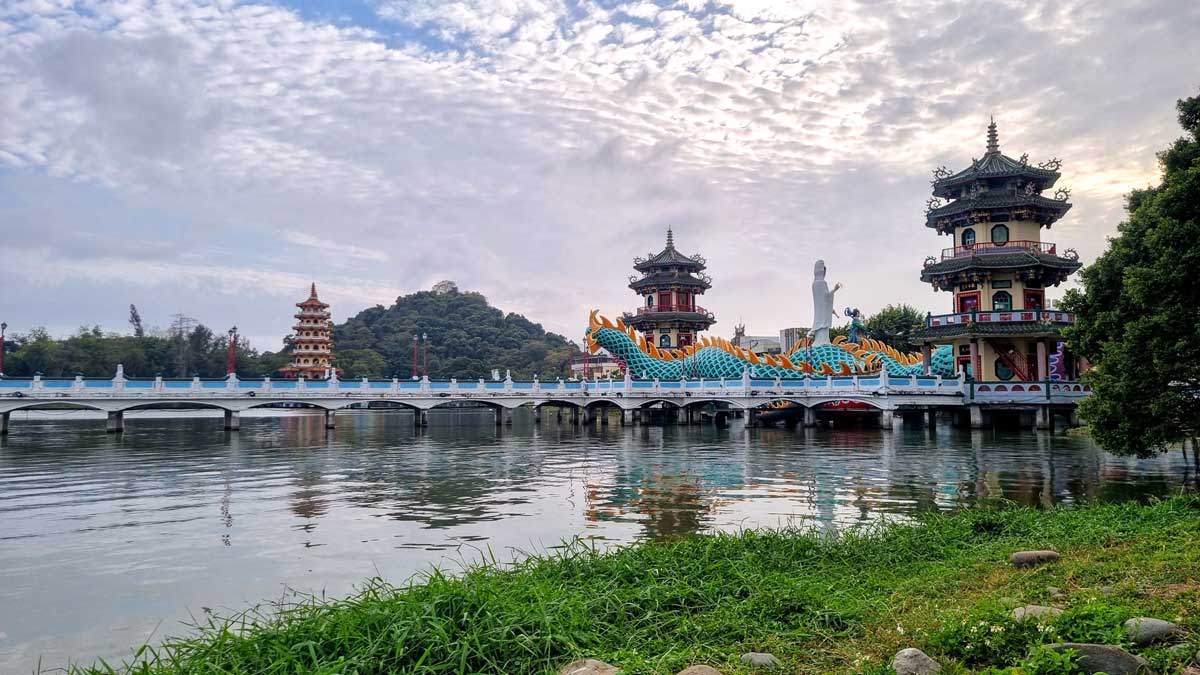
Taiwan’s second city is often overlooked for its industrial reputation, but it’s absolutely worth adding to your Taiwan itinerary. Over the past couple decades, Kaohsiung has blossomed into a city that has plenty to enjoy.
Top things to do and see in Kaohsiung
- Lotus Pond, and the Dragon & Tiger Pagodas (above)
- Zuoying Old Town
- Love River
- Pier-2 Art Center
- Cijin Island
- Night markets
- Formosa Boulevard MRT Station (and its beautiful Dome of Light)
- Day trip to Xiaoliuqiu Island – for the best sashimi and snorkelling with turtles
The once-polluted Love River is now a pleasant sight dotted with cafes, restaurants and even romantic gondolas, while the seaside Qijin Island offers a mix of the modern and the traditional – with museums and a lovely food market neighbouring a traditional fishing harbour.
What feels like a more “real” urban Taiwanese experience (with the friendliest people I’ve come across in Taiwan!), the port city has its very decent share of cultural landmarks including the Dragon and Tiger Pagodas (above), set in Kaohsiung’s Lotus Pond. Where else will you be able to walk into a dragon’s mouth and coming out of his.. nether? Nearby, walk through the historic Zuoying Old Town – home to many of the military settlers, preserved traditional homes and some beautiful street art.
As far as the food scene, Ruifeng Night Market surely offers the best street food. Seafood lovers should catch the ferry across to Cijin Island, where you can also enjoy a pleasant evening walk and a visit to Kaohsiung’s oldest religious landmark – Matsu Temple.

How to get to Kaohsiung
It’s only 1.5 hours by Taiwan’s high-speed rail to Kaohsiung’s Zuoying Station from Taipei, or follow the fast highway system as part of a road trip around the island if you have personal transport.
You can also start your Taiwan trip from Kaohsiung, with Kaohsiung International Airport well-connected regionally to global hubs like Hong Kong, Singapore and Tokyo.
Read More: Kaohsiung Travel Guide: 21 Best Things to Do + Hidden Gems
Tainan: Temples, History & Food

Former capitals usually make for great places to visit, and Tainan is no exception. Having stood as the capital for over 2 centuries, this buzzing city also offers a glimpse into it’s brief European past with two fully-preserved Dutch forts, Zeelandia and Provintia, open to visitors.
But there is much more to Tainan, so generously dotted with temples and photogenic streets. It’s equally nationally renowned for its food scene, with a number of famous savoury and sweet dishes originating from the city. One that stood out to me is the somewhat un-Taiwanese coffin bread: literally a square slab of bread filled with a creamy soup, topped with a coffin-like lid.
How to get to Tainan
Tainan is within easy reach by fast-train from both Taipei (under 2 hours with its High Speed Rail) and the nearby Kaohsiung (under an hour on either local or high-speed trains).
Sun Moon Lake: Relaxation & Cycling

Sun Moon Lake is bang in the middle of Taiwan and one of its most serene gems. Surrounded by mountains, it offers the sort of scenery you’d imagine in traditional Chinese movies. For some of the best views, get up to Ci’en Pagoda or take Sun Moon Lake ropeway cable car. The road that roughly hugs the entire lake makes for a perfect (relatively easy) bicycle trip – hire bikes (including e-bikes) are available from Giant in the village of Shuishe. If you feel less active, there is also a ferry taking you across the lake’s handful of piers.
How to get to Sun Moon Lake
Driving is the best, most flexible option, and you can link it up with a trip across Wuling Pass and onto Taroko National Park. Driving from Taipei is 3.5 hours, a little less from Kaohsiung.
For public transport, the nearest train station is Taichung (which is on high-speed rail) – but you’ll need another 2-hour bus to reach Sun Moon Lake from there.
Wuling Pass: Taiwan’s Alpine Escape

As you wind your way up to 3,000m elevation, the flora transforms from sub-tropical jungle to Alpine pine trees, so much so that you’d be forgiven for thinking you’re somewhere in the summer Alps. Needless to say, the mountainous climate also makes for a great getaway from the summer heat!
Up top you’ll find Taiwan’s highest 7-Eleven, restaurants and a plethora of places to stay with jaw-dropping vistas – if the clouds allow. And if you visit in February – impressive cherry blossoms on top of the incredible views across the mountain range.
Wuling Pass travel tip: Couds are pretty common by the afternoon so if you’re day-tripping, get there as early as you can to maximise the chance of clearer sky (and less tour buses to be stuck behind).
How to get to Wuling Pass
Wuling Pass is definitely the sort of place you’ll need a car to reach.
While roads are in a good condition, be prepared for lots of twists and turns, as well as quickly changing weather conditions – the pass gets foggy in cloudy conditions. Your alternative is hiring a driver for the day from Hualien.
Alishan National Park & Tea Terraces

Another wonderfully picturesque highlight of central Taiwan is the Alishan National Park in Chiayi County. The Alishan Mountains scenery rivals that of Wuling Pass, and is home to Taiwan’s much-famed Alishan High Mountain Tea – some of the finest tea in the world. The tea terraces in the tranquil valley around the town of Shizhuo (pictured above) offer some of the most stunning walks, coupled with a traditional Tea House experience.
Visiting Alishan is also a great chance to see the indigenous Taiwanese communities residing in the local highlands, getting to know their own distinct culture and cuisine.
How to get to Alishan National Park
Driving is again most flexible for exploring the scenic region at your own pace.
For public transport, you can get a regional TRA train to the city of Chiayi, then get on the Alishan Forest Bus – which will take 2.5-3 hours up into the mountains all the way to Alishan Visitor Center – but stop along the way for some of the area’s most famous scenic points.
Useful Tips for Visiting Taiwan
When is the best time to visit Taiwan?
The ideal months to visit Taiwan are October to April. For me, November and March-April are the sweet spots.
Taiwan enjoys a subtropical climate, which basically means its warm (or hot) just about all year around. This makes it a great option for European / North American winters – which is why I’d recommend October to April as the best period to go for those not keen on hot and humid. Summers get sticky unless you’re up in the mountains, with August & September also blowing in the occasional destructive typhoon.
Otherwise most days you should get at least some sun and warmth even in January – February. The north can get down to +12c for a week or two, and in southern Taiwan you’ll be unlucky to have to wear layers unless up in the higher elevation. Southernmost Taiwan (Kenting especially) get windy in autumn through to winter.
Is Taiwan Safe to Visit?
Yes, Taiwan is a very safe destination. The only “threats” to your Taiwan holiday are mosquitoes, and the occasional typhoon (usually a late summer/early autumn occurrence). Crime-wise, the country feels far safer than much of Europe or the US, and you’re never made to feel like a walking wallet unlike the tourist trails of Thailand and Vietnam with scams around every corner.
Food hygiene is generally fine and still I haven’t experienced any issues after countless street food experiences in 5 visits. Driving is also pretty manageable, although can get a little chaotic in the bigger cities mostly due to the myriad of scooters winding in and out of lanes.
What’s Taiwanese food like?
Taiwan is a foodie paradise. As with all the best cuisines, each region and major city boasts their own specialties and the variety of foods you can try across what is a small country is impressive.
Street food rules in Taiwan. Night markets play a central role in Taiwanese culture and for a good reason – this is where you will find the best versions of Taiwan’s most famous dishes, for cheap.
They may appear overwhelming at first, tempting you to find a sit-down restaurant instead, but I urge you to just go for it and try as much as you can! You’ll discover some incredible flavours and dishes you never knew existed. Even just walking through the night market is an experience for the senses: eyes, ears, nose.. And yes, sometimes this involves the infamous stinky tofu (absolutely worth it!).

Some of the must-try foods to try in Taiwan:
- Beef noodle soup – A stunning texture of tender beef and chewy noodles, in a rich broth. More of a restaurant dish
- Oyster omelette – A yummy night market classic – fresh oysters, batter and eggs, topped with a tangy-sweet sauce
- Braised pork rice – A beautifully savoury and filling comfort food
- Grilled squid – A delicious night market staple
- Taiwanese fried chicken – I don’t know what they put in it the batter, but it’s possibly the best fried chicken in the world.
- Stinky tofu – Fermented tofu – hence the stink. I dare you to get past the smell – it’s delicious
- Peanut ice cream rolls – My favourite dessert. Combines sweet and savoury in a delightful way – like an ice cream burrito with peanuts and even coriander!
- Cherry tomato skewers – A sweet night market snack – where tomatoes are rightfully treated as a fruit and caramelized
- Fresh fruits & juices – A refreshing way to end your night market visit: pick and choose your combo from an epic selection of fruits


For when night markets aren’t around, 7-11s and Family Marts are your best friends. The rival all-day corner shop chains are just about everywhere in Taiwan, from every other street corner in towns to all the way to the top of mountain passes. More than a basic corner shop you’d get in the West, they are an excellent source of anything from snacks to a quick hot meal (be sure to try the tea eggs and the dumplings!).
Transport in Taiwan
Taiwan’s train system is well developed, with its High Speed Rail (HSR) the fastest and easiest way to travel between Taipei in the north and Kaohsiung in the south. An HSR across the country will take you as little as 1.5 hours, making it the most convenient transport for your trip through Taiwan. Normal, slower trains operate the rest of the network – including the scenic train along the east coast. Handily, Taipei is just a quick 35 mins by train from the country’s main travel hub – Taoyuan International Airport
I recommend booking train tickets for HSR in advance, especially during busy times.
Mopeds are the main mode of transport, although it can get chaotic in the bigger cities so I’d only recommend if this is something you’re comfortable with. Cars are a great way to get around the island – driving is safe and not stressful outside of the big cities. Make sure to get an International Driving Permit in order to rent cars or mopeds in Taiwan.


Taipei and Kaohsiung also have convenient and affordable metro systems – with Kaohsiung’s metro also connecting the city to its airport.
Cycling is fantastic outside of cities, with respectful drivers and wide moped lanes giving you plenty of space away from the cars. I’ve written about an epic Taiwan bike tour here if you’re interested!
Walking – Many streets don’t have separate pavements and walking often involves meandering around parked mopeds, street food stands and getting onto the road. So you may find yourself preferring other transport modes over long walks – perhaps with the exception of Taipei.

Language Tips in Taiwan
Taiwanese speak a dialect of Mandarin, as well as local Taiwanese spoken by some. While there is a higher chance of meeting Taiwanese who speak some English than when travelling China or Vietnam, it still isn’t widely spoken and it’s not like you can make out menus and signs in Mandarin as you would with Latin alphabet.
While visiting Taiwan I recommend using Google Translate (mainly Google Lens) to instantly translate text and translate voice, but learning a handful of key Mandarin phrases will also go a long way and be really appreciated! Here’s a good resource for starters.
I hope this Taiwan travel guide helped you plan and prepare for your own adventure discovering this hidden gem destination. If you have any comments or questions about Taiwan, leave a comment below!
If you’ve got more time to explore Taiwan, you might also be interested in Taiwan’s beach paradise – Penghu Islands:
» Penghu Islands Travel Guide: Hidden Beaches, Basalt Cliffs & Island-Hopping Adventures
Kaohsiung Travel Guide: 25 Best Things to Do
» Bike Touring Taiwan: A 9-Day Cycling Itinerary from Kaohsiung to Taipei

2 Comments
Elias
This blog is super helpful! We’ve been thinking about a 2 week itinerary round the island but heard some of Taroko National Park is still inaccessible due to the earthquake damage. Do you know if it’s still worth visiting in spring?
Nikita
Thanks Elias!
With Taroko, you can still visit but lots of hiking trails are closed off and traffic access is limited (road only opens at specific times). So the visit needs more time and planning. If you want more certainty and still beautiful Taiwanese scenery, I’d focus instead on Alishan National Park. Especially if you’re coming in spring when you might witness the cherry blossoms!
Have a fantastic time in Taiwan!