
When most people plan a trip to Taiwan, they naturally gravitate towards Taipei. But after spending three months living in Kaohsiung, I came away wondering why so many travellers overlook Taiwan’s second city.
Unlike the capital, Kaohsiung doesn’t overwhelm you with famous landmarks. Instead, despite being home to almost three million people, it somehow retains the feel of a big, friendly town. A once-industrial port has dramatically reinvented itself into a relaxed, liveable city where colourful temples sit beside modern art spaces, ferries cross one of Asia’s largest harbours, and cycling paths link palm-lined waterfronts with mountain viewpoints.
Despite its size, Kaohsiung somehow retains the feel of a big, friendly town.
Life moves at a gentler pace than in Taipei, the locals are welcoming, and thanks to its excellent MRT, trams, ferries and cycle hire, it’s one of the easiest cities in Asia to explore. Add in warm weather for much of the year, and it’s an incredibly easy place to enjoy.
In this guide I’ll share the places I genuinely enjoyed most: from the obvious Kaohsiung highlights to a few lesser-known corners that many visitors never discover.
Kaohsiung Travel Guide
Handily for visitors, most of Kaohsiung’s sights can be split into 3 clusters:
- Northern Kaohsiung
- Coastal & Central Kaohsiung
- Inner / Eastern Kaohsiung
The first two are what I’d recommend for a first-time visit, and they’re also easily connected by MRT, trams and buses. The third is focused more on Kaohsiung’s hidden gems, one I’d recommend if you have more than 2-3 days in the city and want to feel a little more like a local.
Then there are plenty of day trips possible from Kaohsiung both by private and public transport – so I’ve included a section of my favourite ones.
Interactive Map of Kaohsiung
Northern Kaohsiung
My favourite part of Kaohsiung, which offers the most interesting variety of sights. Home to HSR Zuoying Station (Taiwan’s High Speed Rail), it’s where the Kaohsiung journey starts for most visitors. Yet there’s so much to explore in the city’s arguably most sought-after area.
Lotus Pond
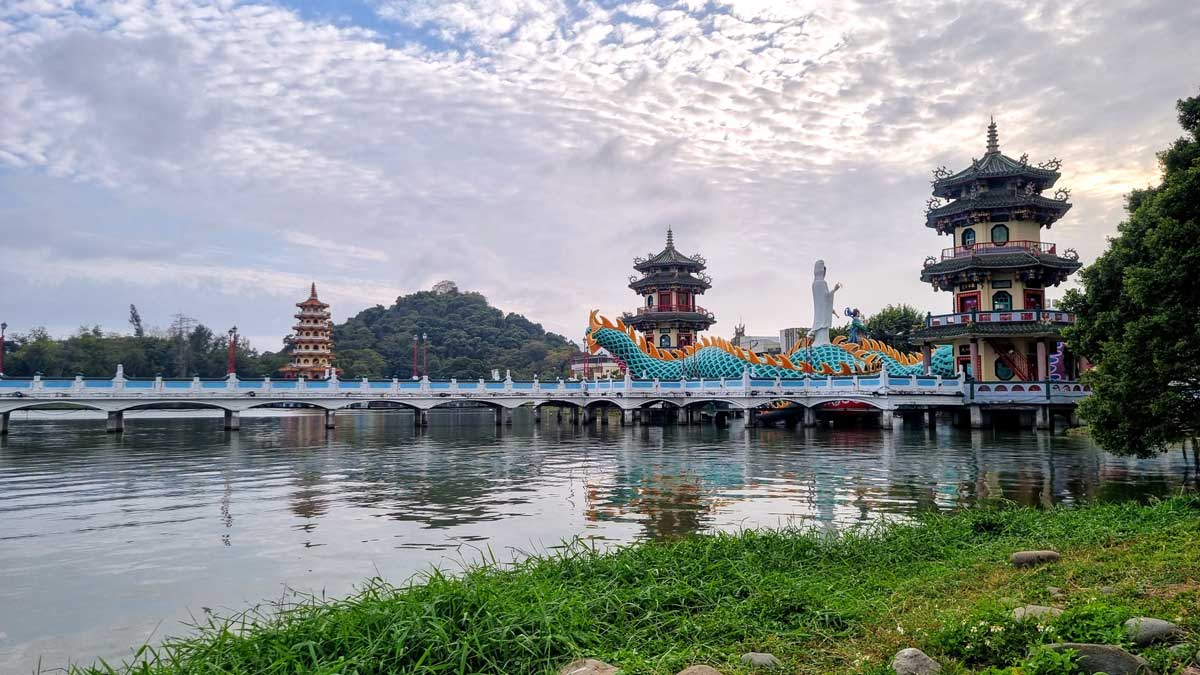
Kaohsiung’s Lotus Pond is the city’s signature postcard attraction, featuring on every Kaohsiung itinerary.
The reason it’s so popular is less the pond itself and more the kitsch structures along its shore. The most famous are the colourful Dragon and Tiger pagodas – free-to-enter towers you can climb up for a nice panoramic view and some peculiar art on the way in.
As you walk along the pond’s western shore you may just come across the old-school open-air karaoke, freshwater turtles bathing in the sun and locals fishing right next to “No fishing” signs.
The Lotus Pond may appear ancient, but it’s an artificial pond only created in the KMT era of the 1950s. Not to take away from it – it’s a genuinely interesting part of the city and there aren’t many other places in the world where you can walk through a tiger’s arse before exiting through a dragon’s mouth.
The Lotus Pond is a perfect place for a circular lakeside walk or a casual bike ride, with trails all around the lake and a few decent spots to stop for a drink or a meal.
Walled City of Zuoying
At the southern end of the Lotus Pond (by the Dragon & Tiger Pagodas) you’ll notice a Kremlin-like city wall. Continue through the gate and you’ll enter what is known as the walled city of Zuoying – Taiwan’s first modern fortified city.
Beyond the walls, it’s not too different nowadays from the rest of Kaohsiung’s older parts – traditional Taiwanese low-rise homes. There’s quite a bit of walking to be done – so come in the morning or later afternoon.
Guomao Village
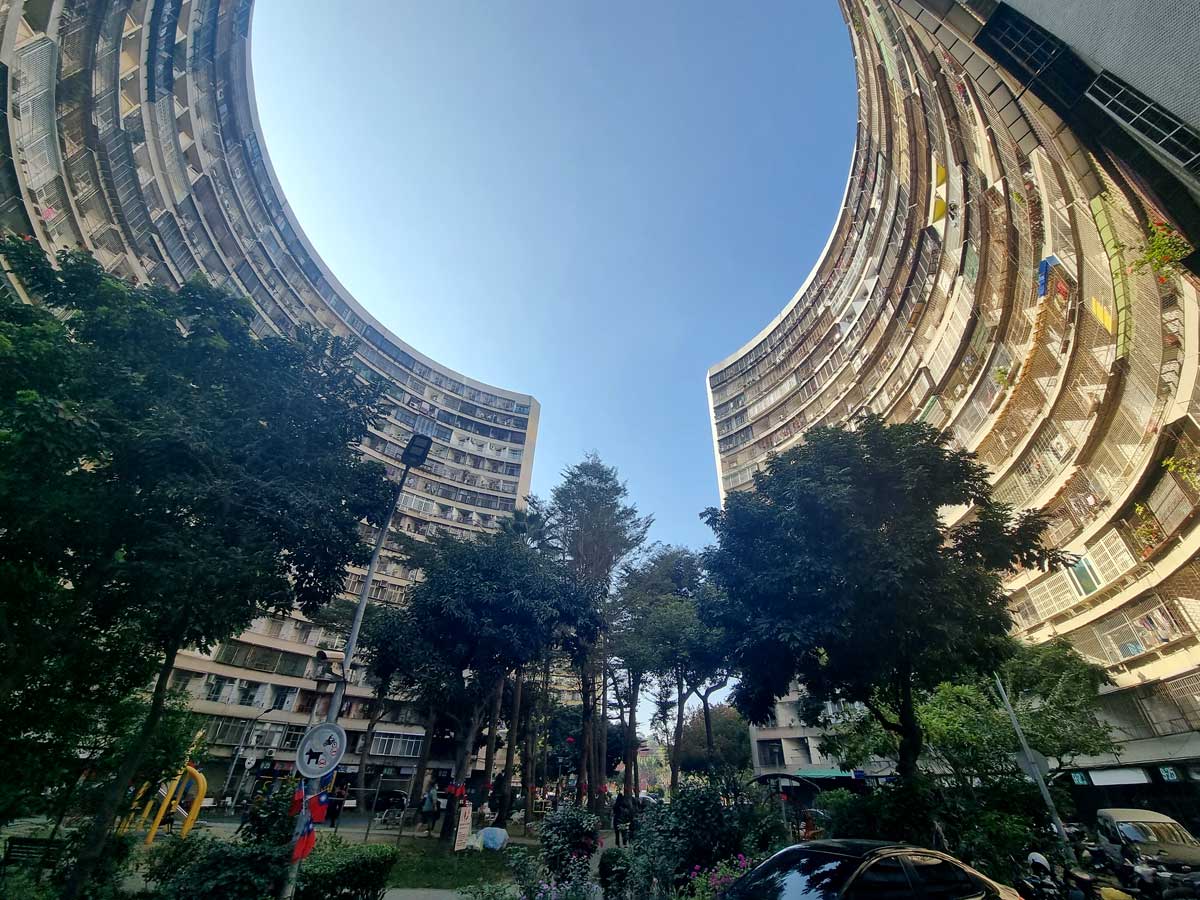
Continue walking south and you’ll come across one of Kaohsiung’s most unique and interesting districts to explore on foot or bike. And a photographer’s wet dream.
Guomao Village is an ageing, tightly-knit community where many military personnel and their families who arrived from mainland China settled in the 1960’s. The large, tightly-packed apartment blocks here resemble a mini Hong Kong, with a slightly dystopian, retro feel. It may be mostly grandpas and grandmas now, but it’s still buzzing in the mornings, when you can savour the authentic Taiwanese breakfast of flatbread with soy milk.
Neiwei Village & Cultural Park
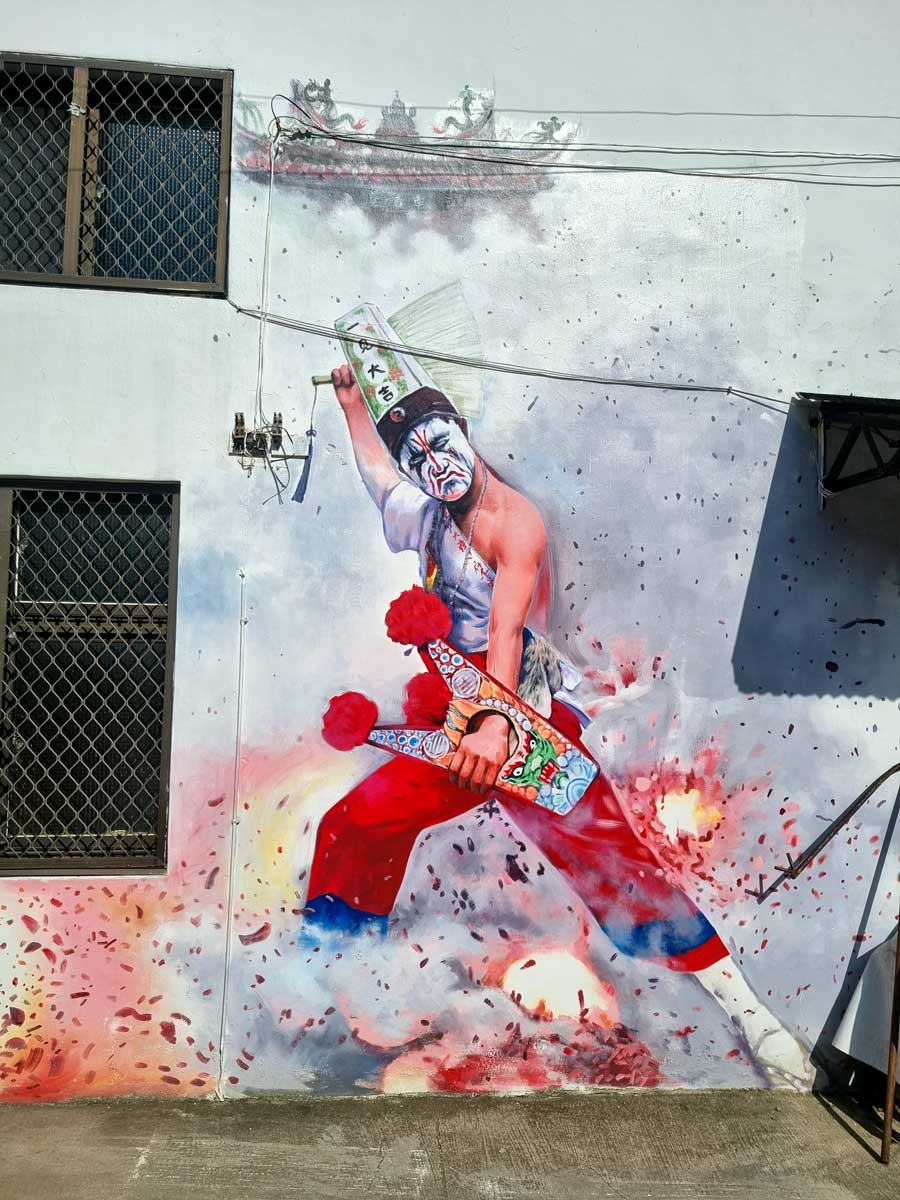
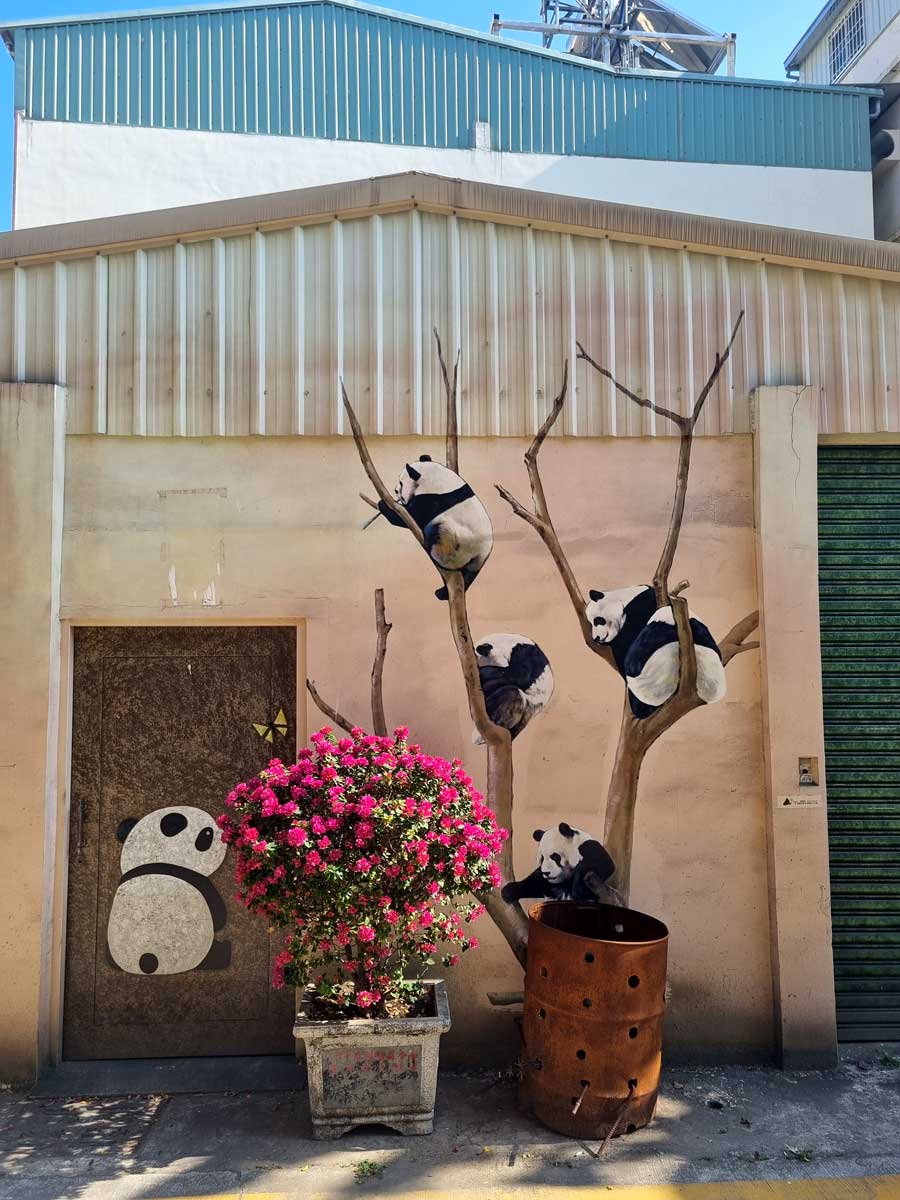
Continue walking or cycling south from Guomao village. Most visitors never make it to Neiwei Village, but it’s one of my favourite parts of Kaohsiung to explore on foot. Behind the Art Museum you’ll find a maze of old streets lined with colourful murals, traditional houses and local cafés that feel a world away from the modern city.
Further east is one of Kaohsiung’s best green spaces – Neiwei Cultural Park. The park features multiple art museums with ever-changing exhibitions and some very pleasant cafés. Look out for funny public signs in “Chinglish”.
Ruifeng Night Market
Kaohsiung has a great selection of night markets, however Ruifeng is my favourite. It’s got a huge variety of food and drink stalls and unlike Liuhe, isn’t dedicated to tourists. The crowd is a nice mix of locals and a few foreign visitors sprinkled in.
If you like spicy, try Peng’s stinky tofu broth (彭氏臭豆腐-瑞豐夜市 on Google Maps) – it’s intensely delightful. Then cool off your taste buds with a peanut-and coriander ice cream burrito. If you like a laugh, go look for the t-shirts sold in the clothes bit of the market – there’s some fantastically random “Chinglish” on display.
Harbour & Central Kaohsiung
Kaohsiung’s extensively redeveloped waterfront is where you’ll find the most panoramic views of the city, the best coastal scenery, futuristic architecture and chill seaside vibes.
Kaohsiung’s identity has always revolved around its vast natural harbour. Once one of the busiest industrial ports in Asia, much of the waterfront has since been transformed into parks, promenades, cultural venues and public spaces. Today it’s the city’s most enjoyable area to explore, whether on foot, by ferry or by bicycle.
Monkey Mountain (Shoushan)
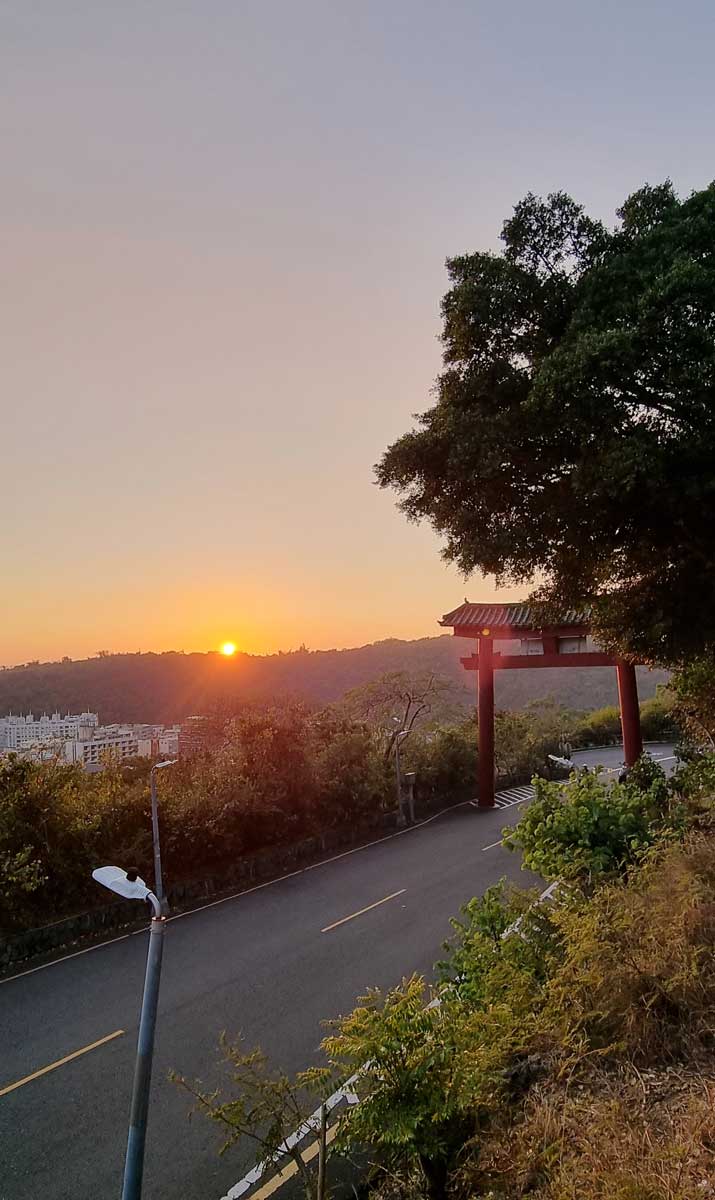
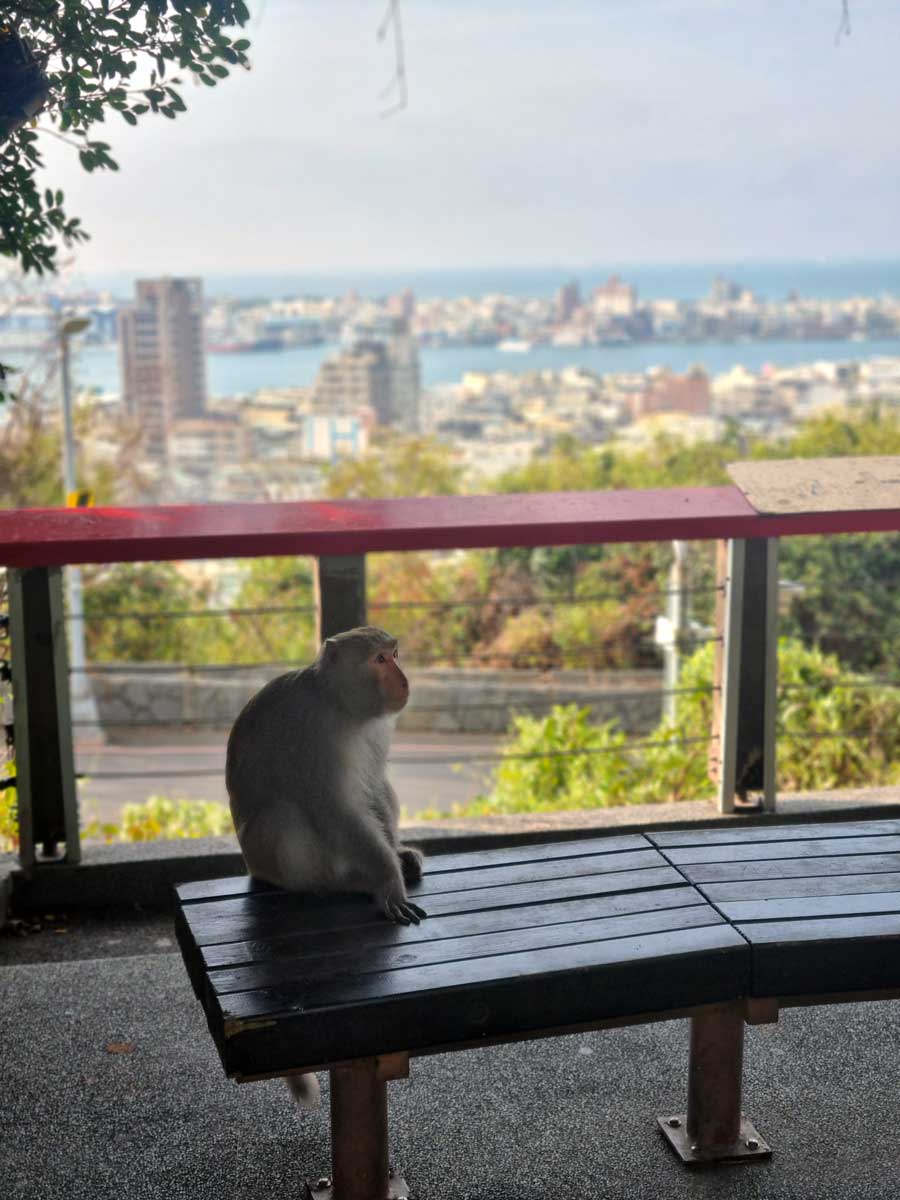
Despite bordering the city centre, Shoushan is a surprisingly wild corner of Kaohsiung. It’s commonly nicknamed Monkey Mountain, and you’ll probably see its resident Formosan macaques whether you’re looking for them or not. Just remember, they’re excellent thieves and have even been known to steal valuables to then exchange back for food.
The views are another reason to come here: Shoushan has arguably the best panoramas of central Kaohsiung and the harbour. You don’t even have to go far – Shoushan LOVE Lookout is close enough to even just walk up from the harbour.
If you’re into cycling, Shoushan is the best bit of urban biking in Kaohsiung, albeit hilly (electric uBike to the rescue!), and you can go quite far in. No worries if you’re not into cycling – you can reach pretty much anywhere by bus or taxi just as easily. If you enjoy a hike, you can follow the popular trail up to the top of Shoushan.
For families, Kaohsiung Zoo up on Shoushan is actually quite impressive and dirt-cheap to enter.
Cijin Island
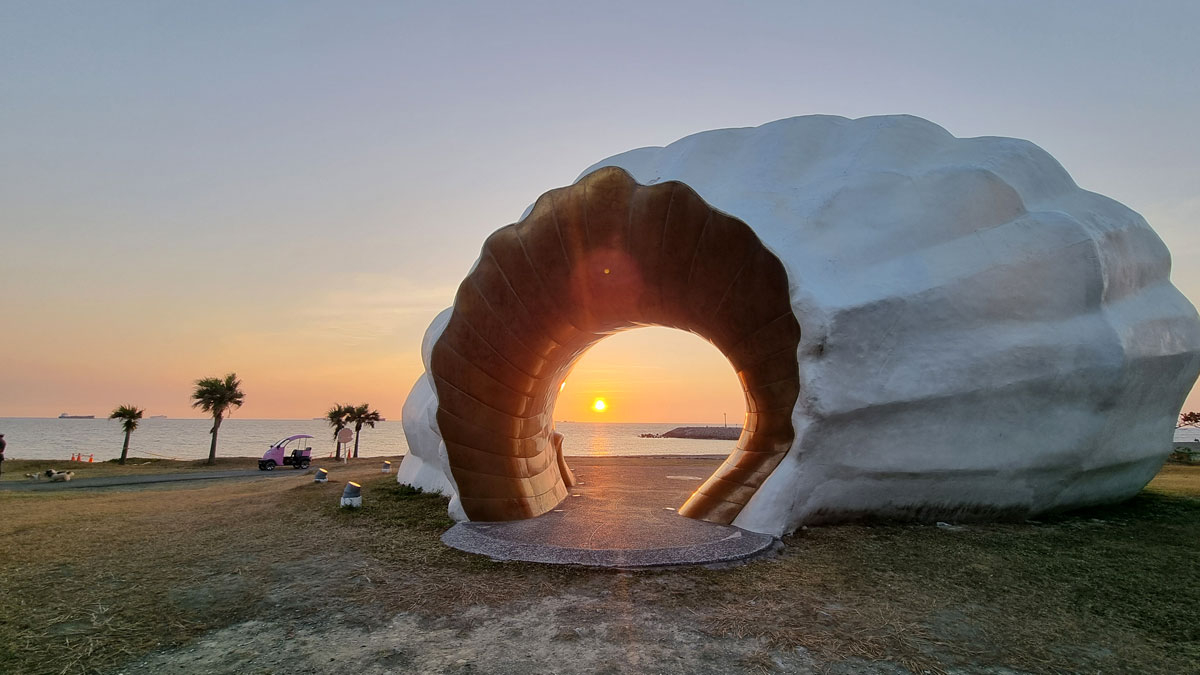
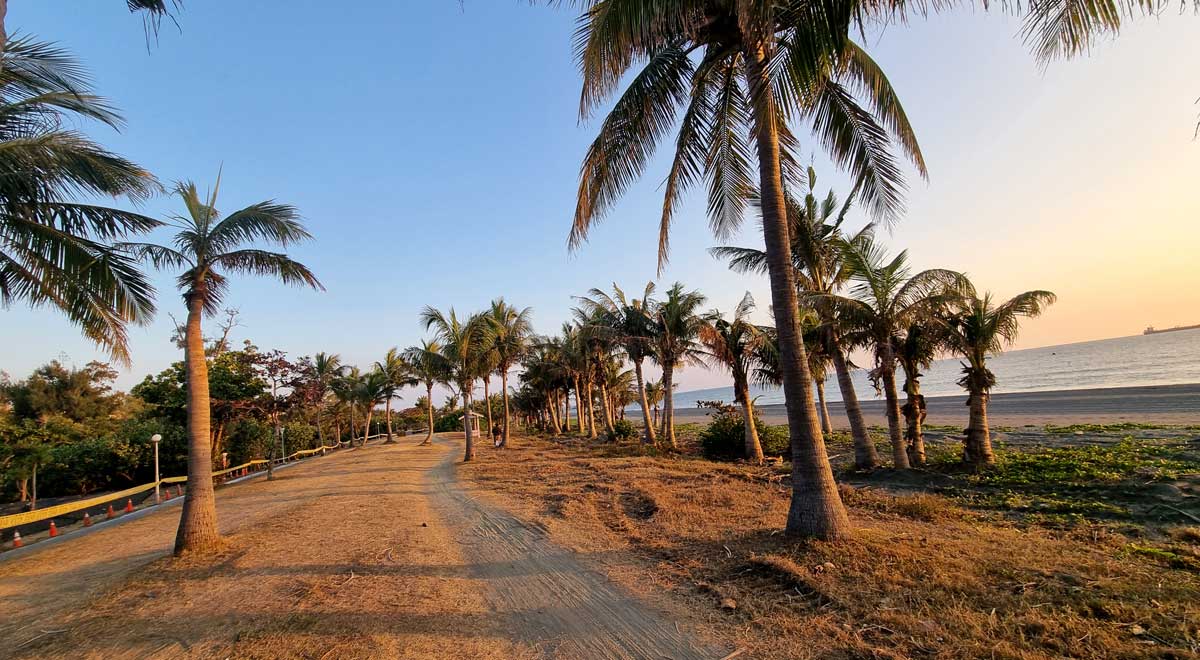
Cijin Island is where Kaohsiung really stands out over Taiwan’s other big cities: You’re just a 10-minute ferry away from sandy beaches and palm-tree-lined promenades.
Come to Gushan Ferry Port on foot, by bike or by moped, then hop on one of the frequent ferries across, and enjoy Kaohsiung’s skyline. You can even pay for tickets with an EasyCard.
The ferry leaves you pretty much at the start of Cijin Old Street, a buzzing night market. Unlike others, it mainly stretches along the road with more sit-down seafood spots deeper in. One of the more unusual foods to try here is ginger tomato, which for some reason are dipped in this ginger-licorice-plum paste – like they’re not already sweet enough.
Nearby, you can also check out the Kaohsiung Lighthouse, the little foot tunnel underneath it and Cijin Tianhou Temple – Kaohsiung’s oldest.
Tip: Arrive on Cijin in late afternoon and rent electric tricycles for a lovely ride along the coastal route that’s almost entirely car-free and is best visited during golden hour or sunset. There are some pretty interesting modern installations along the way. Then return for some street food – a winning combo.
Pier-2 Art Centre
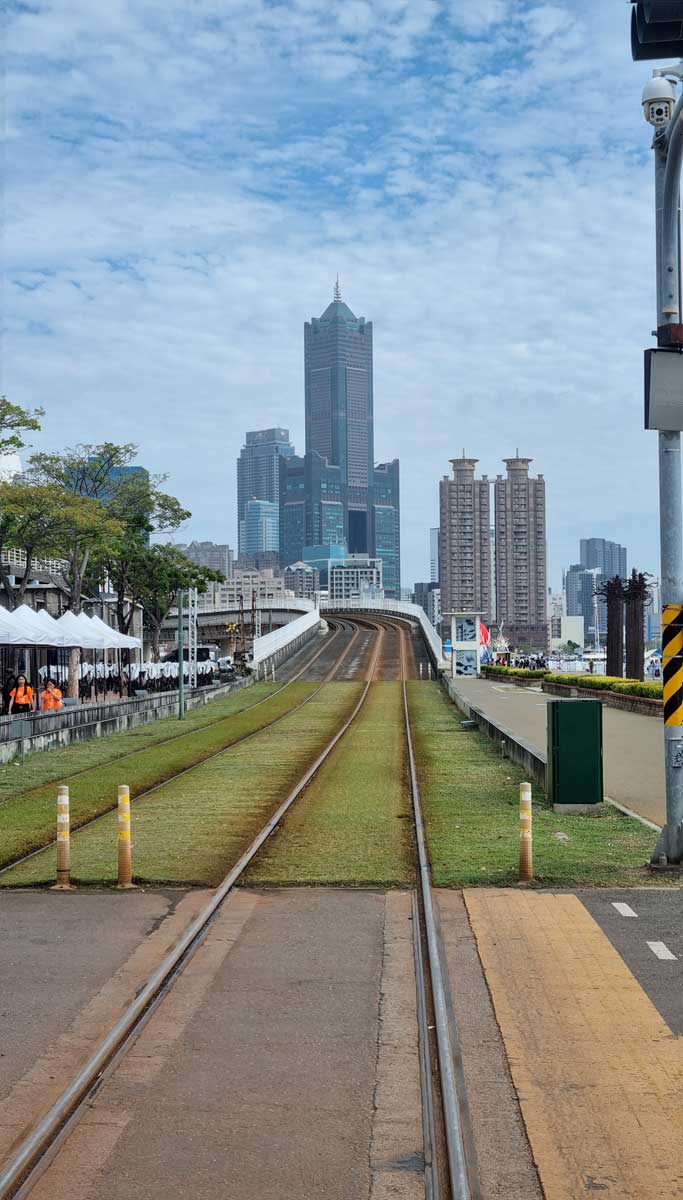
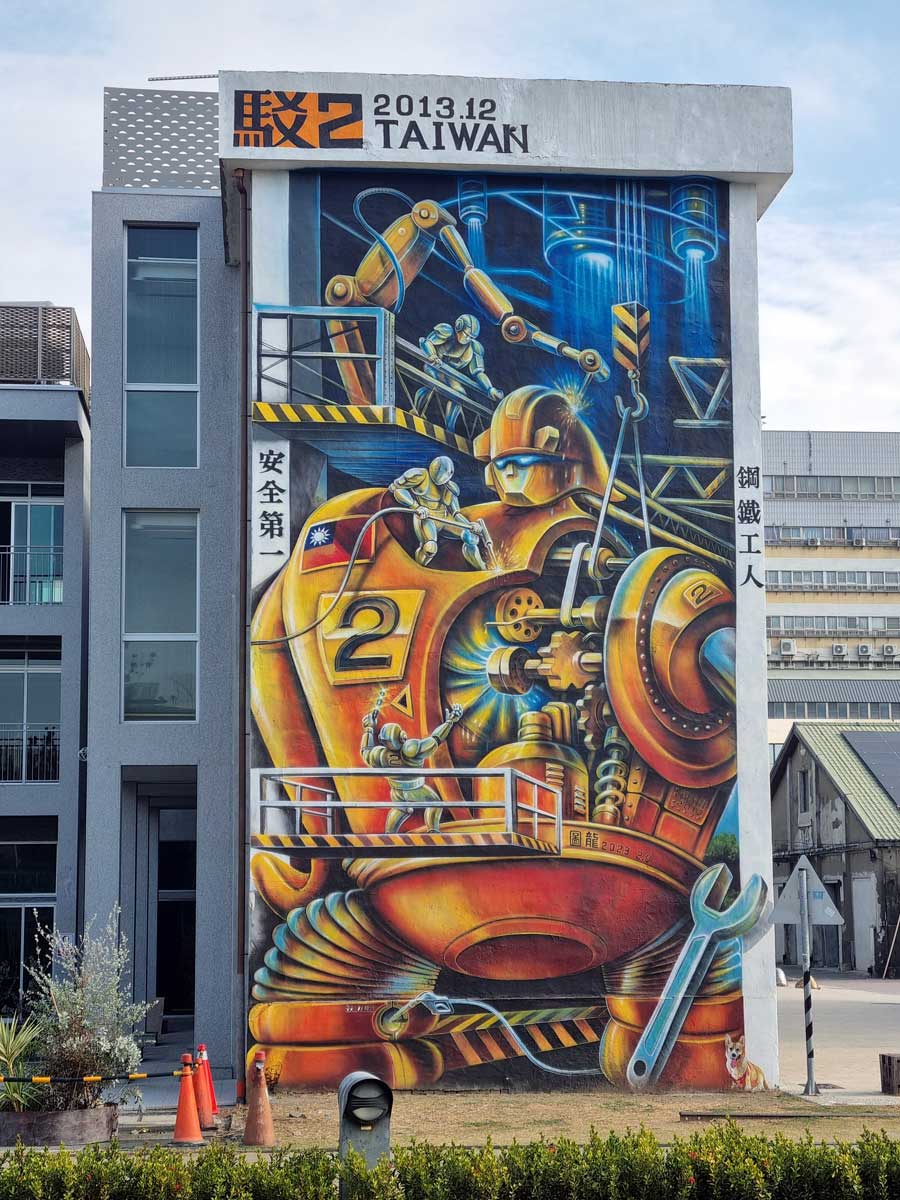
Once a run-down collection of abandoned warehouses, Pier-2 was transformed into the creative heart of modern Kaohsiung. Nowadays, it’s a vibrant waterfront district filled with cafés, bars, independent shops and quirky public art. Being largely car-free also makes a big difference to enjoying the harbour. There’s even a futuristic rotating footbridge.
We found it especially enjoyable wandering here into the evening, when the harbour sometimes features pop-up markets, outdoor cinema screenings, lightshows and other events that bring the waterfront to life. Around the Lunar New Year it’s the heart of Kaohsiung’s festivities.
Pier-2 is easily reached by both the tram and Kaohsiung’s MRT (metro).
Love River
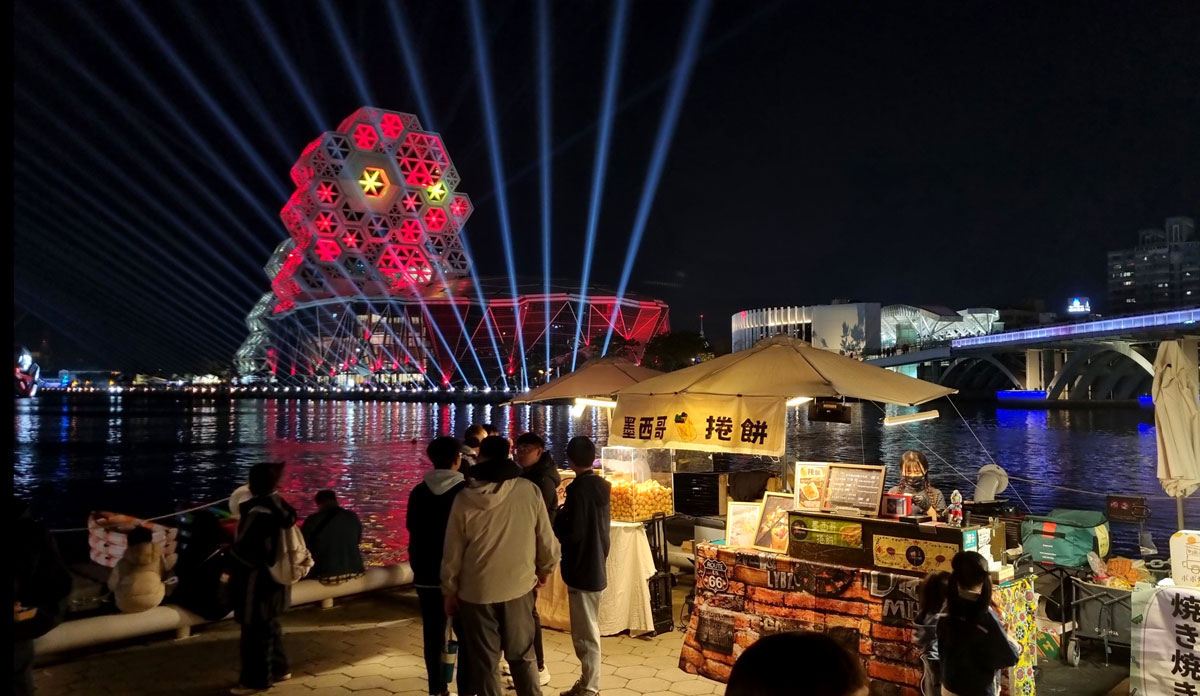
Pier-2 flows almost seamlessly into the waterfront around the mouth of the Love River.
Once heavily polluted, the Love River has been revived into a vibrant waterfront lined with cafés, restaurants and walking paths. Its romantic name dates back to the post-war years, when boating on the river became particularly popular with local couples. It’s particularly atmospheric after dark, when the skyline lights up and neon-lit gondolas glide along the river.
If you rent a bike, it’s the best car-free artery to get around the city too – far nicer than sharing space with hundreds of stinky mopeds.
Former British Consulate at Takao
Perched above Kaohsiung’s harbour, the Former British Consulate at Takao is worth the climb for arguably the best view of the city’s oldest parts. It’s also a place you can get British-style afternoon tea but I feel like that’s more for locals. Not essential – but it’s an interesting slice of Kaohsiung’s colonial history.
Dome of Light
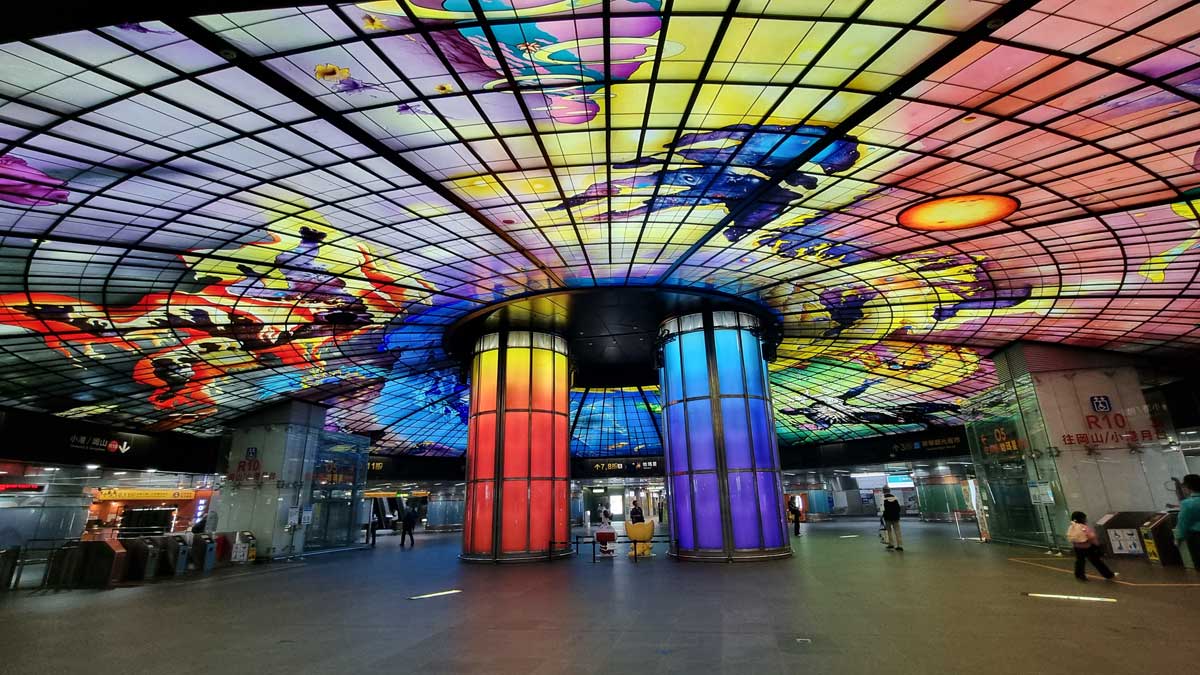
Chances are you’ll pass through Formosa Boulevard Station at some point. If you do, take a moment to admire the spectacular Dome of Light, one of the world’s largest stained-glass artworks and a surprisingly impressive sight for an MRT station.
Liuhe Night Market
A couple of minutes’ walk from Formosa Boulevard is Kaohsiung’s most famous night market. While I personally prefer the livelier, more local atmosphere of Ruifeng Night Market, Liuhe Night Market remains the city’s most tourist-friendly option.
It’s a great introduction to Taiwanese street food, with wider walkways, English menus at many stalls and plenty of local specialties to try. The market stretches along Liuhe 2nd Road and if you keep walking west you’ll reach the banks of Love River.
Sunfong Temple
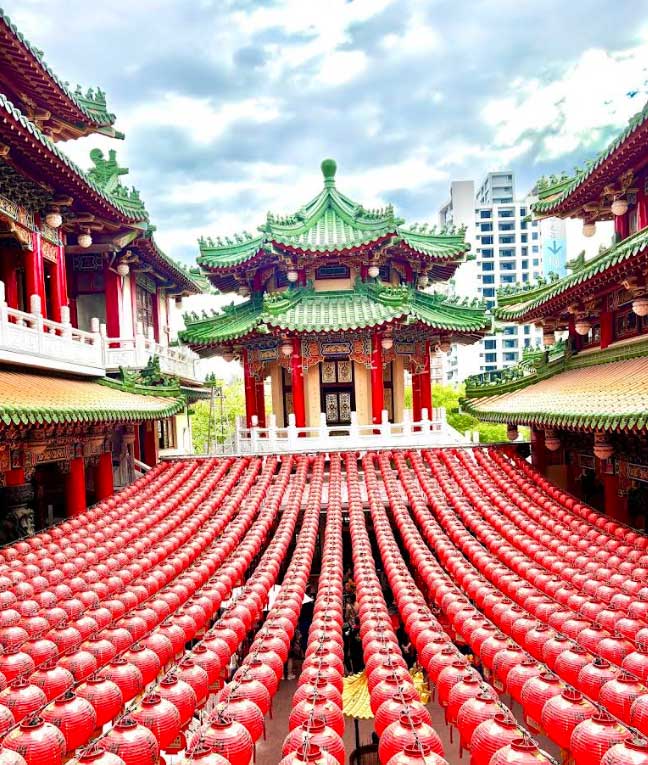
With no shortage of beautiful temples in Kaohsiung, Sunfong Temple still manages to stand out. Visit around dusk, light some incense and then head to the upper level, where hundreds of glowing red lanterns create one of the city’s most photogenic views as daylight fades.
If you have extra time
These places are a little more out of the way and something I’d consider less ‘must-see’ but on the other hand less touristy.
Chengcing Lake
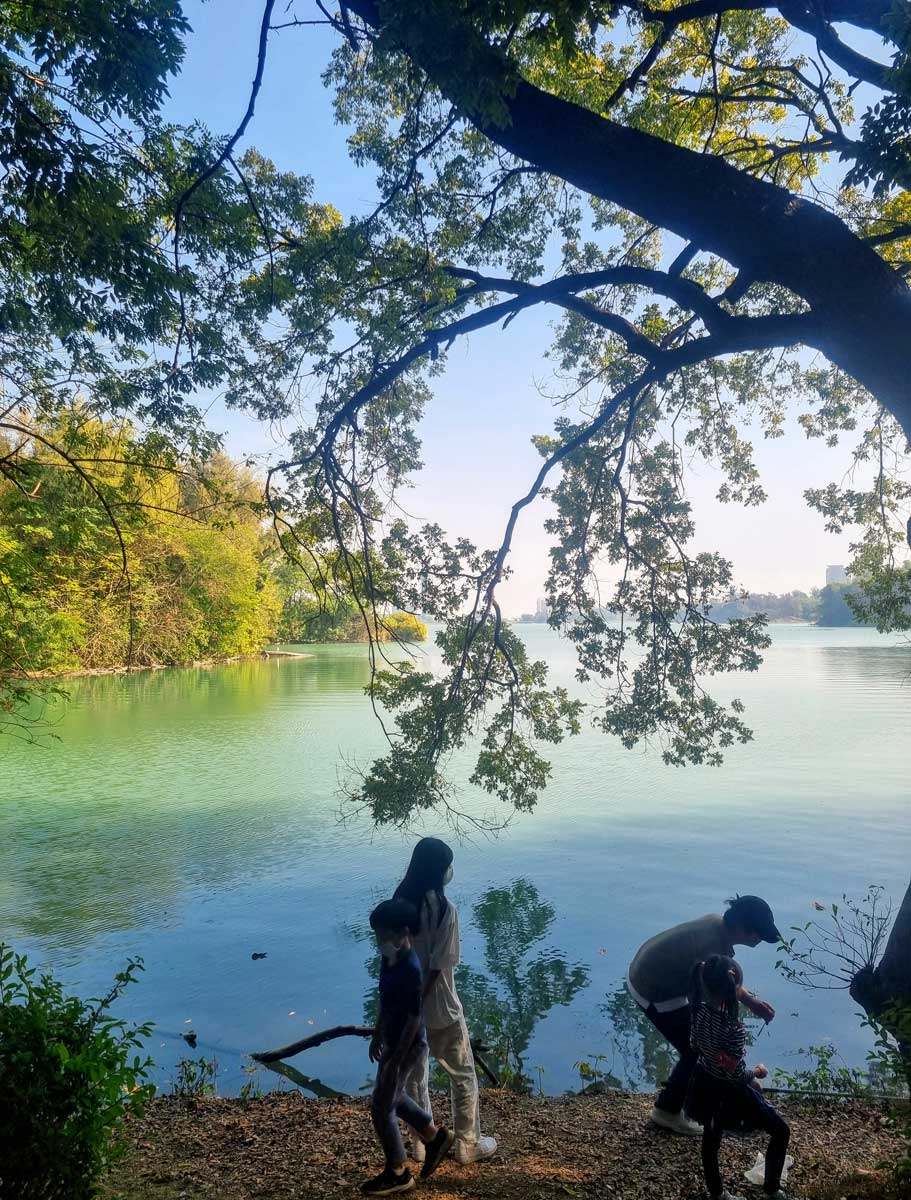
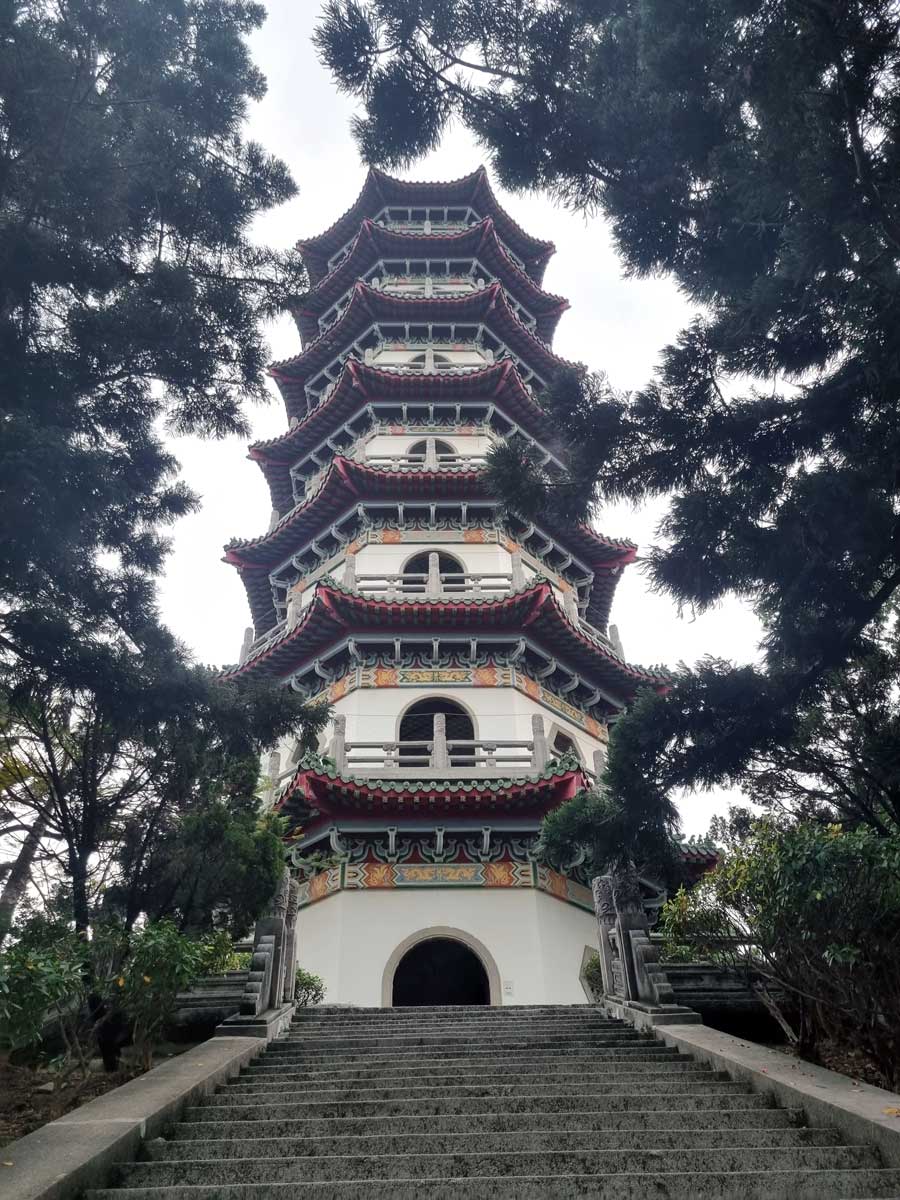
While the Lotus Pond is favoured by tourists, further inland you’ll find the lake most loved by locals – especially on weekends. It’s a peaceful, green spot with plenty of shade, pagodas and trails right around the lake.
While not an essential stop for your Kaohsiung itinerary – it’s a great spot to spend a few hours enjoying the quieter side of Kaohsiung. If you’re lucky, Kaohsiung often hosts quirky public art installations around the lake too. At the northwestern end is Zhongxing Tower, a pretty pagoda with panoramic views across the lake and city from the top.
Getting to Chengcing Lake
The easiest option is taxi. If you want to save taxi costs, take the Orange MRT Line to Niaosong Station, then hop in for a short taxi ride to the lake entrance.
Kaohsiung Grand Hotel
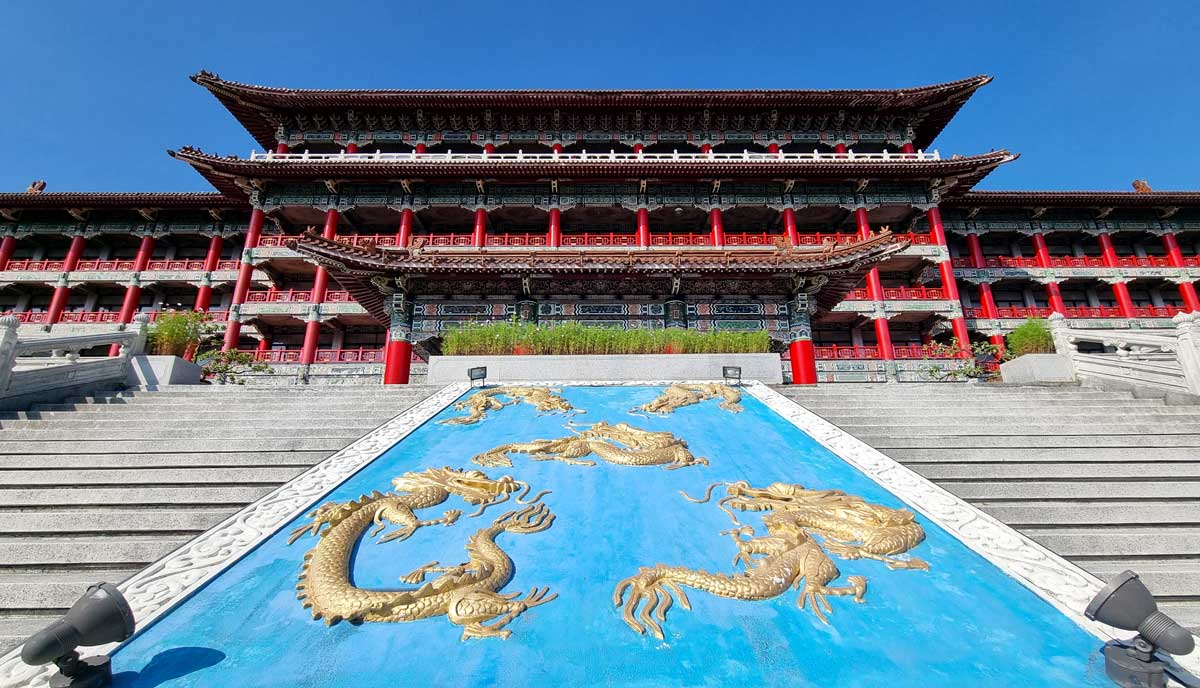
Sitting above Chengcing Lake is one of Kaohsiung’s grandest buildings. The current Kaohsiung Grand Hotel opened here in 1971, its extravagant Chinese palace-style architecture designed to project Taiwanese prestige and hospitality to visiting dignitaries and VIP guests.
Nowadays, it’s a great spot for a fancy-ish meal or just a drink with a beautiful view. The grand interiors and decor live up to the vivid red columns and ornate details on the exterior.
Ciaotou Sugar Refinery
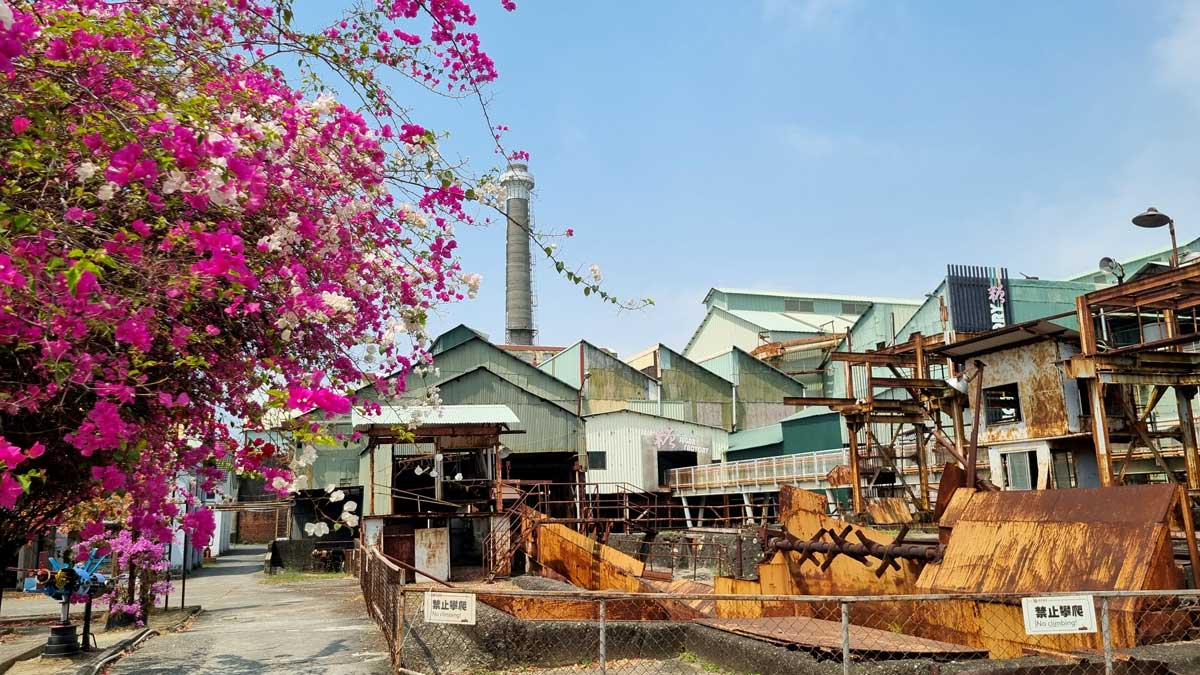
If you’ve got an extra half-day, the former Ciaotou Sugar Refinery is a worthwhile detour. Taiwan’s first modern sugar factory has been transformed into a spacious heritage park, where you can rent one of the quirky four-person bikes and cruise past preserved industrial buildings, old locomotives and tree-lined avenues. Just don’t forget the mosquito spray.
Getting to Ciaotou Sugar Refinery
Although it’s on the edge of the city, Ciaotou Sugar Refinery is easily reached on the MRT red line of the same name.
Days out
Kaohsiung is a great base to explore southern Taiwan, whether by public transport or with a rental. Here are my favourite day trip options for a first-time visitor.
Meinong
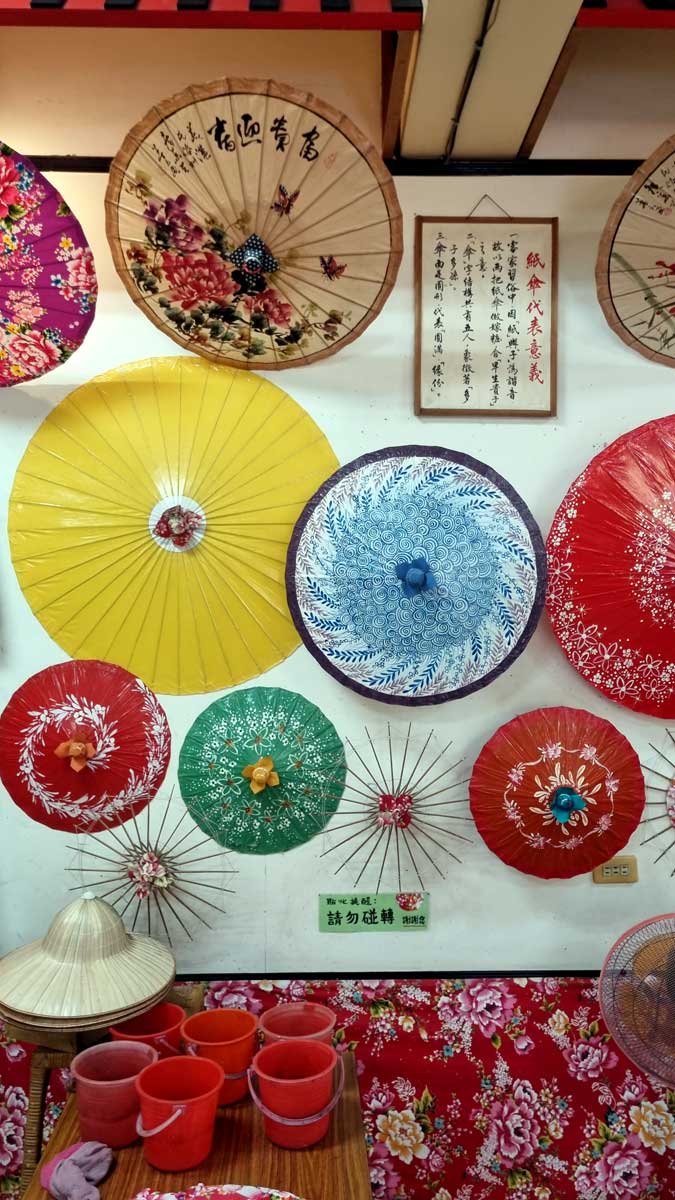
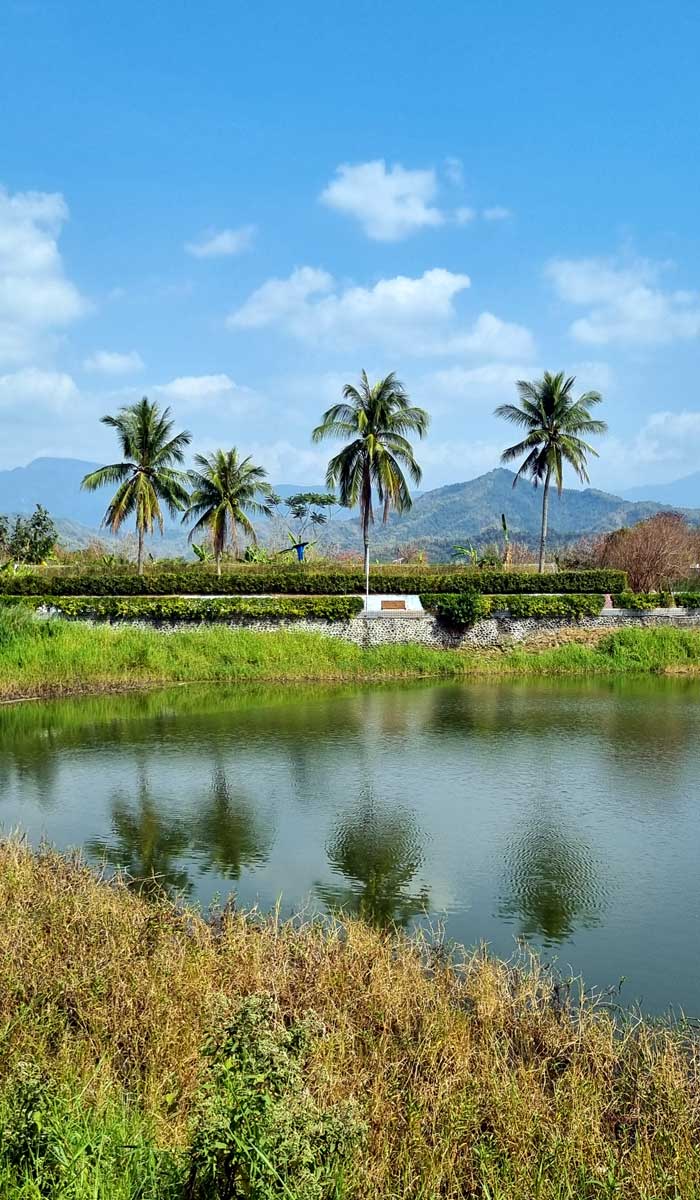
Taiwan is a melting pot of cultures that settled on the island in recent centuries. One of these ethnic groups is the Hakka, with their own distinct language, cuisine, architecture and crafts. Meinong is one of Taiwan’s best-preserved Hakka villages and makes for a great day trip from Kaohsiung.
Surrounded by rice paddies and fertile farmland, Meinong has long been one of southern Taiwan’s agricultural heartlands. Meinong feels noticeably different to most Taiwanese towns, showcased through its traditional tobacco farmhouses, paper umbrella workshops and local cuisine.
If you only have a couple of hours, the Meinong Folk Village is a good introduction to the community, although I’d encourage you to explore beyond. If you’re lucky, you might visit during the blooming season when Meinong is surrounded by colourful flower fields.
Getting to Meinong
Own transport gives you the most flexibility (around 50 minutes’ drive from Kaohsiung). Otherwise the easiest option is the Meinong Express Bus from Zuoying HSR Station, which makes Meinong one of the easiest countryside day trips from Kaohsiung without a car.
Tainan
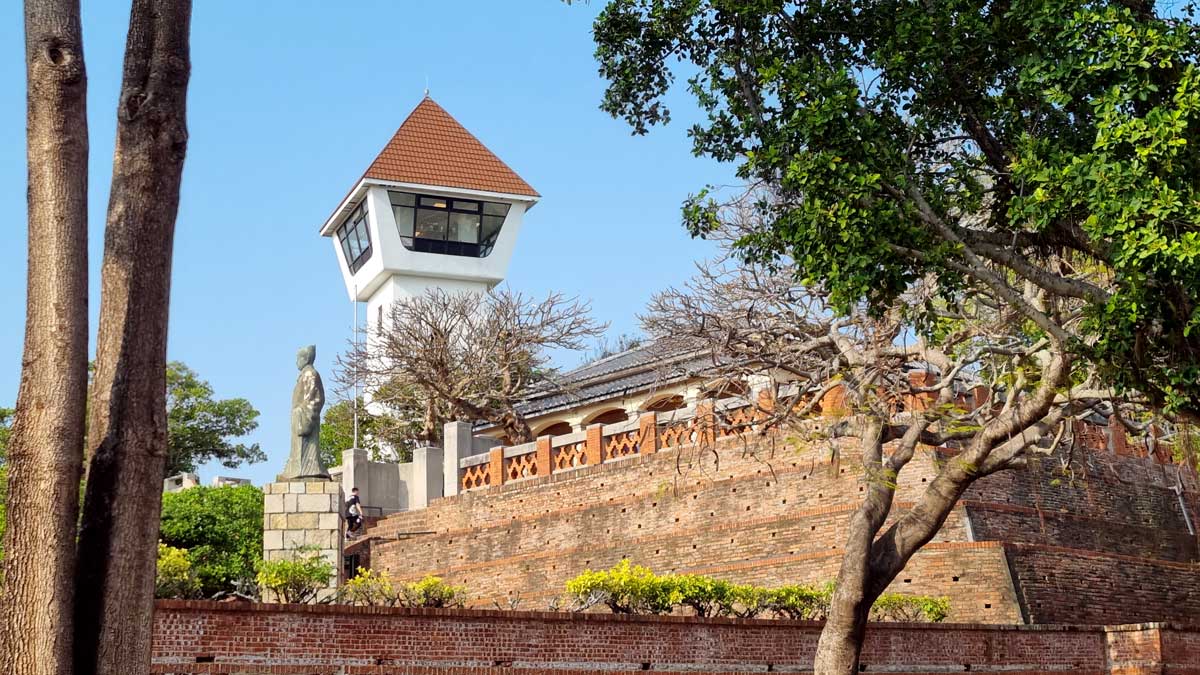
If you’re not already planning to stay in Tainan during your Taiwan trip, this is the most obvious day trip from Kaohsiung – and conveniently, one of the easiest to reach by public transport.
If Kaohsiung represents Taiwan’s modern, revitalised city, then Tainan is its historic heart. As the island’s former capital, it’s packed with centuries of history, traditional architecture and more temples than you could hope to visit in a day. It’s also widely regarded as Taiwan’s culinary capital, with countless local specialities originating here.
There’s far more to see and do than this Kaohsiung guide can cover, but our highlights (besides the food!) were wandering the atmospheric streets of Anping District and exploring the Dutch heritage of Fort Zeelandia and Chihkan Tower.
Getting to Tainan
Take the local TRA train from Kaohsiung Main Station – it’s cheap and will take you around 40 minutes. The HSR (High Speed Rail) also stops in Tainan but unlike the local train, it stops on the outskirts of the city.
Fo Guang Shan Buddha Museum
One of the largest Buddhist complexes in the world, Fo Guang Shan Buddha Museum is an impressive blend of grand architecture, peaceful gardens and fascinating exhibitions. Even if you’re not particularly interested in Buddhism, the sheer scale of the site and its serene atmosphere make it one of the most memorable day trips from Kaohsiung.
Getting to Fo Guang Shan
Driving is roughly 40 minutes from central Kaohsiung. Otherwise you can catch the E02 Harbin Express bus from Zuoying HSR Station.
Sandimen
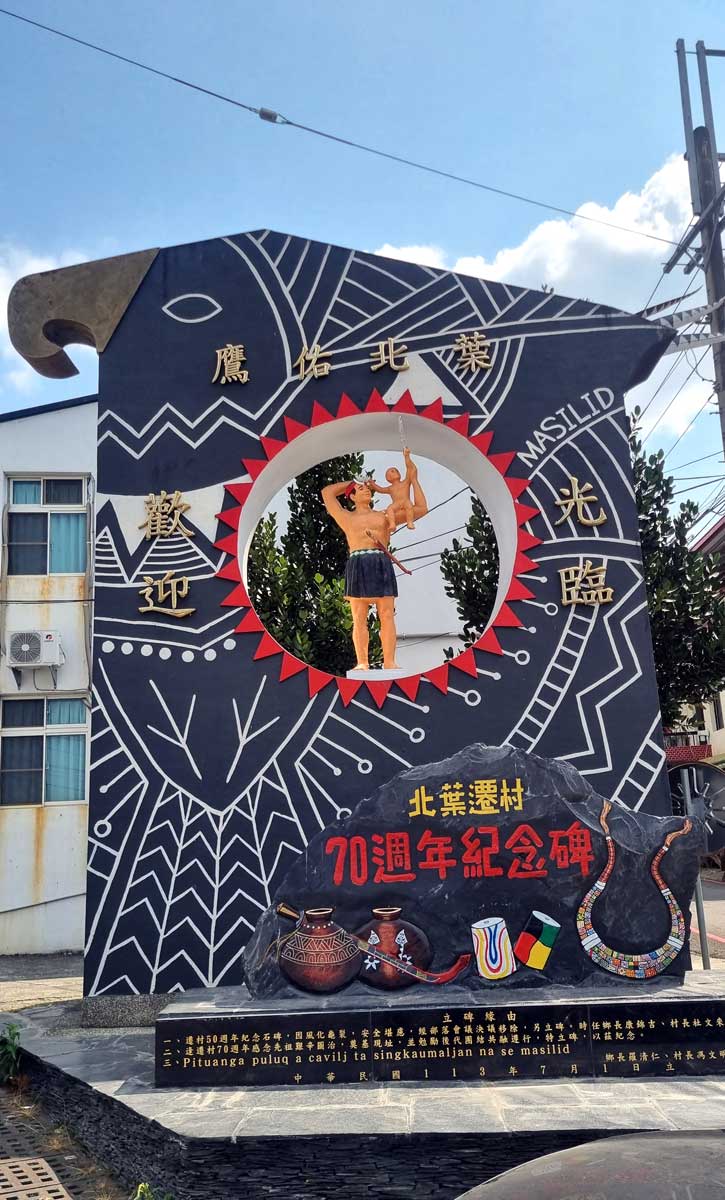
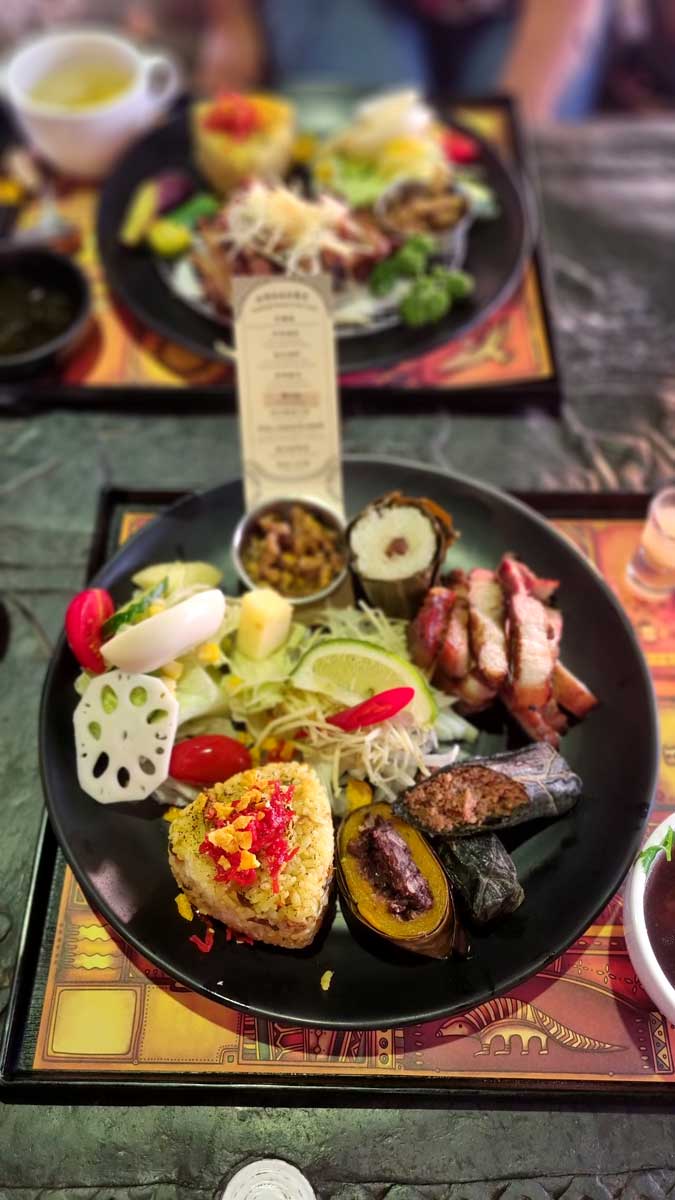
Taiwan has a rich variety of indigenous peoples (now just 3% of the country’s population), closer in culture and language to other Austronesian peoples than Han Chinese. One of the best places to learn about a very different side of Taiwan is in the area of Sandimen. It’s the foothills of Taiwan’s mountains – where many of Taiwan’s aboriginal population live nowadays due to forced expulsion from the plains by the Chinese and later Japanese colonisers.
Taiwan Indigenous Culture Park is the big visitor centre where you can see the local slate houses and indigenous crafts, sample aboriginal BBQ and even dress up in colourful tribal outfits. For a less curated experience, wander the streets of Sandimen (or nearby Majia) to see everyday life in the local communities.
If you have private transport, drive up Provincial Highway 24 to one of the hillside restaurants serving aboriginal cuisine – one I can vouch for is Month of Autumn Restaurant. The food is very different to typical Taiwanese, views are superb and it’s very peaceful. Book ahead if visiting on weekends or public holidays.
You can continue driving up to the mountain roads (generally in good condition) and you’ll reach the more remote communities like Wutai village. As a bonus if it’s hot: the higher you go, the more refreshing the weather gets.
Getting to Sandimen
Car or scooter are by far the easiest options, especially if you want to ride up into the mountains. Public transport isn’t great going to Sandimen although there are some buses from Pingtung. If you don’t drive, it’s also possible to hire a driver for a day for a fairly reasonable price.
Liuqiu Island (from Donggang)
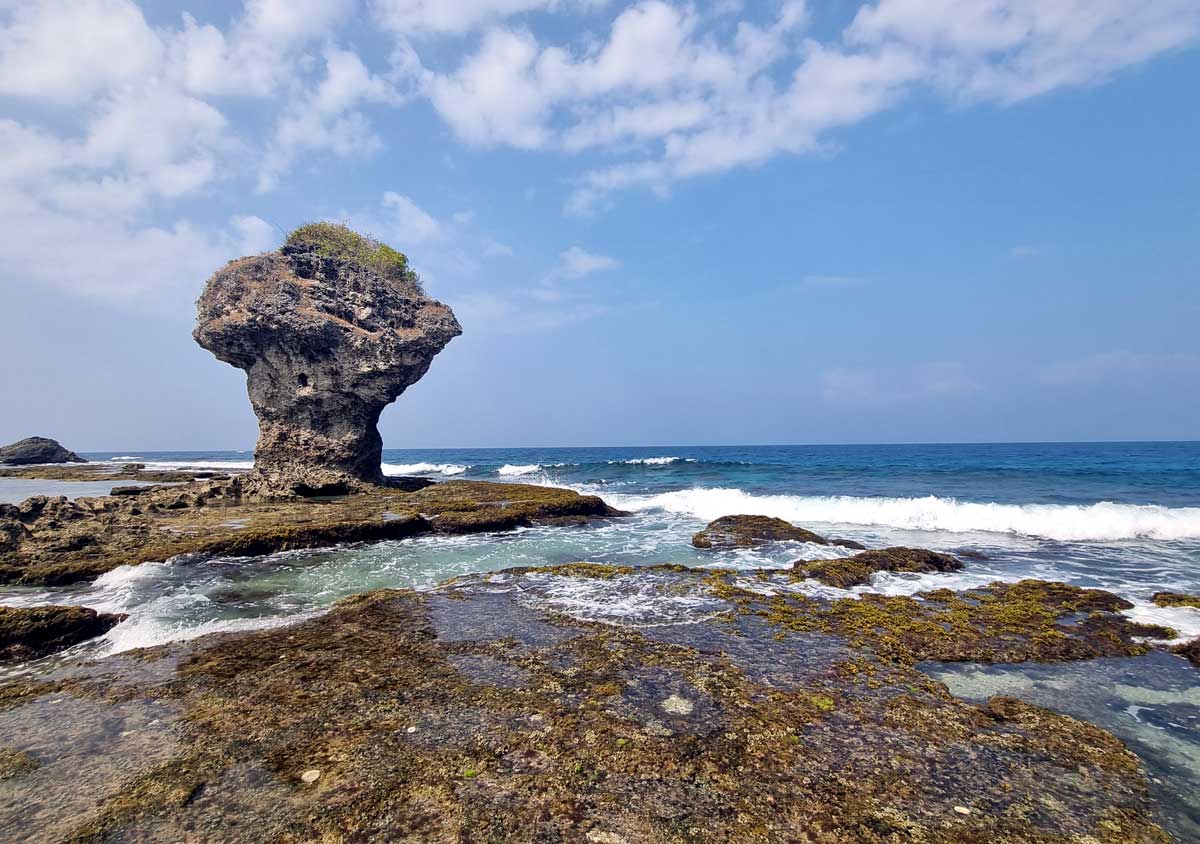
For a completely different pace of life, I highly recommend a day trip to Liuqiu Island (Xiaoliuqiu). Just a short ferry ride from the mainland, this laid-back coral island is best explored on a scooter, winding your way between secluded bays, dramatic limestone coastline and sleepy fishing villages.
One of the biggest draws is the chance to snorkel alongside wild green sea turtles, but just as memorable is stopping for incredibly fresh sashimi, grilled squid and other local seafood before continuing your ride around the island. Scenic, relaxed and refreshingly uncrowded, Liuqiu feels a world away from Kaohsiung despite being so close.
Although it’s well worth spending a night if your itinerary allows, it’s also perfectly feasible as a long but rewarding day trip from Kaohsiung.
Getting to Liuqiu Island
Driving or riding a moped is easiest: a 45-60 min drive depending on traffic. Leave the car, then hop on the ferry. Once on Liuqiu, hire a moped to explore it. Those are widely available around the port.
Using public transport, take bus 9117 from central Kaohsiung or the airport to Donggang, then walk to the ferry terminal and catch a ferry to Xiaoliuqiu. Alternatively, take the MRT to Siaogang + taxi to Donggang if you’re short on time.
———————————————-
Practical Kaohsiung Tips
How many days do you need in Kaohsiung?
To enjoy the main sights without too much rushing, I recommend at least two days staying in Kaohsiung. Ideally, allow 3-4 days if you have the luxury in your Taiwan itinerary. Remember that Kaohsiung can also serve as a great and convenient base to explore southern Taiwan with many day trip options – you could stay for a month and still keep finding new things to see and do.
What’s the best way to get around Kaohsiung?
Kaohsiung is one of the easiest cities in Taiwan to get around.
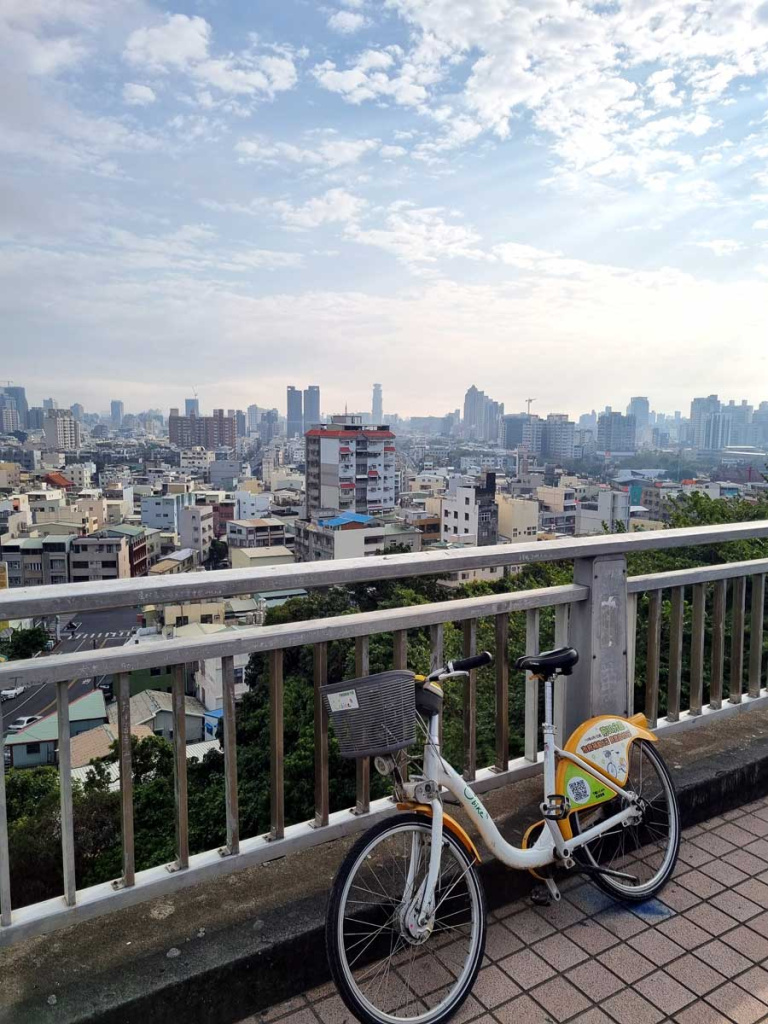
The excellent MRT (metro) together with the recently-built tramline already cover the majority of Kaohsiung. Meanwhile YouBike public bike rental is perfect for exploring areas like the harbour, Cijin, Love River and Lotus Pond – and there is (finally!) a growing bike lane network. For YouBike, remember to set up the phone app beforehand.
Taxis and Uber are quite cheap (by Western standards) and useful for places like Chengcing Lake or the Buddha Museum. An EasyCard (or iPASS) can be used across the MRT, buses, trams, ferries and convenience stores, making it well worth buying when you arrive.
Where should I stay in Kaohsiung?
My top recommendation is to stay in the northern Zuoying district – around the Kaohsiung Arena / Aozihdi Park. It’s conveniently placed for the red MRT line which directly connects to both the nearby Zuoying HSR Station and Kaohsiung Airport, and it’s one of the more upscale areas loved by locals with many of the city’s best eateries, as well as Ruifeng Night Market.
Alternatively you could stay further south around Formosa Boulevard / Central Park. Those are also very well connected with even more hotel options.
When is the best time to visit Kaohsiung?
October to April is the best time to visit Kaohsiung.
Thanks to Taiwan’s mountains, Kaohsiung has an entirely different climate to Taipei and northern Taiwan, despite being less than 2 hours’ train ride.
While the north and east can get cold and rainy in winter, Kaohsiung tends to stay warm and dry and in fact, late autumn to mid-spring is the best time to visit the city. Sunshine is near-guaranteed.
That said, from around May the heat and especially humidity really pick up, peaking in July-August accompanied by almost daily downpours. Summer is the season I’d avoid. Along with the intense heat comes the threat of typhoons from around July to September.
Is Kaohsiung Walkable?
Yes and no. Yes in that it’s doable on foot, no in that it’s not a pleasant experience – depending where you are. Outside newer redeveloped areas such as the harbour and Love River, many pavements haven’t been designed with pedestrians in mind.
You’ll regularly end up walking in the road, as inconsistent pavements are blocked by everything from parked mopeds and outdoor seating to hawker stalls – or simply disappear altogether. Which is manageable on quiet residential roads but unpleasant where there’s traffic.
What are the best day trips from Kaohsiung?
As covered earlier – the best and easiest day trips from Kaohsiung by public transport are Tainan, Meinong and Fo Guang Shan Buddha Museum.
If you have a car or scooter, Sandimen and Liuqiu Island are the most rewarding day trips from Kaohsiung.
Whether you’re spending two days in Kaohsiung or using it as a base for exploring southern Taiwan, I hope this guide has helped you plan your trip.
If you’re planning a visit to Taiwan, take a look at my other Taiwan travel guides below:


