
Italy is packed with must-see destinations like Rome, Florence, and Venice — but the real charm often lies off the beaten path. As an added benefit, it probably won’t cost you €20 for a tricolore salad (hello Amalfi Coast).
From hidden villages and scenic valleys to less-crowded coastal towns, these 16 hidden gems in Italy will inspire your next authentic Italian holiday.
[Updated September 2025]
Italy’s Hidden Gem Destinations
Hidden Gems of Northern Italy
Trento, Trentino: A Hidden Gem City at the Foot of the Dolomites

The regional capital of Trentino Alto-Adige is much more than a gateway to the Italian Dolomites – Trento is a hidden gem city break destination of its own. The city was once part of the Austro-Hungarian Empire which left a degree of Austrian influence on its culture and cuisine, giving it a different vibe to the rest of Italy. To this day Trento has a sizeable German-speaking minority.
The city is a mixture of the old and the modern. The beautiful Old Town features fresco-decorated Renaissance architecture and an impressive Piazza del Duomo complete with an Alpine backdrop. The cafes and restaurants on the city square will entice you for an al fresco lunch or an Aperol spritz. Everything feels within easy reach and you’ll quickly start to feel at home in Trento. It’s no surprise that the city consistently features in the top cities for quality of life in Italy.
If you want to soak up the best views of Trento and the Adige valley, take a panoramic(if wobbly) cable car up to the sleepy village of Sardagna.
And yes, the other big draw of Trento is the great location from which to explore the surrounding region. Both the Dolomite mountains and the lush green valleys offer ample hiking, cycling and skiing opportunities. Lake Garda is within reach, as well as numerous pristine mountain lakes of green and blue hues. If you’re after peace & nature, the Adige valley is dotted with agritourism farms and numerous wineries.
How to visit Trento
While the city doesn’t have its own international airport, it’s still quite easy to reach from other cities. The closest airports with direct train connections are Verona, Milan, Venice or Innsbruck in Austria. My tip is to fly into Verona Airport as trains from there take just an hour and the airport is quite close to the train station.
Valsugana, Trentino: Cycling & Scenic Adventures
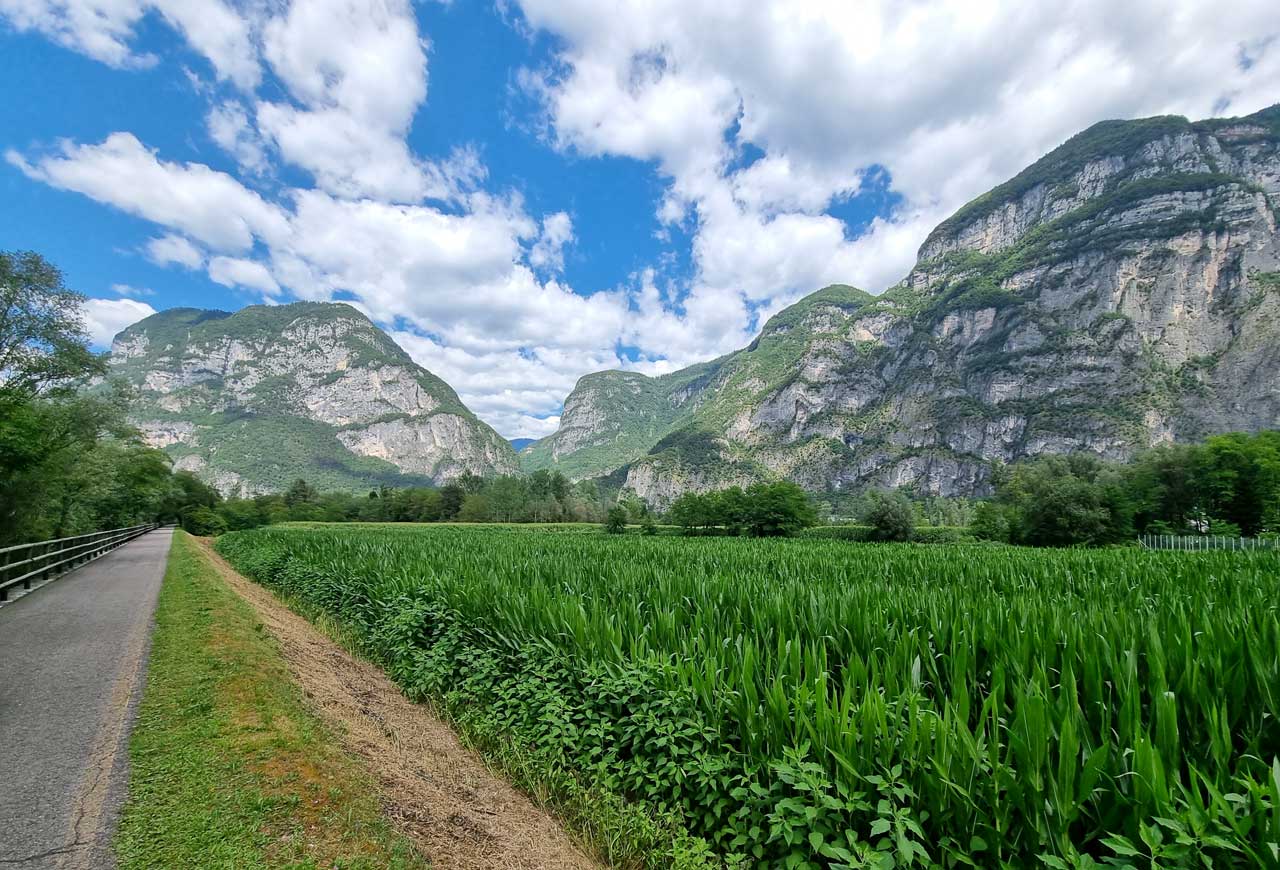
A lush green valley stretching along the river Brenta along the edge of the Dolomite Mountains, the Sugana Valley is an absolute hidden gem of Northern Italy.
As with much of Italy, Valsugana offers both outstanding scenery and historic sights. Its plains are lined with a sea of verdant vineyards, apple orchards and raspberry plantations with a backdrop of steep hills and the distant Dolomite peaks. At its Western end near Trento, the Caldonazzo lake offers water activities and even an opportunity to enjoy a cooling swim in the hotter months.
Being a part of the ancient Via Claudia Augusta route, the valley is dotted with hilltop castles and ancient towns including the alluring towns of Borgo Valsugana and Levico.
Valsugana is perfectly set up to be explored by bicycle. Being a valley it’s pretty much entirely flat (slight descent going East) and features almost entirely traffic-free dedicated bike paths that reach places a car won’t. Best of all, you can rent a bike at multiple points along the valley and return them at the other end. Valsugana Rent Bike is the place to go for this service.
» Read more: Bike Touring the Dolomites
How to visit Valsugana
Valsugana valley is best accessed from Trento. The regional capital doesn’t have its own international airport but can be reached directly by train from Verona, Milan, Venice or Innsbruck in Austria. From there, you can use local buses or best, rent a bike to explore the valley.
Genoa, Liguria: Italy’s Underrated Port City & Pesto Capital
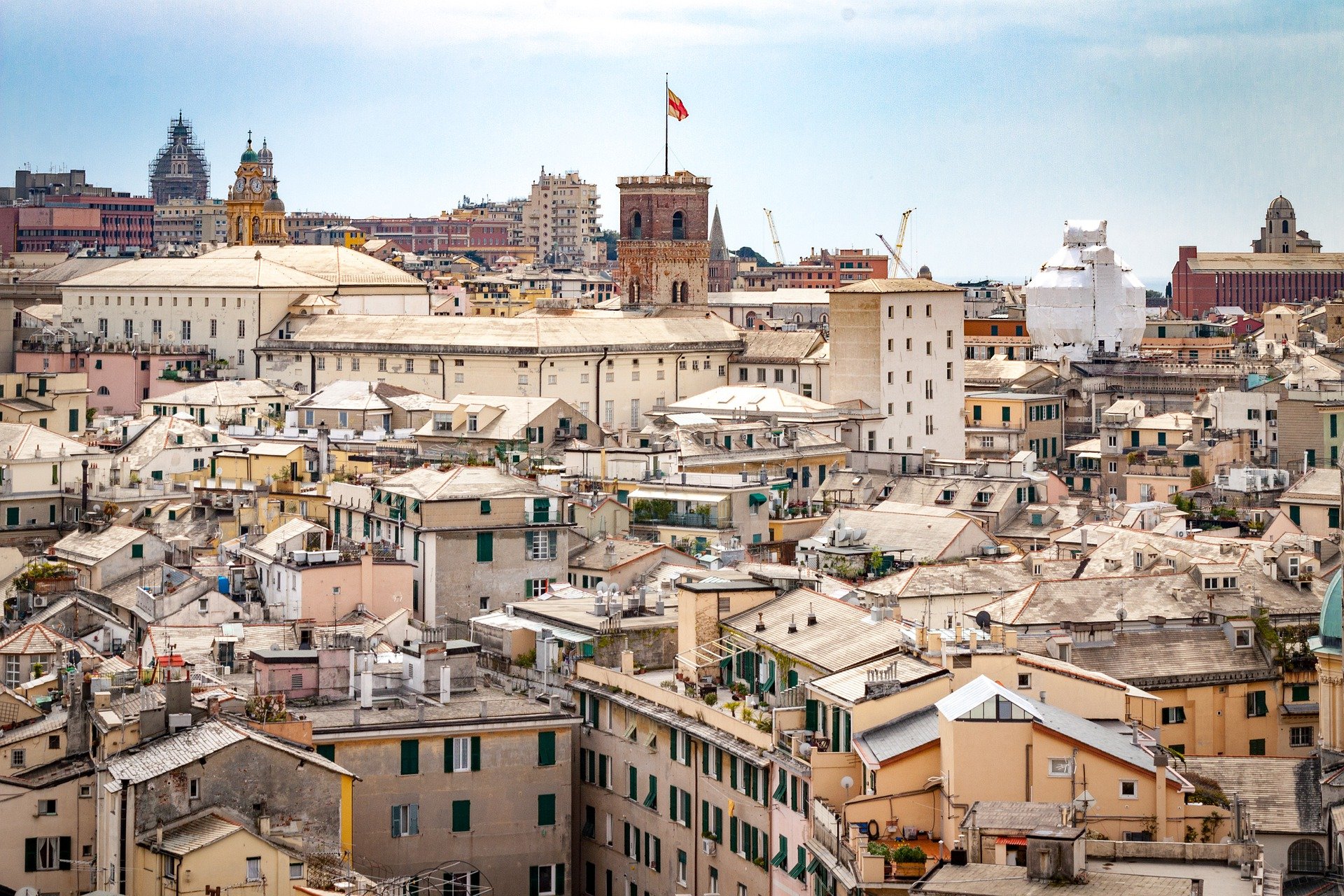
This sea-hugging port city in the country’s Northwest doesn’t seem to get anywhere as much tourist cred as the likes of Milan, Verona or Bologna. So take advantage of that. Genoa is far more than a landing point for the tourist spots of Cinque Terre and Portofino. It has Italy’s largest old town and plenty of sights including its ancient port that stretches through the centre of the city.
And if you like pesto, you’ll not want to leave Genoa. It’s the very home of pesto which by the way is a different world from the stuff from the jar you’re probably used to. Of all the wonderful things I tried with pesto in Genoa (there are plenty!), the focaccia is probably the one I miss most.
How to visit Genoa
The city has its own Genoa Airport with destinations right across Europe, just a short drive from the city proper. Trains from Milan and Turin both take around 2 hours.
Nesso, Lake Como: Tranquil Lakeside Village
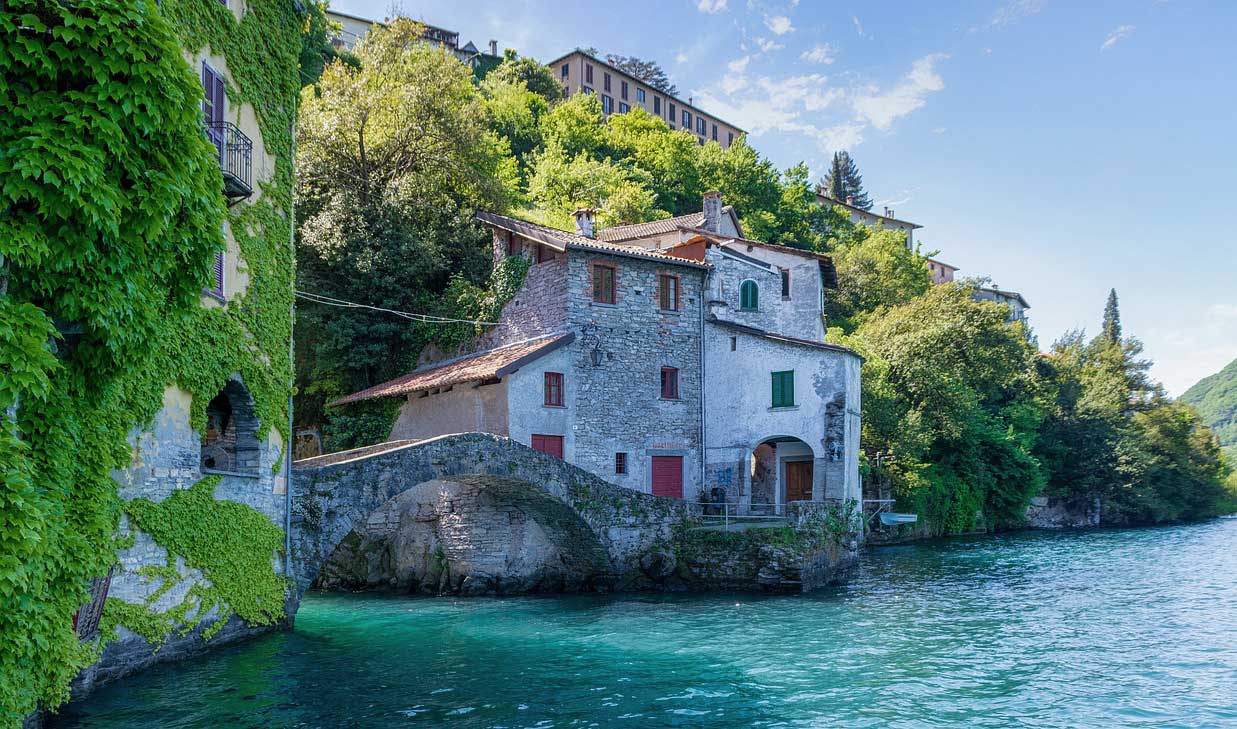
The little-known sleepy town on the shores of Lake Como lacks the glamour and buzz of the popular towns down the shore such as Bellagio. Instead, it’s a place of peace and tranquility. The pace of things in Nesso is slow, leaving you to admire the stunning lake views and enjoy authentic local culture.
As you meander from the town square down to Nesso Gorge (Orrido di Nesso), you’ll find a waterfall and an ancient stone bridge Ponte della Civera where the stream meets Lake Como. For me it’s one of the most picturesque corners of the lake. Just be ready to tackle a lot of steps on your way back up!
I can also recommend a nice and affordable place to stay and eat too – the Hotel Tre Rose – with excellent views of the lake from your balcony.
How to visit Nesso
The hidden gem town is located on the main coastal road between Como and Bellagio, and if you don’t have a car or desire to splash out on a taxi you can reach the town from either one with the hourly C30 buses. Como is easily reached by train from Milan and its 2 international airports.
Boite Valley, Veneto
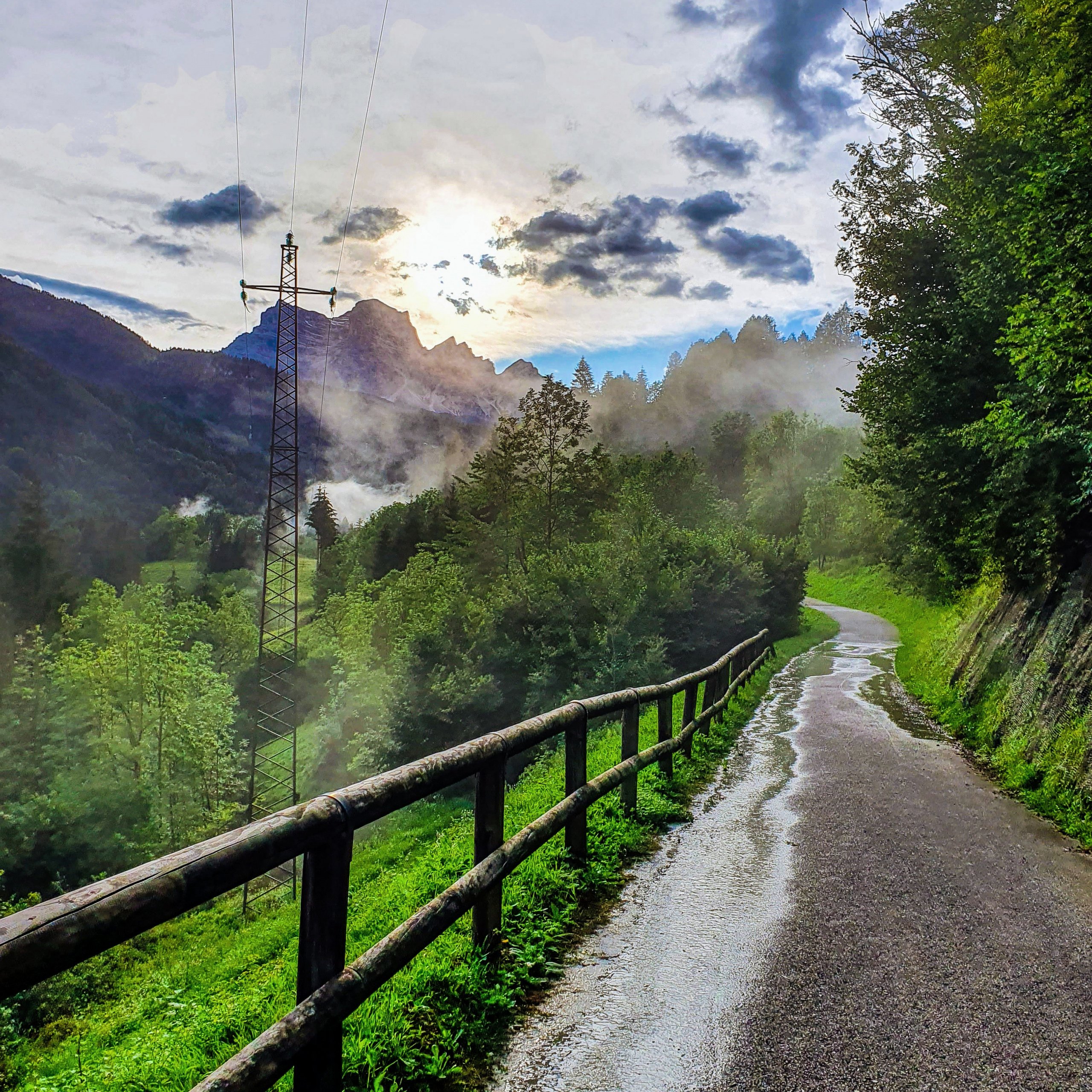
The Dolomite region of Italy offers far more than skiing and is possibly even more stunning in the summer months. One of its lesser-known yet prettiest parts is the Boite Valley, following the river by the same name and framed on either side by some of the tallest of the dramatic Dolomite peaks.
One of the ultimate highlights is the old railway track converted to a dedicated (and mostly paved) cycling path that stretches from the touristy but charming town of Cortina d’Ampezzo through quaint villages down to Calalzo di Cadore. Heading west to east makes it a very subtle but relaxing descent, yet you’ll find yourself wanting to slow down to take in the views. At one point you pass through a railway tunnel now given over to bicycle use and imagine how it might have been back in the days of steam trains.
Down near Calalzo is Lake Cadore with its remarkably green hues and another perfect spot for getting the most out of nature.
How to visit Boite Valley
Venice Airport, Verona Airport or the low-cost hub of Treviso are closest to fly into, with Austria’s Innsbruck another rail-connected option. If you want an incredible cycling route with a slight descent throughout, start at Dobbiaco (Toblach) near the Austrian border then make your way down to the valley to Calalzo di Cadore on the marked cycling route.
Hidden Gems of Central Italy
Castelluccio Plateau, Umbria: Stunning Flowering Plains in Summer

In the heart of Italy’s Apennine mountain range lies one of the most spectacular natural views in Europe – when visited at the right time of the year.
The twisty road up through Umbria’s Sibillini Mountains all of a sudden opens up to a large plateau – visually impressive in its own right. But what really makes this a spectacle is La Fioritura (literally – “The Flowering”), an annual flowering that transforms the plateau into an extraordinary display of colours from yellows to reds and violets. The exact flowering time of the lentils, daisies, poppies and cornflowers that make this spectacle varies year by year, but usually takes place from late May to mid-July which is the best time to visit.
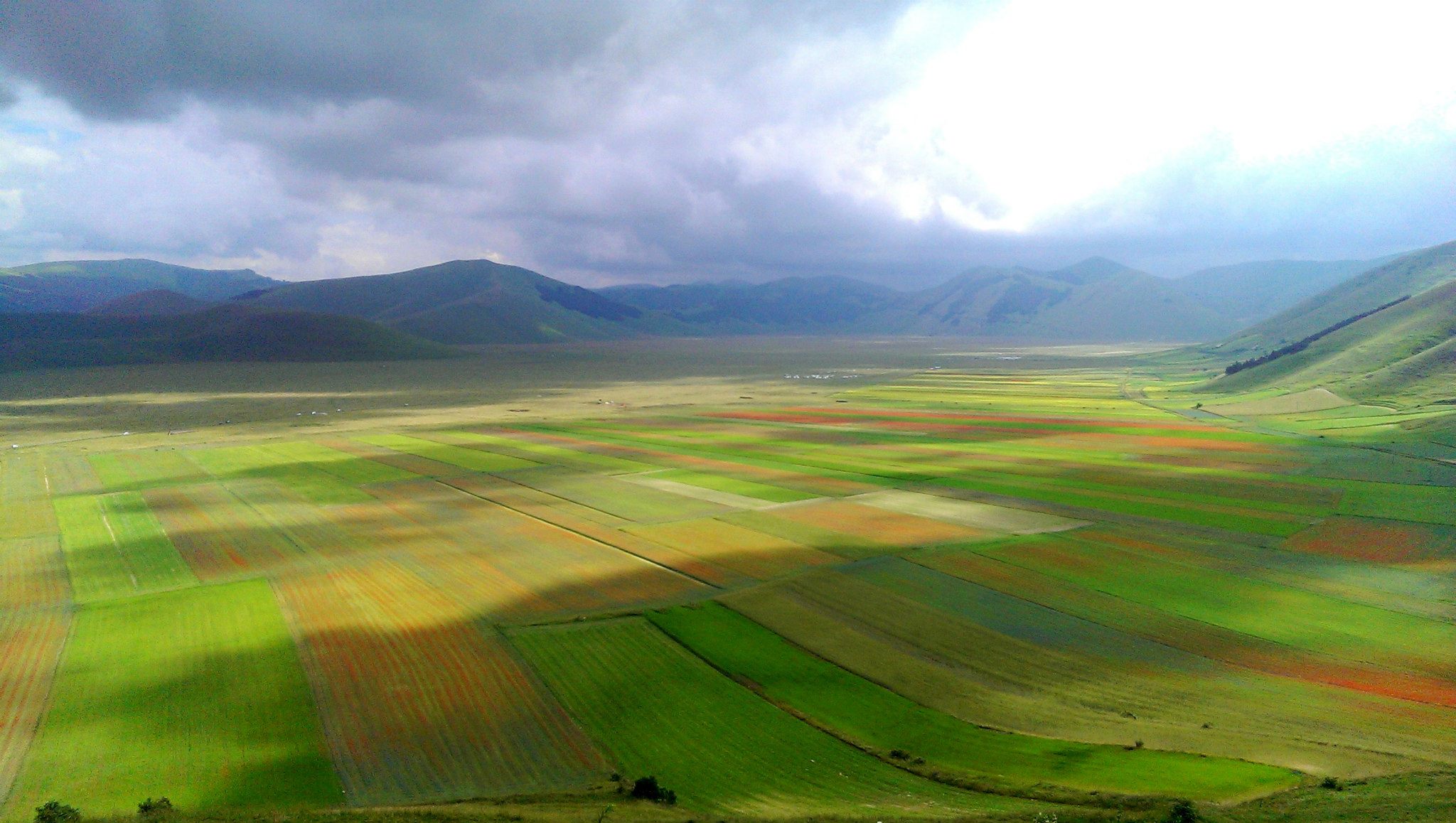
The lone hilltop village of Castelluccio di Norcia overlooks all this beauty and provides impressive views of the plateau from a different perspective. Unfortunately Castelluccio experienced a number of serious earthquakes, the latest of which as recent as 2016 left much of it in ruins.
How to visit Castellucio Plateau
Car is your friend for visiting this hidden gem, unless you want to join a day tour. Perugia, 2 hours’ drive, serves as a perfect base to visit the area, and has an airport served by a handful of international flights including London. Rome is a longer 3 hour drive.
» Read more: 9 unique nature destinations around the world
Perugia, Umbria: Medieval City with Chocolate, Jazz & Etruscan Heritage

The central region of Umbria is the hidden gem Tuscany – similar vibes without the crowds and more affordable for visiting. Perugia is the regional capital – an enchanting medieval city that’s also the Italian capital of chocolate, jazz and truffles. Perugia is the home to the famous Baci chocolates which means the Perugina Chocolate House is a must-visit for any chocolate lover. Fans of jazz, meanwhile, will want to plan their trip in July for the annual Umbria Jazz Festival, one of the most famous in the jazz world.
The rustic Old Town situated on top of a hill offers stunning views of the region and a fine selection of fantastic restaurants (if you like truffles you’re in luck!). While the Old Town is easy to explore by foot, it’s connected to the lower part of the city by Minimetro, a cute rollercoaster-like funicular thing that just seems quite fun compared to the usual buses.
It’s also a great base to explore the unique Etruscan region, whether it’s a day trip to the historic Assisi, the wildflower spectacle of Castelluccio Plateau (see above) or even a truffle hunting trip in the countryside.
How to visit Perugia
The city has its own small Perugia International Airport, served by Ryanair and more recently British Airways. Otherwise it’s a reasonable ~2 hours from Rome and Florence by train or car.
Lucca: Tuscany’s Hidden Gem

The walled city of Lucca is within an hour’s drive from the tourist Meccas of Florence and Pisa, perhaps it’s because of this that it sees a fraction of the tourists.
By all accounts, Lucca is one of the most beautiful and peaceful towns in Tuscany. You’ll struggle not getting lost in the narrow, medieval streets only to pop out eventually in one of the round piazzas. Once you’ve had enough getting lost, rent a bike for an easy loop right on top of the ancient city walls. Or climb the old Guinigi Tower for an even better view, with an oak tree growing on top.
Lucca makes for an outstanding base for exploring the region. The town enjoys easy access to Pisa Airport, Mediterranean Sea a short drive to the West, the hilly green Garfagnana region to the North and the rest of Tuscany all well-connected.
If you’re out on a car or a bicycle, make your way North to the unusually shaped Ponte della Maddalena, beyond to Bagni di Lucca and perhaps one of the harder-to-reach hilltop villages if your car is small enough to squeeze through the steep narrow streets.
How to visit Lucca
Visiting Lucca is very easy, with the nearby Pisa Airport often offering great-value flights from across Europe. From there it’s a short 30-minute train or car journey.
Urbino, Marche: Renaissance Gem Off the Beaten Path

Far off the tourist itineraries, the charming walled hill town of Urbino is a home to a university which doubles its population during term-time and hence enjoys a strong studenty feel similar to that of Bath or Durham in UK. This makes for a fun atmosphere on the central piazza by the evenings and a very decent nightlife for an otherwise small town. Besides the whole of Urbino also carries UNESCO status, and deservedly so. Once a major cultural hotspot, the town has retained its Rennaisance feel and medieval cobbled streets.
Food-wise, some of the local delicacies like the wild boar pappardelle are to die for.
How to visit Urbino
The closest airport is Rimini – 69km away, alternatively there is Ancona Airport a little further out. As trains don’t go to Urbino, a car is recommended – but the nearest train station on the Trenitalia mainline is Pesaro on the Adriatic coast.
San Leo, Emilia-Romagna: Charming Clifftop Village & Fortress
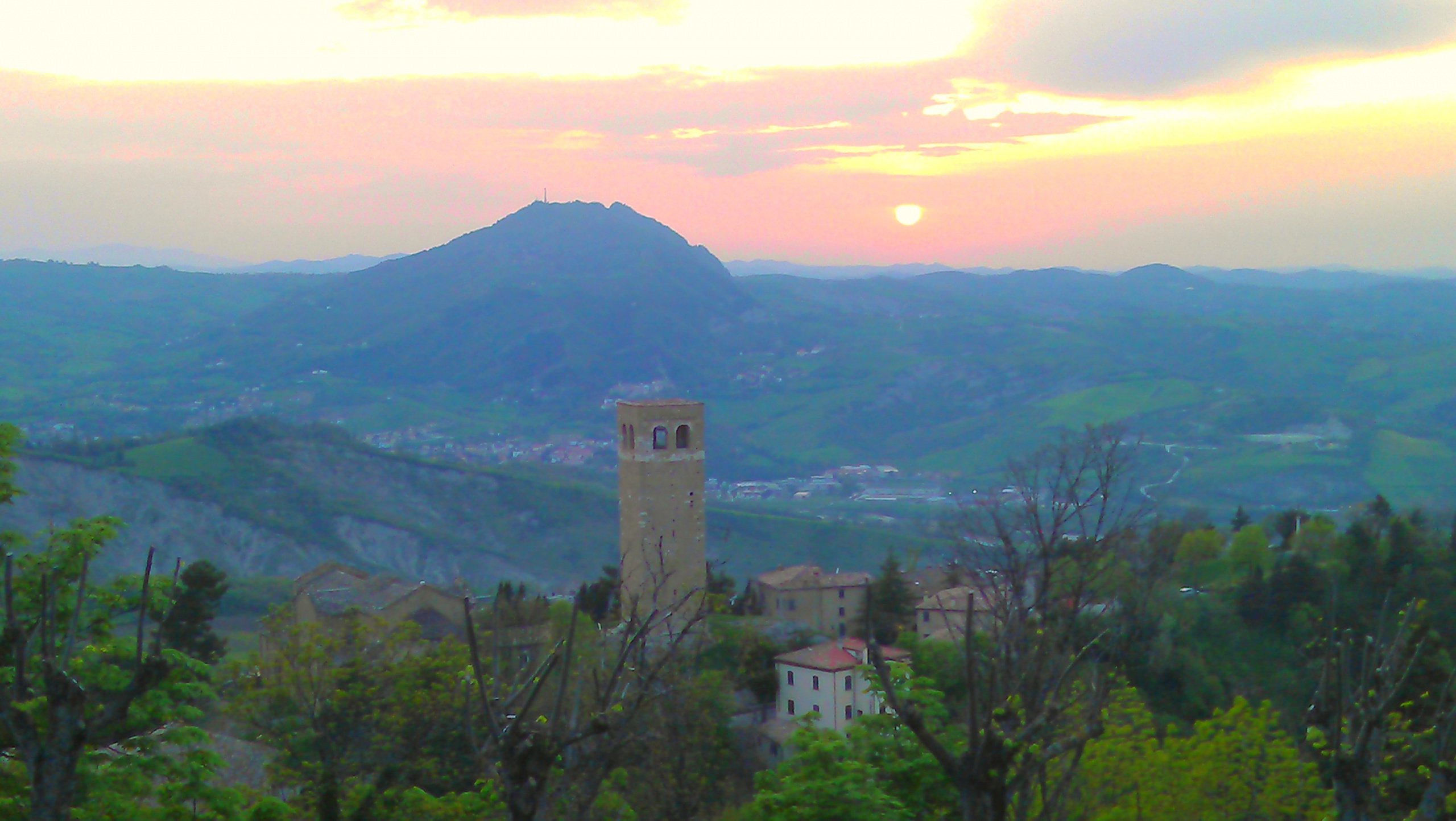
Pretty hilltop villages aren’t exactly rare in Italy, but there is something particularly special about the village of San Leo nestled on a rock a short drive away from the dwarf country of San Marino. There isn’t much to do other than wander around, walk up to the hilltop castle to sit down and simply enjoy the feeling of peace. Bonus tip: go up to the castle during golden hour, i.e. around an hour before sunset.
How to visit San Leo
Rimini is the nearest city, while the micro-country of San Marino is a short drive.
Hidden Gems of Southern Italy
Procida Island, Campania: Hidden Coastal Gem Near Naples

The small charming island of Procida is just a short ferry hop from Naples and offers the authentic and laidback Southern Italian atmosphere that has gradually been lost in the popular Amalfi Coast destinations.
Procida is so compact that you can walk from one end to the other by foot in 45 minutes, yet you’d be wise to hire an e-bike or a moped on which to explore the hidden gem island.
Unlike its more famous neighbour Ischia, there isn’t one particular ‘must-see’ sight on Procida. It’s a destination to marvel at its picturesque colourful harbours, explore its different nooks and crannies, bask in the black-sand beaches and eat your way through every bit of seafood on the local menus. While remaining an under-the-radar destination for decades, the island was picked as the Italian Capital of Culture in 2022 so visit before it gets too much mass tourism limelight.
How to visit Procida Island
It’s a very simple ferry or hydrofoil boat journey from Naples that takes roughly an hour depending on the service. Once there, there are free buses taking you around the island and you can hire mopeds or e-bikes to get around its narrow streets.
Matera, Basilicata: Ancient Stone City with Cave Homes
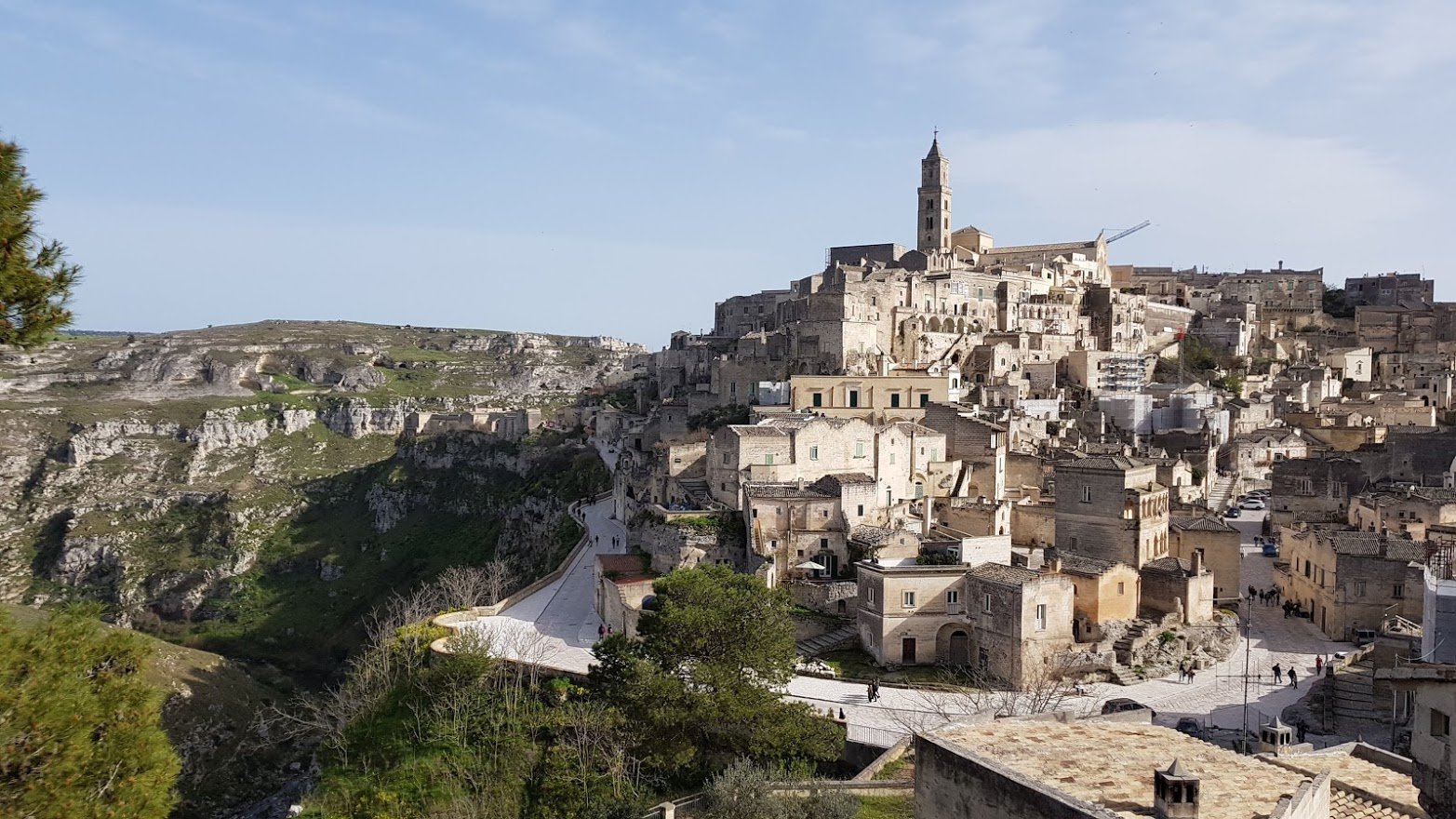
Italy’s city of stone, Matera is like no other in the world. Its borders are carved by deep canyons and the oldest parts of the city are cut into the rock that have long served as cave dwellings for its citizens. While other cave systems around the world are ancient relics of life many centuries ago, in Matera people lived in cave homes known as Sassi as late as the 1950’s. In fact what is now a growing tourist attraction was less than a century ago considered the embarrassment of Italy with its severe poverty and outbreaks of malaria. Many of the cave homes can be visited, and in fact you can even stay in one of the boutique cave hotels.
What’s most surprising is the city remained under-the-radar for so long despite being Italy’s oldest and despite its one-of-a-kind location. That is until 2019 until it jumped into the limelight as European Capital of Culture. But there is still some time before it turns into a tour-bus destination so visit sooner than later!
How to visit Matera
Matera combines perfectly as part of a road trip to the neighbouring and stunning Puglia. You can fly into Bari (closest airport and large city at around an hour by car) or Brindisi and travel around from there.
» Read More: Where to Visit in Puglia – Italy’s Hidden Gem
Alberobello, Puglia: Iconic Trulli Houses

With its surreal white-coned houses – “trulli”, Alberobello and the surrounding Itria Valley are like no other in the world. There are a load of unproven theories as to why they were built this way. One I liked most is for avoiding house taxes: as locals heard the taxman is coming they’d destroy the roof until after he’s gone, after which it could then be quite easily rebuilt.
OK, Alberobello itself is starting to get touristy but for something as unique as this, it’s still 100% worth it especially outside of the peak summer months. For somewhere more tranquil, trulli houses are dotted around the rest of Puglia’s Itria Valley. Even better, you can find one on Airbnb to enjoy your very own trullo experience. In fact with the high sealings, it’s very spacious.
Enjoy as part of an unforgettable road trip in Puglia.
How to visit Alberobello
Bari and Brindisi are the closest airports, both serving destinations across Europe. A car is recommended to get around the area.
» Read More: Where to Visit in Puglia – Italy’s Hidden Gem
Scala: Amalfi Coast’s Quiet Hilltop Village
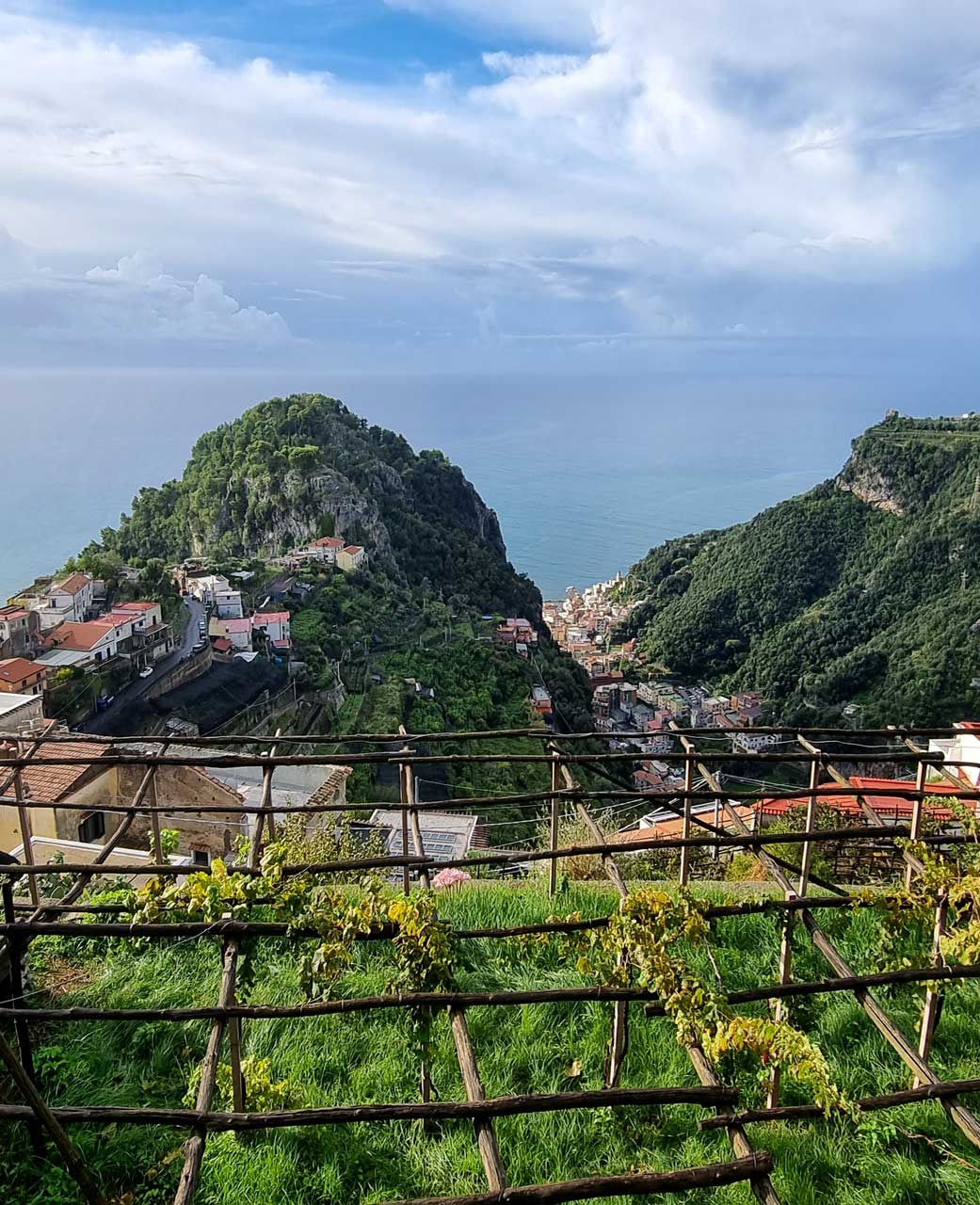
Perched high above the Amalfi coastline, the village of Scala is one of the last few spots on the Amalfi Coast that’s kept its simple, tranquil existence. Despite being next to the popular Ravello (and offering the best views of the town) as well as above the bustling town of Amalfi, most day tourists don’t make it this far. On a picturesque walk up its hilly alleys and paths you might come across transport mules, still used today to carry goods in the parts otherwise unreachable by mechanised transport. Mind, the horses seem happy not to have to lug around generously-sized cruise ship tourists.
The village that’s one of the oldest in the whole region is split into little hamlets that include Minuta and its hillside villa as well as Pontone down below with a very cute tiny piazza to observe local life on. Just be prepared for a good workout to tackle all of the steps.
With outstanding views in every direction, better-value accommodation and dining options as well as easy access to explore the rest of the coast, Scala makes for a sound hidden gem destination for an Amalfi Coast trip. It’s also just a 30-minute walk to Ravello and to Amalfi below (you can get the bus back up!).
How to visit Scala
Fly into Naples (or Rome + 1hr train), get the Alibus to Naples Centrale train station then hop onto one of the regular 40-minute trains to Salerno. From there, get the local SITA bus to Amalfi, and change to another bus up to Scala. Or get a taxi directly from Naples which (ideally arranged ahead of time) should cost €100-120 and take an hour instead of 3.
Sciacca, Sicily: Authentic Seaside Town with Festivals & Thermal Springs
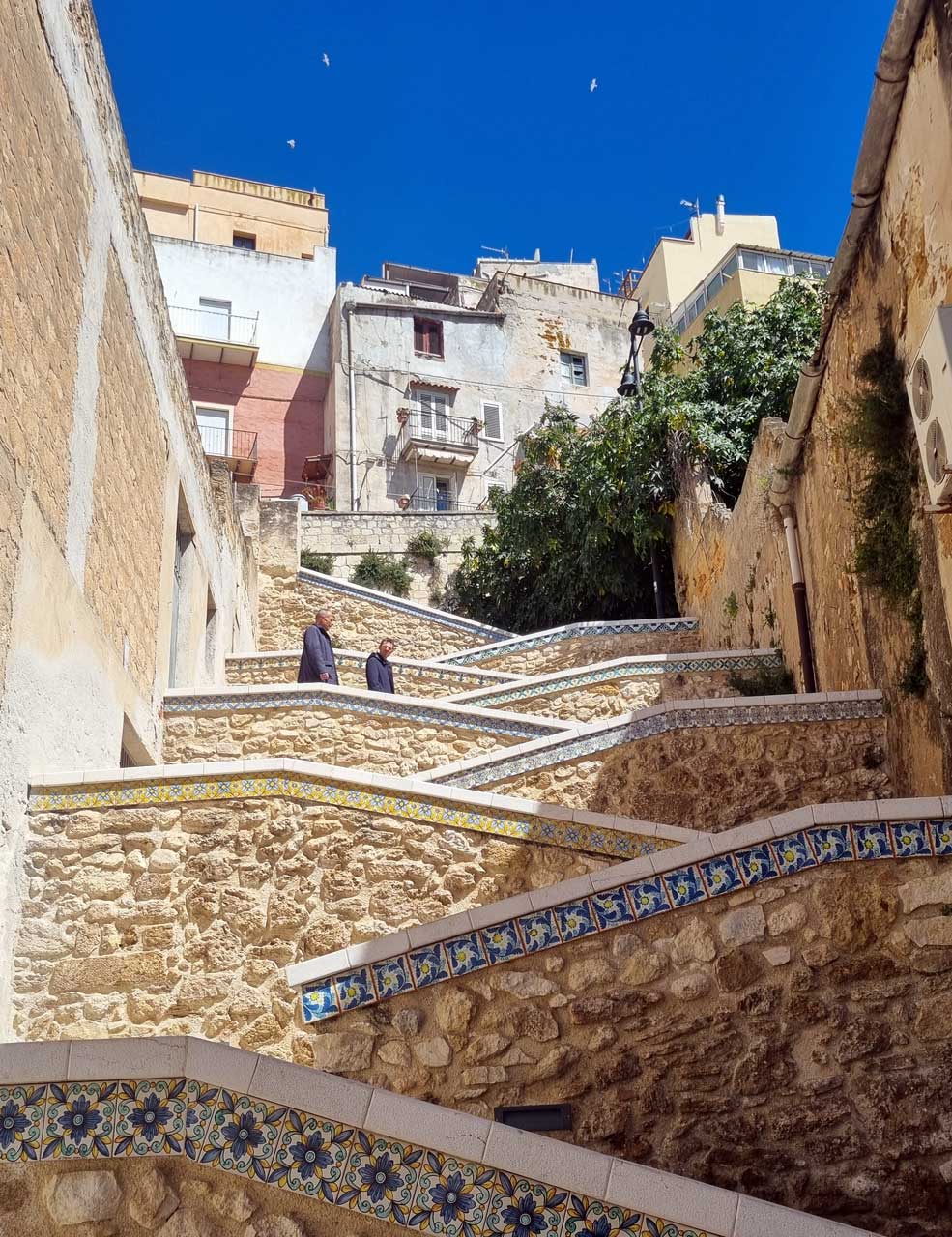

While you’re spoilt for choice when it comes to fantastic coastal towns in Sicily, Sciacca remains an under-the-radar working town which gives you a true sense of Sicilian life.
Sciacca is a vibrant and charming seaside destination on Sicily’s southwest coast rich in history and traditions – especially involving pottery and fishing. But the town is most famous for its annual 4-day Sciacca Carnival, usually taking place in February, one of the biggest in Sicily. The streets come alive with parades, colours of masques, costumes, music, dances and traditional cuisine.
But there’s plenty to enjoy if you don’t come specifically for the Sciacca Carnival. This stretch of Sicily’s coast is adorned with picturesque sandy beaches and azure waters, some walking distance from Sciacca itself. And for a break from the Mediterranean waters, relax in one of Sciacca’s ancient thermal springs – another thing this destination is famed for.
Not far down the coast you can take a trip to the spectacular Scala dei Turchi (Turkish Steps), a step-like white rocky cliff which the Turks allegedly climbed on one of their raids of Sicily.
How to visit Sciacca
The town lies on Italy’s southwest coast, roughly 1.5 hours’ drive from both Palermo and Trapani airports. So while it can be done as a day trip, it’s the sort of place you’ll want to spend a couple nights. Sciacca combines with an idyllic road trip of Italy’s south and west, going from Marsala along the coast and onto Sicily’s historic Agrigento and Noto valleys.
Note: Sciacca doesn’t have a train station.
» Read More: Round-Sicily Adventure by Bike
Altamura, Puglia: Hidden Gem Town Famous for its Bakeries

If you like your dough you won’t want to give this less-known inland Puglian town a miss. Altamura is especially famed for what many call the best bread in the world. The walled town is home to Pane di Altamura, so special that it’s the only bread to have been classified DOP (Protected Designation of Origin) in Europe. Made from durum wheat from ancient recipes, the wonderfully soft, aromatic loaves taste heavenly simply with some quality olive oil and salt.
No stop in Altamura is complete without a visit to one of its traditional bakeries offering some of the finest Pugliese focaccia, taralli, biscotti and much more. I recommend Panificio del Duomo (near Altamura Cathedral) for the ridiculous variety of freshly baked bread products, the likes of some you’ve probably never seen.
Once you’re stuffed with dough, the town itself has an interesting city centre to walk it off, including an impressive Romanesque cathedral and the medieval walls. I also found it a great place to watch local life in a city not so familiar with tourists.
How to visit Altamura
Bari has the closest airport, Brindisi Airport being another option a little further. A car is the best option in Puglia, a scenic 1-hour route from Bari will take you past more olive trees than you’d have seen in your life.
» Read More: Puglia Travel Guide
So there you are! Hopefully you’ve been inspired to visit some of the lesser-known and unsung parts of Italy. What do you think of this list of Italy’s hidden gems? Let me know in the comments!

1 Comment
Anisha
Love Italy but its been too long. You’ve inspired me to return, Pulgia and Matera look incredible!