
Japan needs little introduction — it’s long been a beloved destination for its unique culture, cuisine, and gorgeous scenery. What it’s less famous for, perhaps, is as a bike touring destination. Aside from the stunning island-hopping Shimanami Kaido, there aren’t many well-known or official cycling routes that are widely recognised outside the country.
Yet Japan is remarkably bike-friendly, and Western Japan in particular offers some of the most rewarding touring you can find.
Why Tour Western Japan?
First, the variety. On a single ride across Kyushu and Shikoku you’ll experience volcanic highlands, dramatic coastlines, historic towns, underrated cities, and quiet mountain valleys. You can opt for flatter coastal stretches, or tackle challenging climbs with equally rewarding views.

Second, the roads. Kyushu and Shikoku are generally quieter than Honshu, Japan’s main island. You’ll also get to ride across smaller islands where traffic is minimal — often with dedicated bike lanes.
Finally, the food. Western Japan is home to an incredible spread of regional specialties: rich tonkotsu ramen, Shikoku’s sea bream dishes, and Hiroshima’s unforgettable okonomiyaki, to name just a few.
But hold on – do you even need convincing? The real challenge isn’t deciding whether to cycle here — it’s figuring out where to ride and what to leave out.
That’s where this Western Japan Bike Touring Guide comes in. I’ll share the day-by-day bikepacking route I ended up doing after much research, with downloadable GPX files for each section. I hope it gives you a clear idea of what to expect from touring Western Japan, and inspires you to plan an epic trip of your own.
Western Japan Bike Tour Overview
At just over 1,000km, the route covers 18 islands – including 3 of Japan’s big 4 – Kyushu, Shikoku and a little bit of Honshu.
I commence the ride in the city of Fukuoka on northern Kyushu, exploring the NW coast before making my way down to Nagasaki and Kumamoto. The route goes through the picturesque volcanic landscapes of Aso Caldera and Kuju Mountains, descending down to Japan’s thermal hot spring capital region. From Beppu, I catch a ferry across to Shikoku. I explore Shikoku’s coast, river valleys and its highest mountain roads.
The final section is easy riding across the islands of Inland Seto Sea, via the famous Shimanami Kaido and the lesser-known Tobishima Kaido – finishing in Hiroshima.
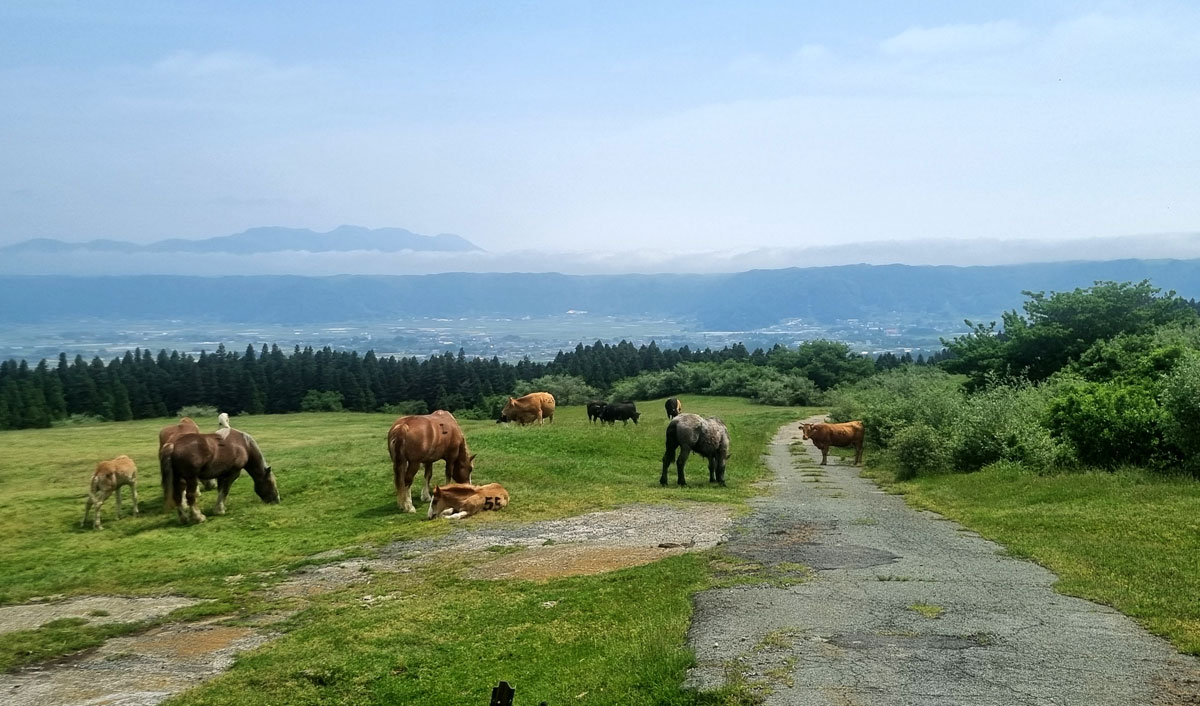
This isn’t an easy tour with gentle climbs. If you’re looking for one of those – consider the island hopping part, or aim for coastal, round-the-island type loops. What this bikepacking-friendly itinerary offers is a solid balance of easy, mostly-flat days mixed with some days of tough climbing – which adds up to around 12,000m elevation gain.
I covered this in 10.5 of cycling days doing averaging around 90km a day, although this itinerary easily lends itself to being extended to 2–4 weeks – if you have the luxury of more time!
I’ve split the itinerary for the western Japan bike tour guide into 2 roughly equal parts – Kyushu; and Shikoku along with the island hopping section in the Seto Inland Sea.
Part 1: Kyushu
Total Distance: ~520km
Total Elevation: ~6,500m
Highlights:
- Fukuoka’s food scene
- The seaside pine forest of Komatsu
- Okawachiyama Village and Japan’s porcelain capital region
- Terraced rice fields of Hamanoura
- The cities of Nagasaki & Kumamoto
- Aso Volcanic Caldera
- Kuju Mountain Pass
- Japan’s hot spring heartland
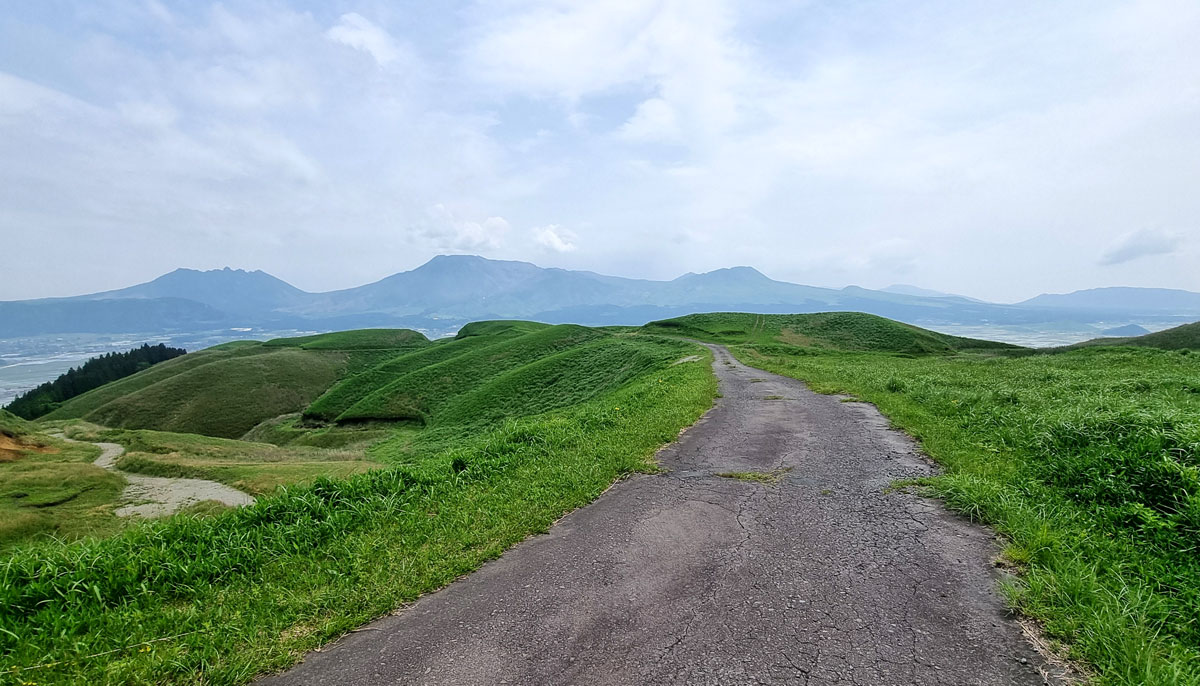
» Read Part 1 – Kyushu Bike Tour
Part 2: Shikoku, Shimanami Kaido & Tobishima Kaido
Total Distance: ~530km
Total Elevation: ~6,000m
Highlights:
- UFO Line – the breathtaking “road in the sky” along mountain ridges
- Shikoku’s scenic coastal riding
- River valley gorges
- Historic towns of Ozu & Uchiko
- Shimanami Kaido and its state-of-the-art cycling infrastructure
- Quieter Tobishima Kaido island hopping route
- Stunning views of Japan’s Seto Inland Sea
- Local seafood & citrus delicacies
- The city of Hiroshima (finish point)
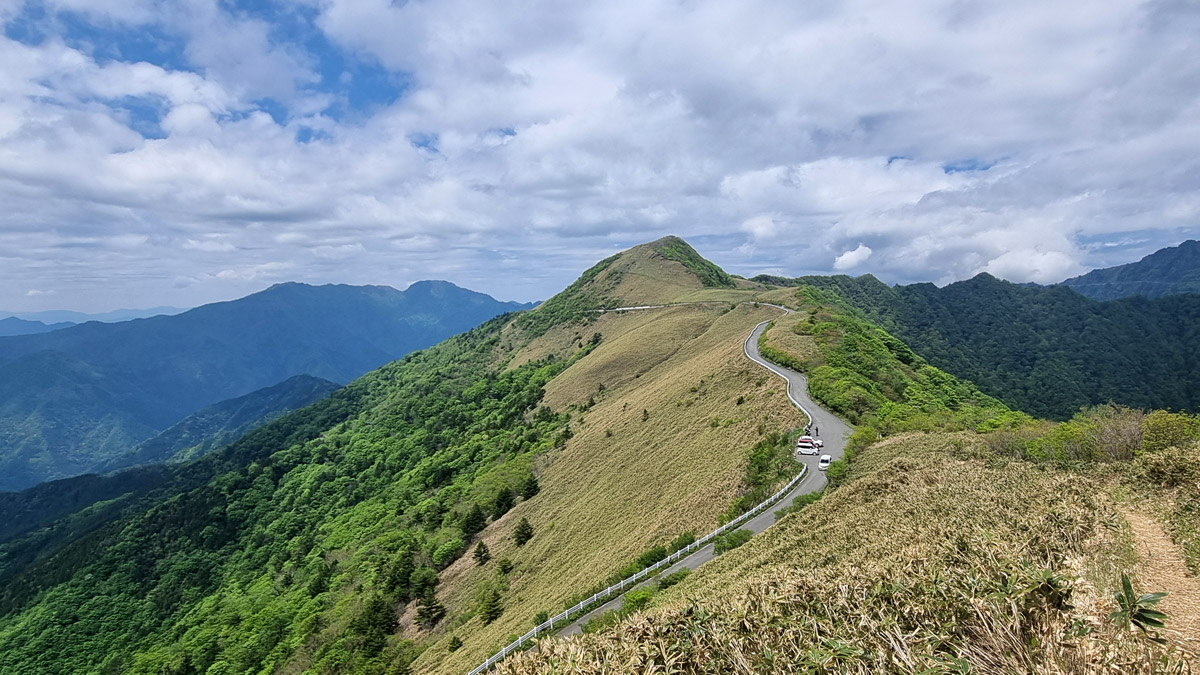
» Read Part 2 – Shikoku, Shimanami & Tobishima Kaido Island Hopping
Western Japan Bike Tour FAQs
What’s the best time to bike tour Western Japan?
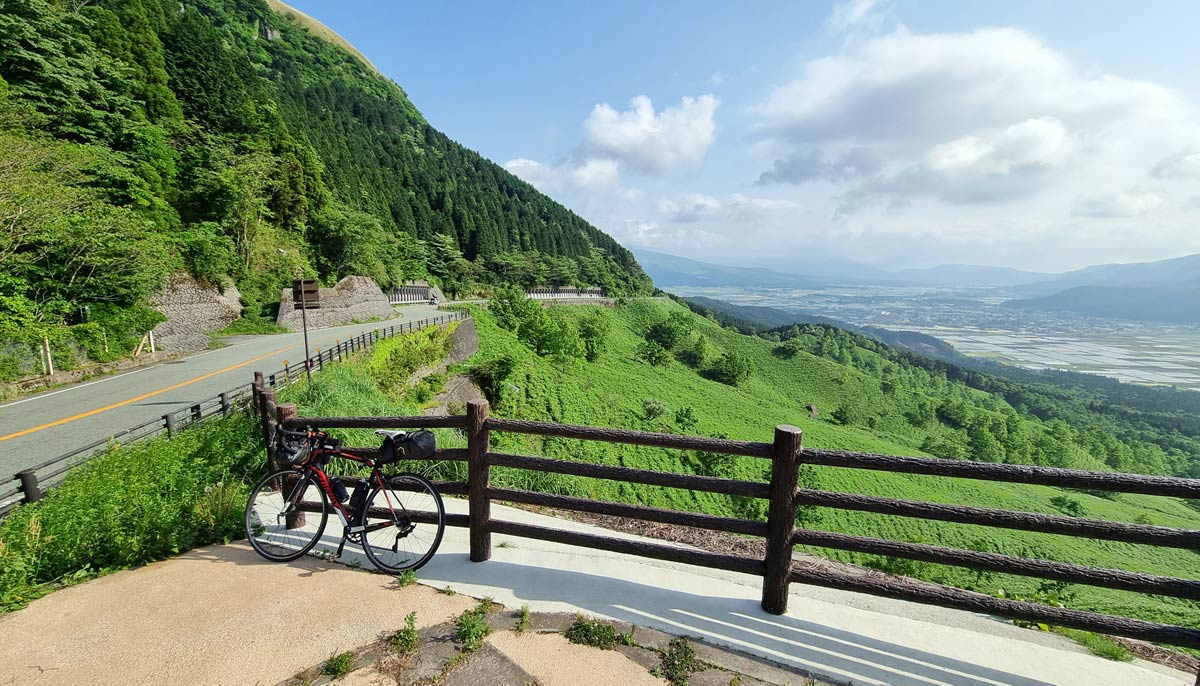
The best time to tour Western Japan is spring (April to May) or autumn (mid-September to early November).
Why spring and autumn are ideal
Spring (April–May) → Warm but not too hot, with cherry blossoms in March/early April if your timing is lucky.
Autumn (late September–early November) → Mild temperatures and brilliant autumn colours, especially in the mountains.
Seasons to avoid
June–July → Rainy season; when it rains in Japan, it often pours all day.
July–August → Oppressively hot and humid, with highs over 30°C.
Winter (Dec–Feb) → Coastal areas are manageable, but mountain passes (like Aso or Shikoku’s highlands) may be snowed in or icy.
My own experience
On my May tour, I cycled for 11 days:
5 days were sunny
4 were cloudy
2 were full days of heavy rain
Temperatures reached up to a sweaty 32°C on the hottest days, but it never felt cold.
How long does it take to tour Kyushu & Shikoku?
Anywhere from 10 days to a month.
The real answer is – as long as you have! Being limited to a 2-week annual leave, I managed the above bike tour route within 10.5 cycling days from a total of 14.5 days in Japan – and managing to fit in a rest day. That averaged 90-100km per day with some big elevation days – so depending on your touring preference and fitness, you may well want to cut the route or extend your stay.
How difficult is a bike tour in Western Japan?
You can make your Western Japan tour as easy or difficult as you like.
The cycling tour I’m sharing today is a mix of easier and challenging days with plenty of climbing. So a perfect balance to me – although you’d need to be comfortable with long, big climbs for a couple of the days. The cycling days range from around 600m to 1,800m elevation gain per riding day – better suited for bikepacking than full-gear touring.


Coastal routes are mainly flat but often busier, while most of Japan’s inland routes tend to get hilly or mountainous. For the most interesting routes and maximum variety, I’d suggest being comfortable with going inland and doing some climbing. For the same reasons, it also helps to keep your luggage to the minimum, and Japan lends itself well to credit card touring.
If you’d like an easier overall route, do the island hopping of Shimanami or Tobishima Kaido (or better – both), then consider another coastal route – for example Shikoku, with maybe a couple river valleys for variety.
What are the best bike routes in Western Japan?
There are many outstanding routes across Kyushu and Shikoku to choose from – but of the places I meticulously researched and toured myself:
- Aso Caldera – climbing the ridges and cycling down into the giant caldera the size of a big city. Gorgeous volcanic landscapes with miles of rice paddies down in the crater – and a chance to cycle up to an active volcano.
- Cycling the UFO Line “Road in the Sky” in Shikoku’s Ehime Prefecture. It’s a tough one (mostly getting to it) – but was absolutely the highlight of my tour in Western Japan.
- Shimanami Kaido and Tobishima Kaido island hopping – definitely the safest, most beginner-friendly and undeniably scenic routes in the Inland Seto Sea, much of the routes being on dedicated bike paths and quiet coastal roads.
- Shikoku’s coastal route – many to choose from (some end up doing the full round-Shikoku island loop), but I can certainly vouch for the west coast roads (like the 378 road) – very quiet and offer an excellent mix of scenery from fishing villages and cliffs to sandy beaches. It’s also fairly easy and flat riding most of the way.
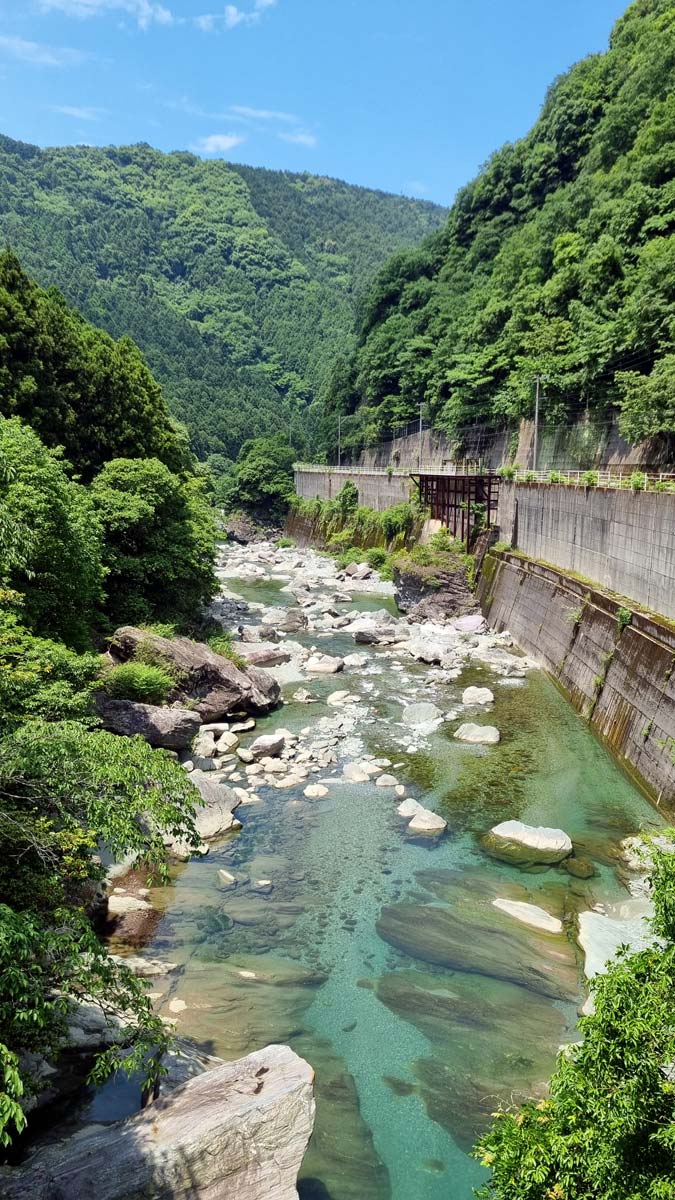
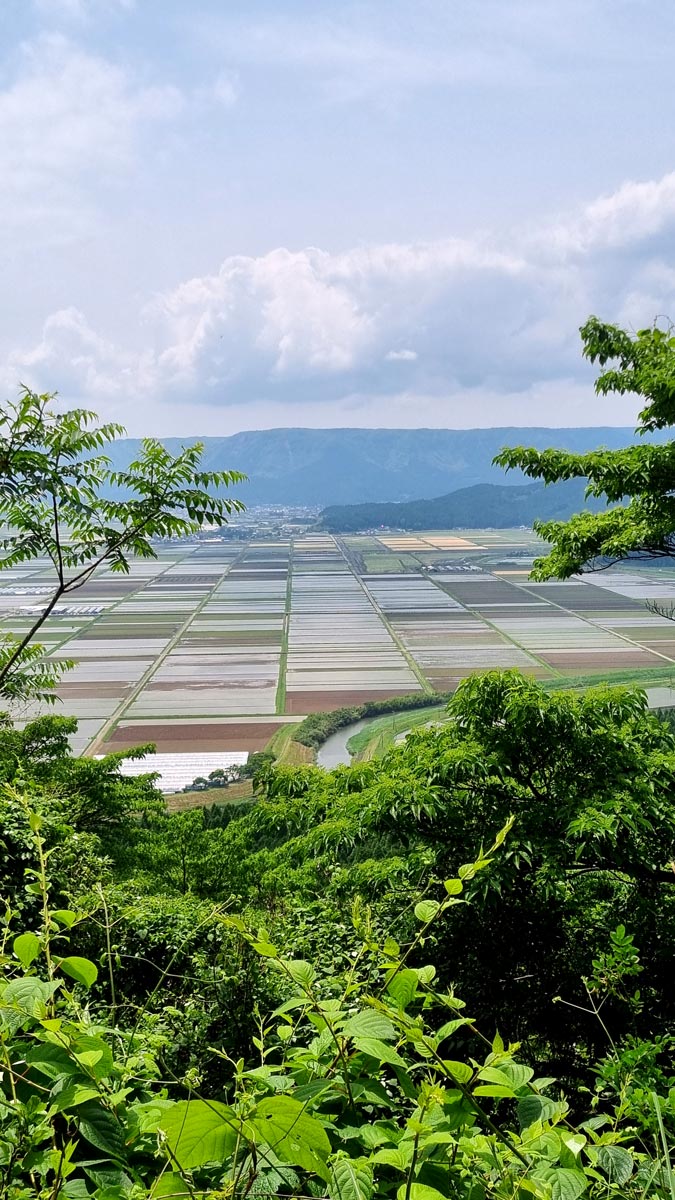
For full disclosure – I haven’t cycled all of Western Japan and those are the top top highlights of the route I ended up doing, and together they combined well logistically to form an excellent 2-week route.
If I had more time in Western Japan, I’d love to have explored the Iya Valley and follow the Shimanto river on Shikoku, as well as the Kirishima Mountains further south in Kyushu.
Where should you start and end a Western Japan cycling tour?
I started in Fukuoka as it was the best option for flying into, but if you were to start, say, in Nagasaki or Kumamoto then this also works fine. It’s entirely up to you and mainly based on the best logistics. It’s certainly more flexible if you bring your own bike.
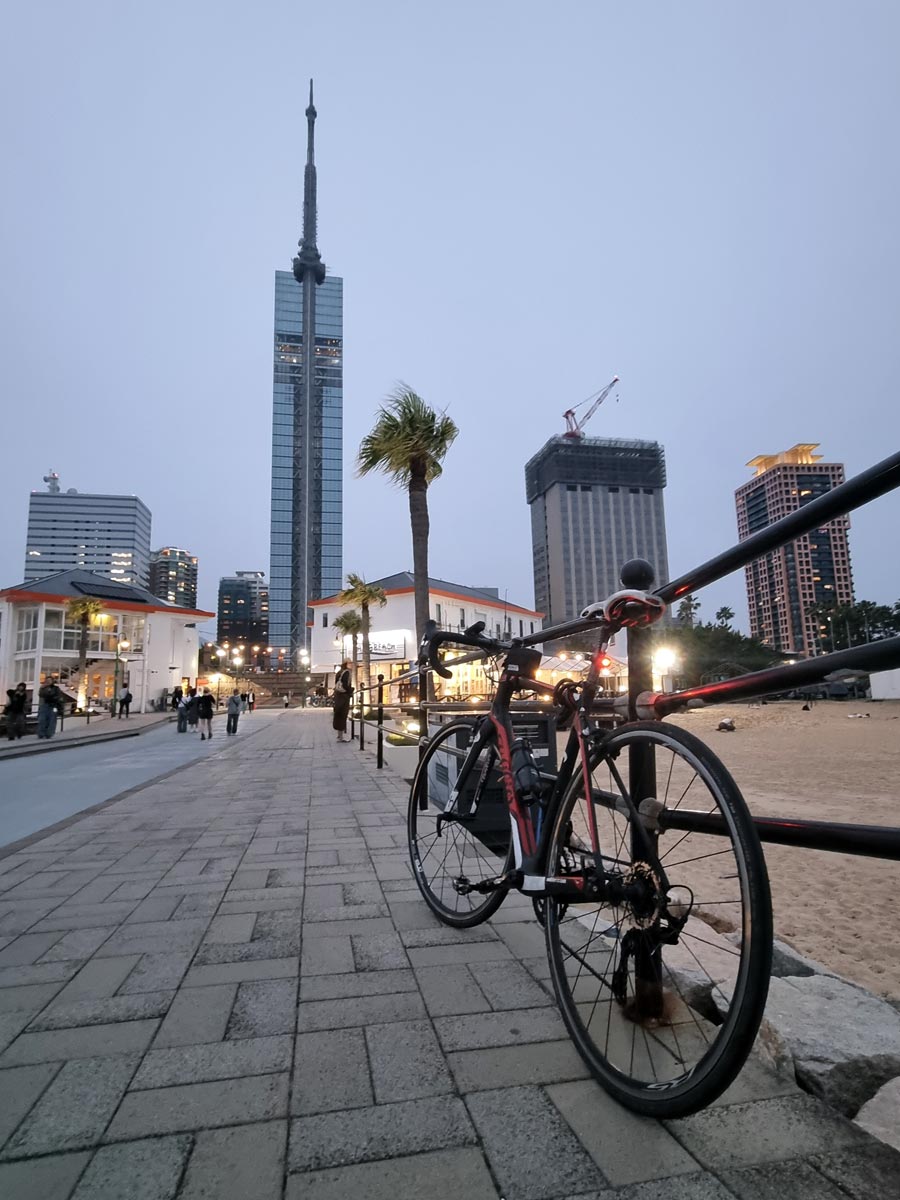
If you plan on renting a bike, you might consider starting with Shimanami Kaido – for example in Onomichi. Higher-end bike rentals are fairly limited outside of the biggest cities, and thanks to its popularity, the start and end towns for Shimanami Kaido are an exception to the rule. Of course you could also try rent e.g. in Tokyo or Osaka and bring your bike in a rinko bag o a shinkansen train to start where you want.
Outside of winter, Japan doesn’t really have a single prevailing wind direction like you get in Europe – so you could reverse the directions without committing yourself to an entire tour of headwinds.
If I were to do the tour again based on what I know, I’d get the train from wherever to Kumamoto, and either explore some more coast further south, or explore more inland Shikoku in addition to what was in my route.
Can I take a bike on Shinkansen?
In short – yes – it’s allowed, but you have to buy a rinko bag. Which is a fairly basic, packable bag to store your bike in – and you’ll have to remove the wheels in order to fit your bike. You can get one in any bike shop in Japan and they’re fairly cheap – or you can try get one in your home country in advance but that seems unnecessary.
For shinkansen trains (the fastest way to get around Japan): Once you have a rinko bag, you may want to book an oversized luggage reservation when purchasing a train ticket. This should land you a seat near the end of the carriage, as this is the area with the extra luggage space where you’ll end up fitting your rinko-bag-covered bike. Ideally book at least a day ahead to ensure there’s space.
Taking bikes on coaches, buses and ferries
Coaches/buses: Rinko bags should equally be accepted on coaches that have undercarriage storage space – but it’s best to check with each company. In fact I had no issues getting my bag in a bigger bike bag on the shuttle coaches coming to and from Fukuoka / Kumamoto Airports either.
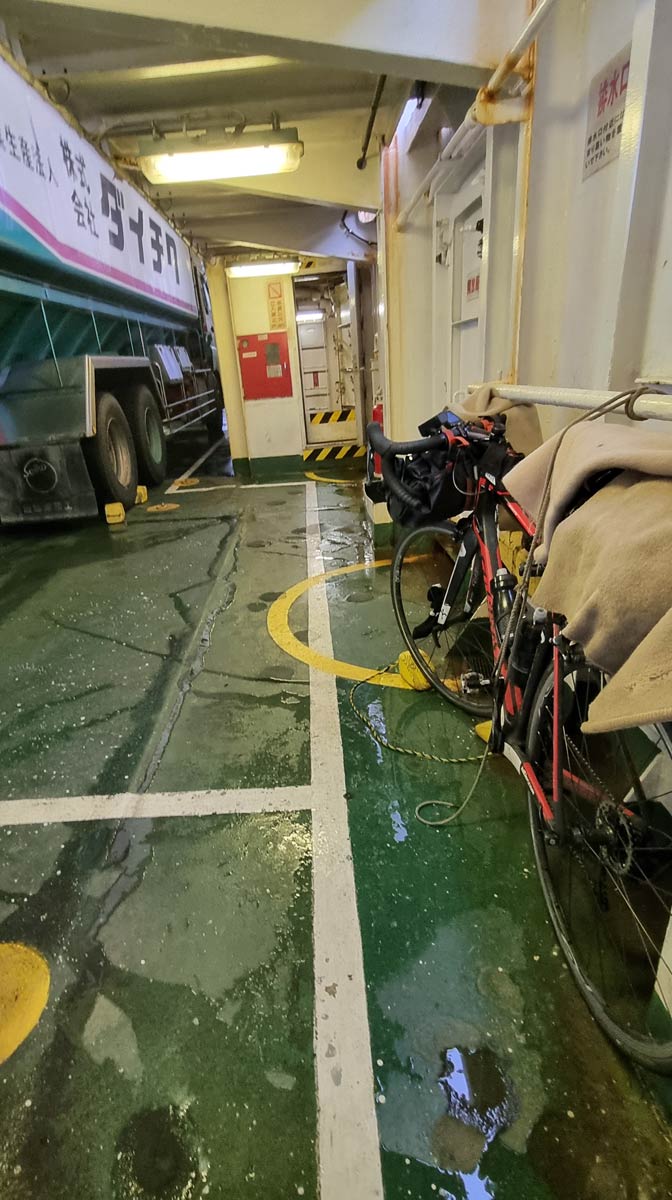
With ferries it’s the easiest – if they take cars, they’ll definitely take bicycles. And unless it’s some sort of peak travel period to/from that place – you’ll usually be able to get a space on the day. Just follow the helpful staff instructions on where to wait to board, leave the bike etc.
Where do I book accommodation in Japan?
For credit card tourers, accommodation options are plentiful and typically easy to find at short notice unless you’re visiting a remote area or travelling during peak seasonal events like golden week and the cherry blossom peak.
In terms of apps/websites: for best coverage, use a combination of Agoda, Booking.com and Rakuten Travel. You’ll often find some places listed or available on one app and not the others, sometimes at different prices or promos.
Some of the more local places won’t show up on any apps. The best way to find those would be by searching accommodation “in this area” on Google Maps, then seeing if they have a website through which to book. That’s how I found an amazing mountain-top lodge in Shikoku. Just don’t be surprised if they don’t have an English-language version.
What types of accommodation can I expect in Japan?
So the main types of accommodation you’ll come across are: hotels, ryokans, guesthouses, apartment rentals and love motels.
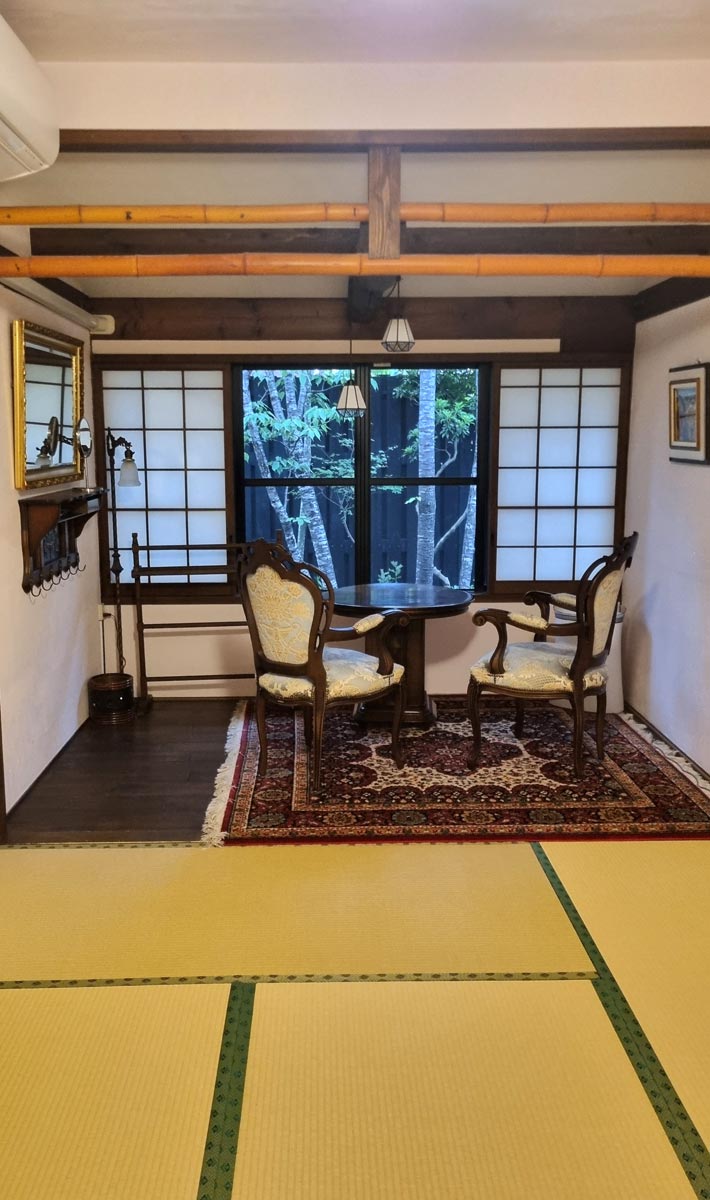
For the most Japanese experience, try the ryokans (and minshukus, the smaller version) – which are often family-run and normally feature traditional tatami mats with mattresses laid out on top, as well as some level of spa facilities which can be perfect after a day’s riding. They’re more likely found in smaller towns out in the countryside, and of course hot spring towns like Beppu and Yufuin which are famous for their thermal spa ryokans. Oh, and you get some great breakfast (and sometimes dinner) sets included in your stay.
Hotels (usually business hotels) are obviously convenient and can be pretty good value outside of the big cities, especially if they offer buffet breakfast – but tend to be a bit more generic in their nature. You can sometimes bring your bike in the room, but I’ve had mixed results with that.
Guesthouses and hostels are usually the cheapest option – albeit least private as you’d expect. And they’ll vary widely in quality and availability of safe space to leave your bike.
Love motels are so called for the locals’ romantic desires and are often rented by the hour as well as per night. But they tend to offer good value for the passing cyclist. Motels offer the best chance to find a room on the spot if you haven’t booked in advance. Chances are you won’t find a love motel on the likes of Booking.com anyway.
And with apartment rentals – you can find some on Booking.com and Agoda as well as Airbnb – these will typically be in high-rise blocks in cities. Some may just have a mattress on the floor.
With regards to WarmShowers – I’ve not come across many in Japan – at least ones that were conveniently enroute. But you might have more luck.

Best Apps for Planning Cycling Routes in Japan
I’ve found the combination of Komoot and Strava Route Builder to be perfectly sufficient for on-the-go route planning in Japan – alongside tips from past tourers. Google Maps is OK for city cycling but I’d avoid like the plague in the countryside – unless you have an all-terrain mountain bike perhaps.
Navitime is another, Japan-specific route app you could try – but to be honest I found Komoot and Strava sufficient.
Of course you are also free to download and use the GPX routes I’ve provided for each part of my Western Japan Tour!
Food & Snacks in Western Japan
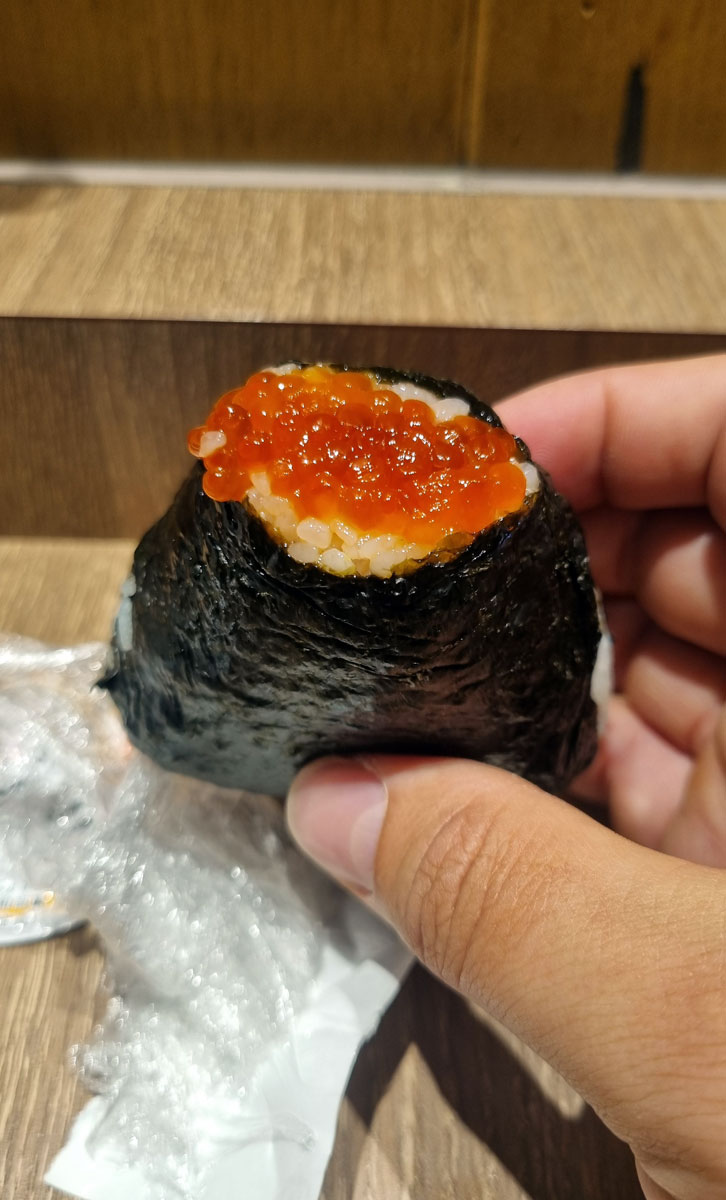
Konbini: Bike touring Japan is made simple by the near omni-presence of konbini – always-open convenience stores, mainly 7-Eleven, Family Mart and Lawson. There’s a great and affordable selection of both snacks and full on meals, including some hot food. Some of my favourite konbini snacks include onigiri (those filled rice triangle wraps), weirdly delicious egg & mayo sandwiches as well as soft boiled eggs – ideal for breakfast.
You can heat the food on the spot and there are sometimes seats and tables in the konbini. As you’ll quickly learn, they’re also the only places that tend to have bins.

The only exception where you need to plan ahead are the most remote areas of Japan, like the mountains of Shikoku or some of the more desolate coastlines. While you may still come across drink vending machines (which are conveniently found even in the middle of nowhere), you’ll want to pack some food for these sections.
Restaurants: Japanese cuisine doesn’t need selling – it’s famously outstanding – and restaurants tend to be quite affordable. One of my favourites are izakayas – where you can sit at the bar and often watch the food being made. But then you’ve got everything else – from ramen or katsu curry specialists to excellent Italian restaurants. And all the regional specialties that are abundant in every self-respecting area or city.
Food in accommodation: Many hotels and especially ryokans offer often-filling breakfast, but best worth checking when you book if it’s already included.
Are cards accepted in Japan?
Mostly – yes. Having visited in 2016 then 2025, I’ve found that there’s been a dramatic improvement on the credit card payment front. You’ll still need to have cash handy, but on the 2025 bike tour I’ve rarely come across hotels, restaurants or cafes that didn’t have a card machine. You may still need cash
ATMs are usually available in konbini stores, as well as across towns and cities.
Tip: Consider getting an IC card while in Japan. They’re top-up cards that you can use in a range of places from konbini to regional public transport. They can be downloaded digitally on your phone or bought at train stations and convenience stores. The one most used in Western Japan is ICOCA.
What are Japanese roads like for cycling?
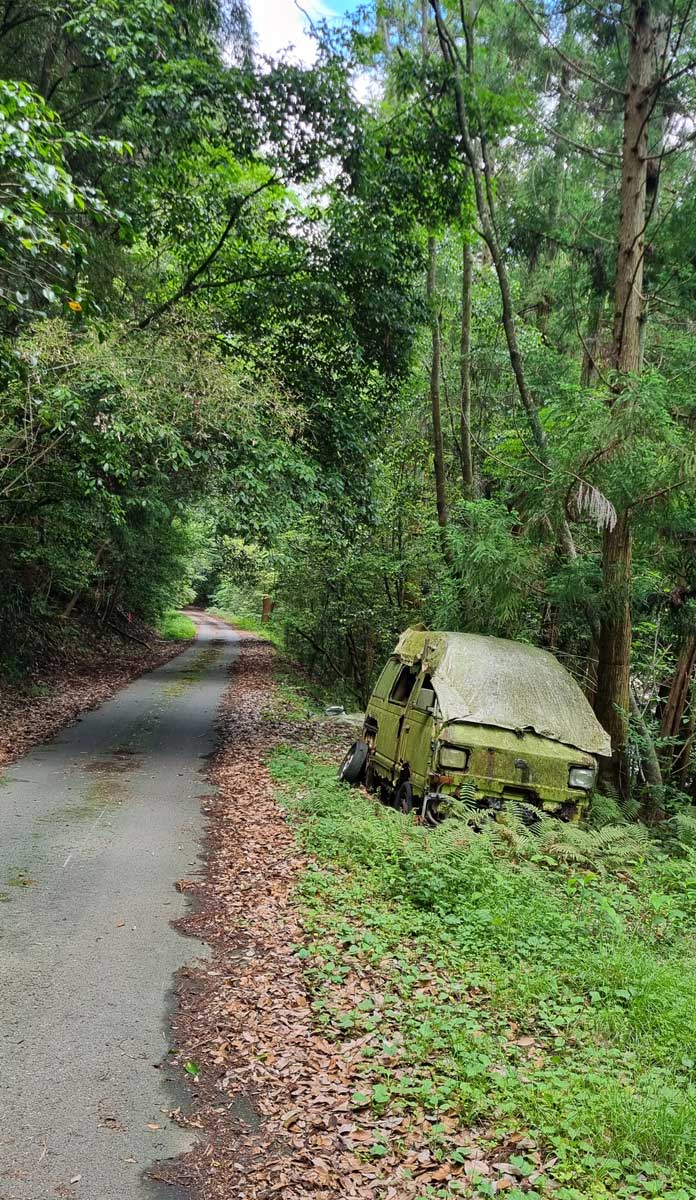
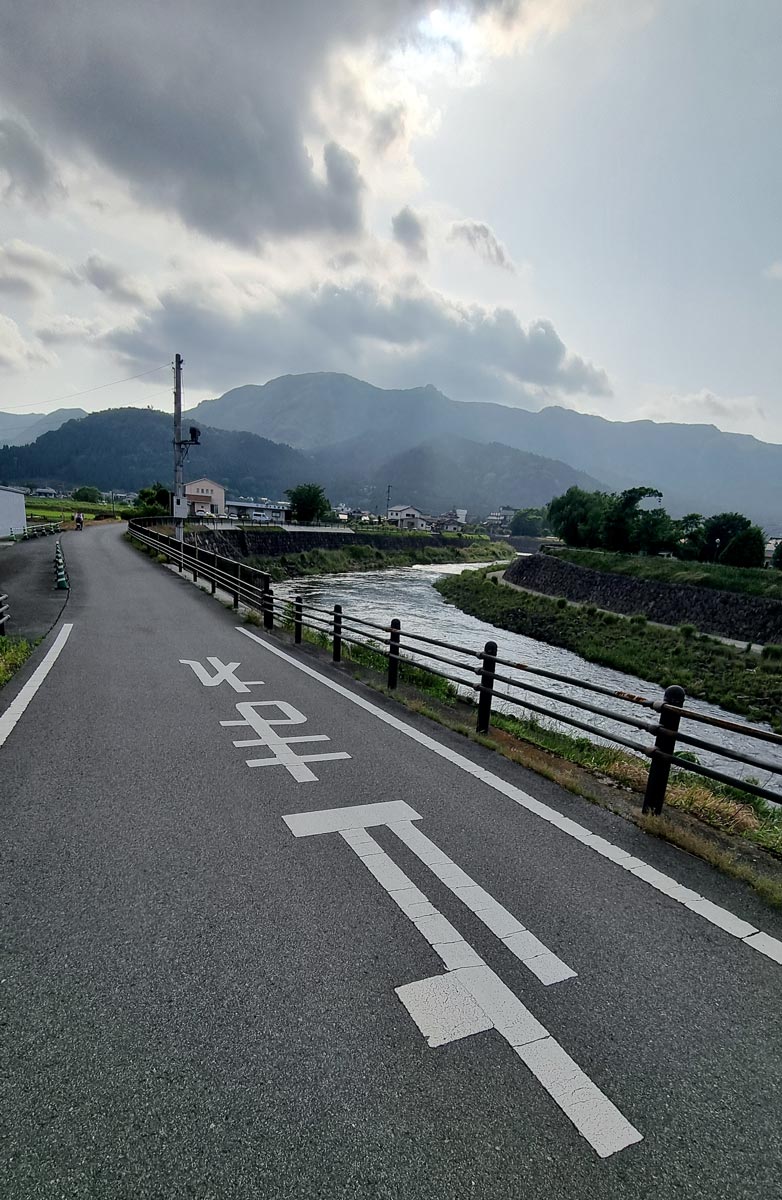
Aside from a few dedicated cycling paths like the Shimanami Kaido, you’ll usually find yourself sharing the road with cars on both Kyushu and Shikoku. Of course, the roads vary greatly in how busy they get – the good news is you can usually find alternative quiet roads running in parallel to the busier arteries.
As a rule-of-thumb, the coastal roads on the main islands are usually busiest – so I’d suggest avoiding those where possible by either heading a bit inland or picking local streets that run alongside them. And importantly – there are normally pavements you can hop on both in the city and outside – although this does vary by city and prefecture.
As Japan is a mountainous country with great engineering, there are plenty of tunnels. So have your lights ready. Most I cycled had a raised section you can cycle on and were well-lit – but there were a few exceptions.
Quality-wise, most roads in Japan are very well maintained. It’s no surprise – as cycling Japan you’ll often come by active roadworks seemingly in the middle of nowhere.
Is cycling in Japan safe?
Yes. Having covered over 1,000km in my 2-week adventure on a full mix of roads ranging from the smallest country roads to a few busy A-roads, I experienced little trouble other than one unnecessarily close pass on an overtake. That can happen anywhere.
Japanese drivers are generally safe and relatively slow (if you compare to somewhere like Italy), and also respectful of cyclists. In my experience you’re more likely to be given a snack than honked at. Maybe that’s because I looked desperately knackered.
Japanese drivers: more likely to hand you a snack than honk
If you do find yourself on a busy road, chances are there will be a verge or hard shoulder you can hop onto – those are usually provided.
You might also be interested in Bike Touring in South Korea: A Beginner’s Guide – some tourers like to combine the neighbouring countries into a bigger tour.
For more cycling holiday inspiration, read my guide to the 14 Best Hidden Gem Cycling Destinations Around the World.
Found this guide useful? You can support the site with a coffee ☕ — it helps cover hosting costs.


2 Comments
Jacob
Hi Nikita,
I’ve decided to go bikepacking Kyushu and Shikoku in October. Your website is such a great source of information. I’m still unsure if my 46/30T front chainrings and 36T cassette will be enough to climb those hills however. I was wondering if you remember the bike drivetrain specs you used on your trip.
Thank you so much for the inspiration and for helping us plan our trip!
Cheers,
Jacob
Nikita
Thanks Jacob!
I think you’ll be fine. Most of the gradients are fine, there were hardly any particularly steep climbs on the routes I took. It was more about the amount of climbing on a couple of the days than the steepness. And your gearing is more climbing-friendly than what I had (though I did pack light which helped).
Hope you have an amazing tour and thanks for your feedback.
Nikita