
Penghu feels different the moment you arrive. The air smells faintly of salt and seaweed, scooters hum along the coast, and time slows down beside the turquoise sea. Ancient temples stand next to coral-walled houses, and wide sandy beaches stretch out with barely another soul in sight.
What I loved most was the balance – a mix of old and new Taiwan that feels completely unforced. Days drift by between moped rides, seaside lunches, and golden sunsets over Shanshui Beach. Penghu has that rare ability to make you feel far away without being hard to reach.
If the Penghu Islands were in the Mediterranean, they’d be brimming with tourists. Yet despite being easy to reach from mainland Taiwan, this quiet Taiwan Strait archipelago remains surprisingly overlooked – even by many Taiwanese.
Whether you’re here for beach days, traditional villages, or just to slow down, this Penghu travel guide covers my favourite things to do and see around the islands.
Top Things to Do and See on Penghu
Relax on Penghu’s Beaches
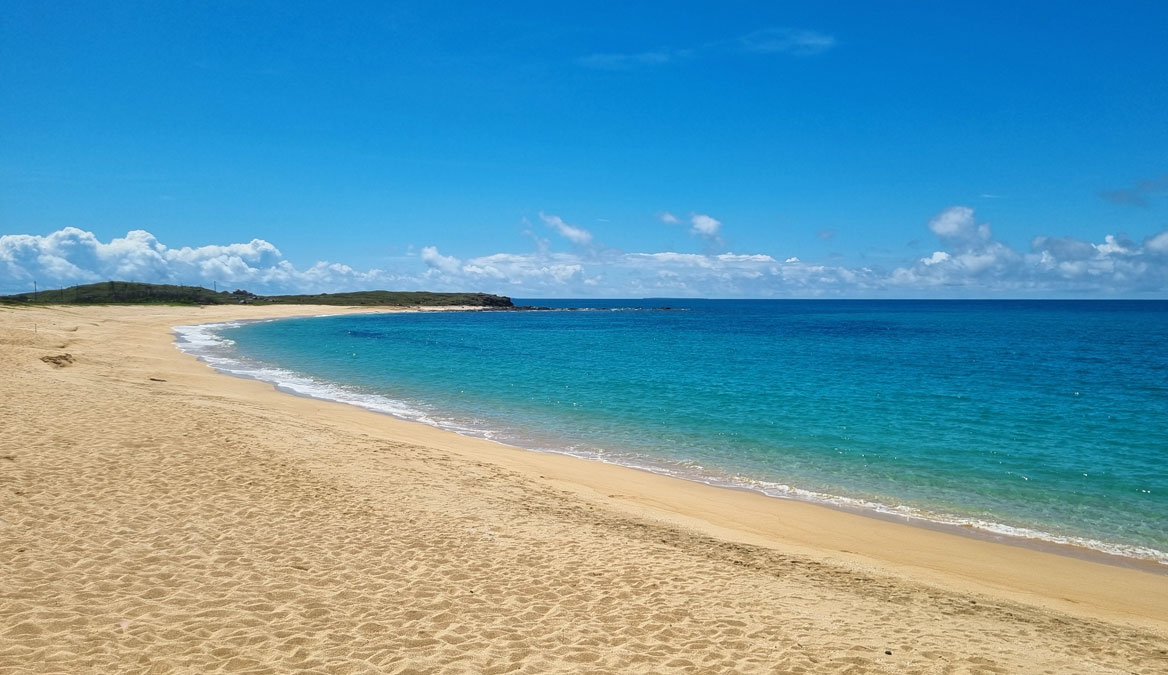
If you like the idea of wide, quiet and uncrowded beaches – where some feel like your own private stretch of sand – you’ll absolutely fall in love with Penghu.
For its size, the archipelago boasts a surprising number of sandy beaches – in my opinion the best in Taiwan. The waters are warm and clear, often with the backdrop of basalt rocks and coral walls. Most beaches are easy to access by moped, and even these are rarely busy. While it wasn’t easy to pick, I’ve listed my favourite beaches to consider for your itinerary – a mix of swimming-friendly and unique places for a stroll.
Tip: Please remember that there isn’t much shade on most of Penghu’s beaches (or the islands in general) so bring plenty of sunscreen, hats and water.
Best Beaches on Penghu Islands
- Lintou Beach – A scenic beach with some tree shade that’s usually quiet despite being a short drive from Magong City. Stop by the lovely cafe (Ji Lin Chun Cafe) nearby, as well as gardens and an interesting military park including a pair of Taiwanese tanks and a big rocket.
- Shanshui Beach – A long stretch of wide sandy beach that’s perfect for swimming and families – situated on the southern shores of the main island. There are changing facilities, and a couple rows of colourful hotels behind. I actually recommend this area as the best place to stay on your Penghu holiday.
- Wangankou Beach – The island of Wang’an (an hour or so by boat from the main island) is awash with stunning bay beaches, and Wangankou is the one we’d come back to in a heartbeat. Despite its beauty, you might just find the entire beach to yourself. So if you plan to take a trip to Wang’an, make sure to pay a visit.
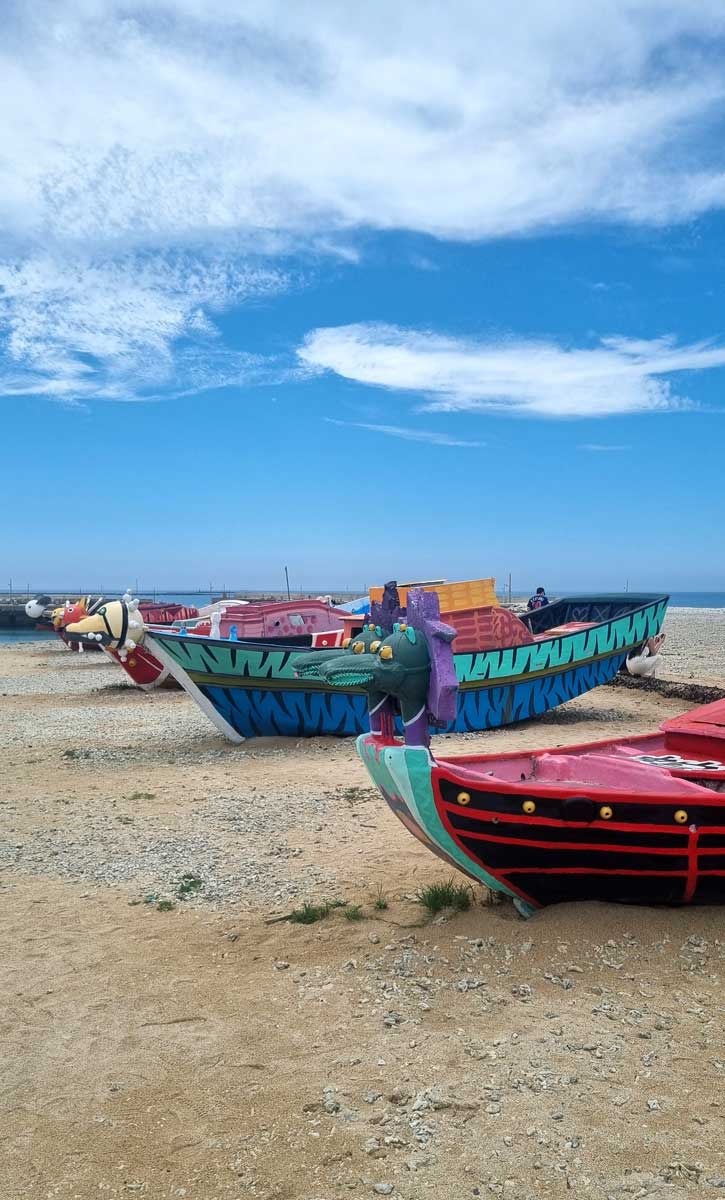
- Houliao Beach – This one is more of a picturesque one for exploring than a swimming beach. Some of the highlights for us were the colourful boats and the “Paradise Road” pier stretching out into the blue waters.
- Kuibishan Beach – The most unique beach on the list, as it only truly appears in its full glory at low tide – revealing a natural causeway to a small island. Be sure to check tide times and don’t get caught out!
Step Back in Time in Penghu’s Coral Villages
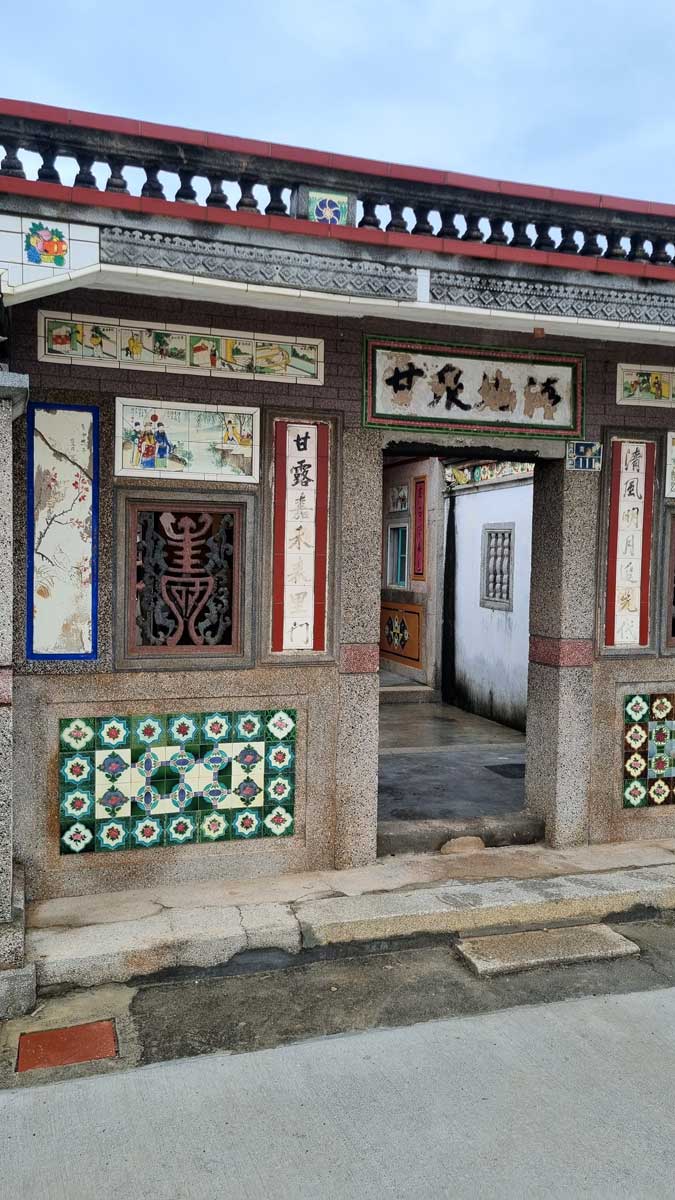
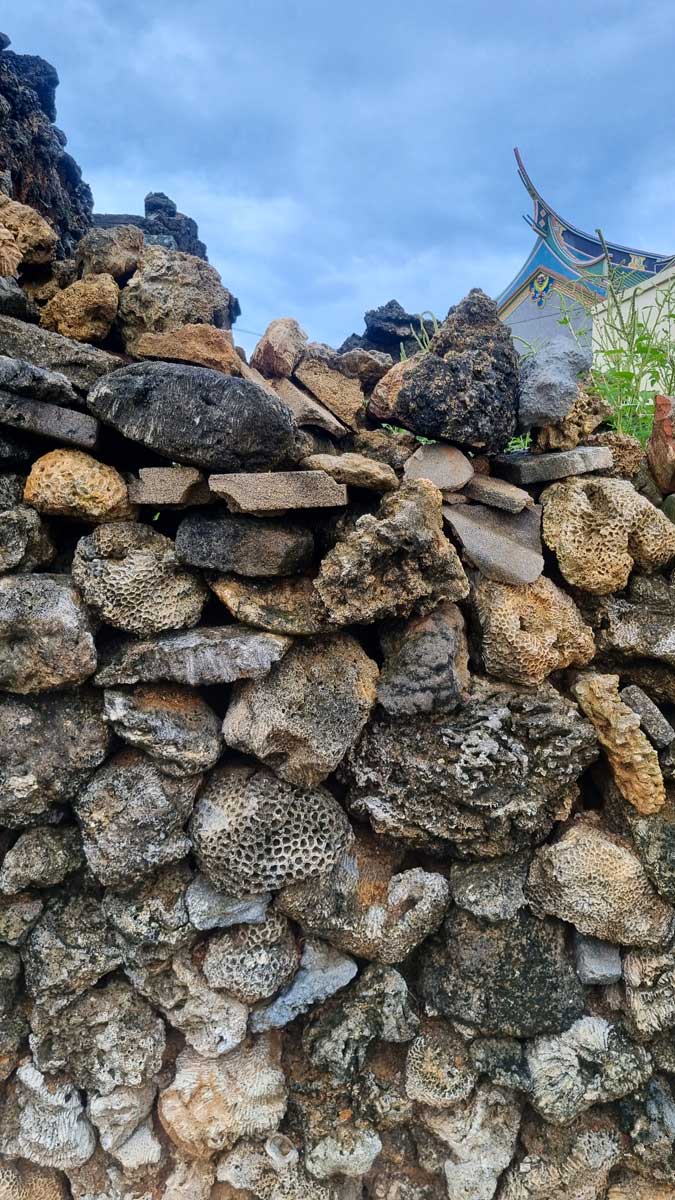

Penghu Islands boast some of the most unique traditional architecture in Asia. Amongst the traditional villages scattered around the island, you’ll find the oldest homes built of local coral and basalt. Many have stood the test of time and the weather – perfectly adapted to withstand the harsh winds that lash the archipelago.
Some of the best examples of Penghu’s traditional villages can be found in Nanliao Village (near Huxi) as well as Erkan Historic Village on the western end of the main island group.
Erkan feels like more of a well-preserved open museum village with cute narrow streets and a few family-run artisan shops and eateries. Nanliao is more low-key raw, with more abandoned homes amongst some interesting examples of ancient Penghu craftsmanship. Both villages are on the main island group and easily reached by moped or car.
Penghu Buoy Art
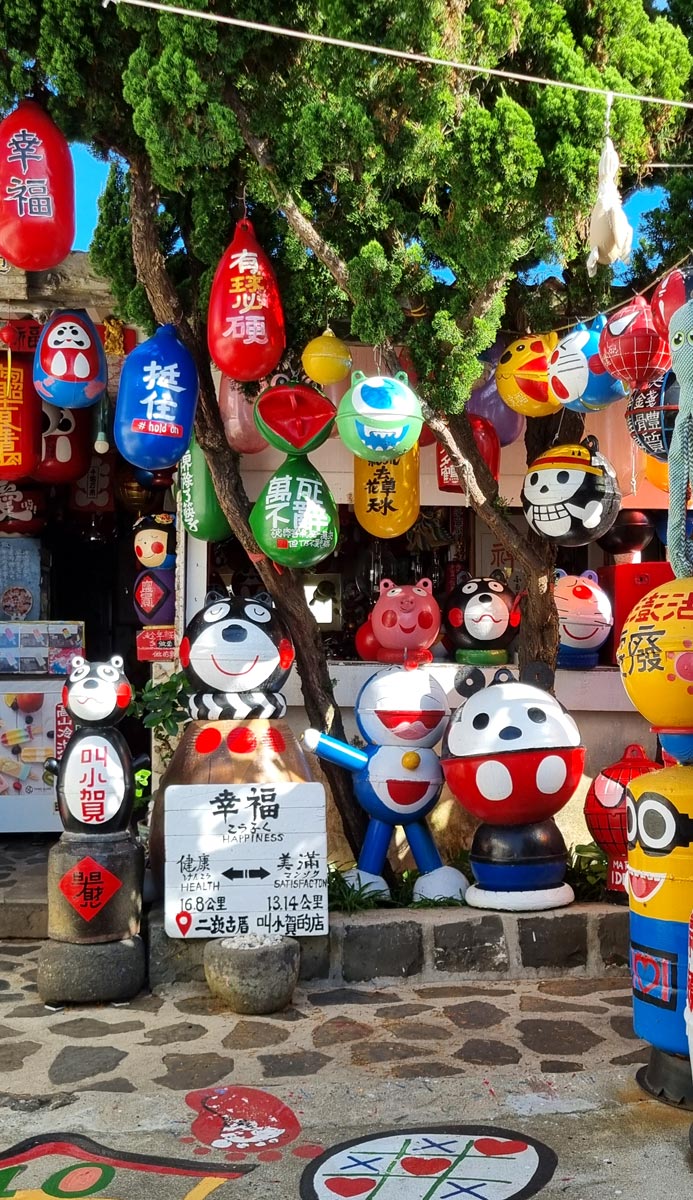
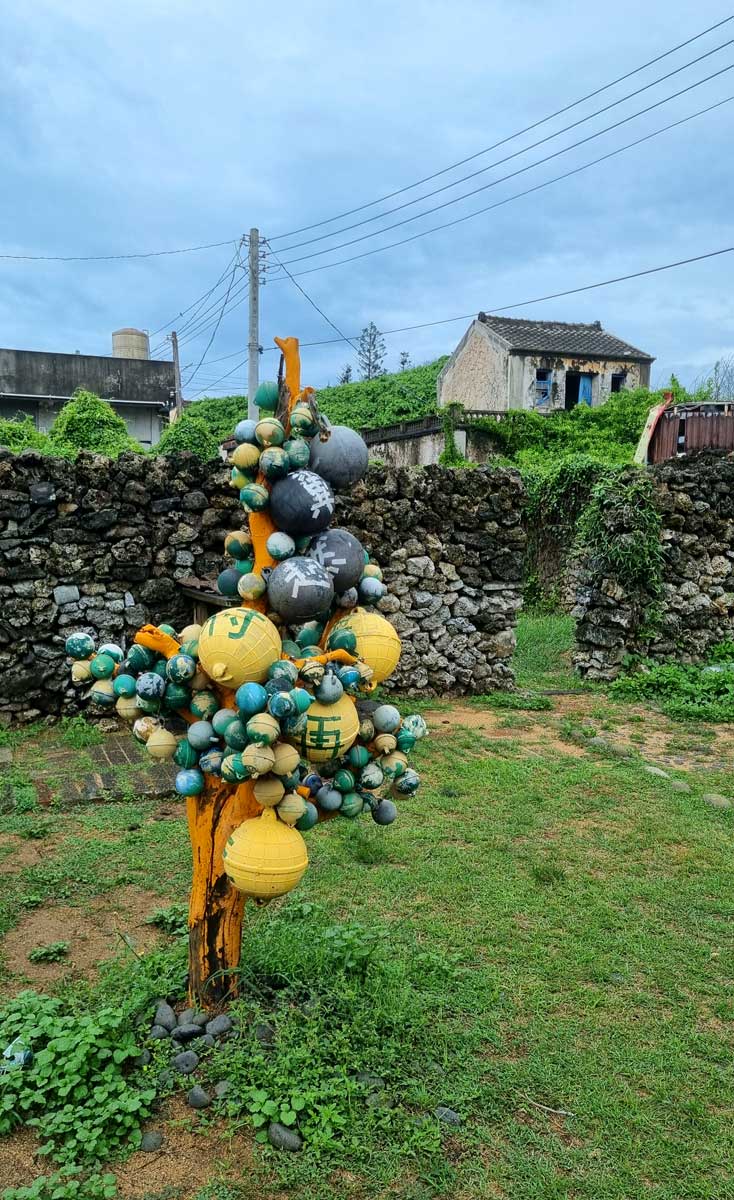
In both villages (and also across the islands) you’ll notice some fascinating showcases of Penghu’s very distinct art form – old fishing buoys brightly and creatively painted in all forms of designs – from local motifs and symbols to Angry Birds characters. What began as local artists’ desire to recycle all the discarded buoys that wash up on Penghu’s shores now adds another little layer to the island’s tourist appeal.
Explore Magong City’s History and Fireworks
Magong is Penghu’s main and only city – the naval gateway to the islands. But the islands’ “capital” has plenty cultural and culinary delights to offer besides its harbour.
The city center is compact yet full of texture – from coral-stone lanes and incense-filled temples to seaside parks and some excellent eateries. We love wandering the old streets in the evening, savouring local seafood and catching the fireworks over the harbour.
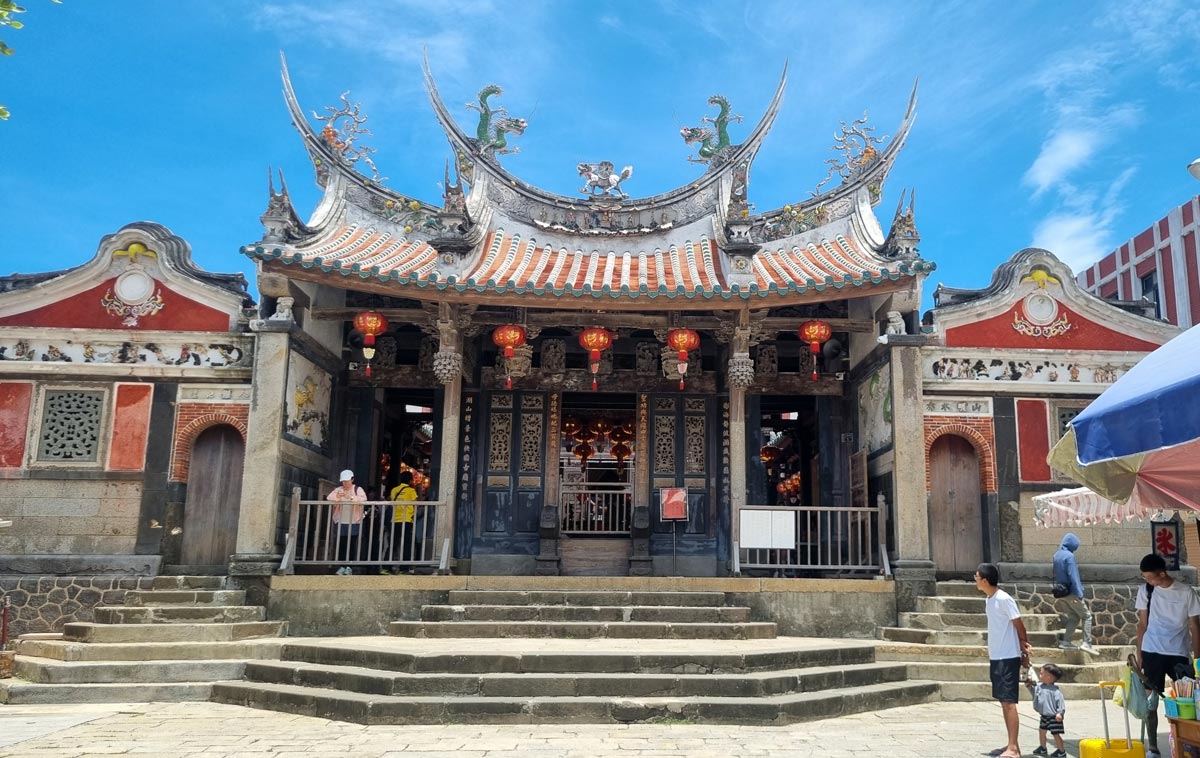
Magong’s compact old street area is a maze of charming alleys with traditional shop fronts offering a wide variety of local delicacies, crafts and souvenirs. Here you’ll also find the Penghu Tianhou Temple – the oldest Taoist temple in all of Taiwan and made mostly from wood. It might not be as colourful as some of Taiwan’s more modern temples, but look out for the details in the wooden craftsmanship and you’ll see why it’s well worth adding to your Penghu itinerary.
Magong has a few museums too: if you want to learn more about Penghu’s history and the islanders’ life then I recommend the Penghu Living Museum.
Naturally, Magong is the islands’ most happening foodie destination – a chance to try local specialties like the delicious squid noodles, fried cuttlefish balls and cactus-flavoured desserts. While there are surprisingly many great restaurants, no culinary exploration of Magong is complete without a visit to Zhongyang Night Market to enjoy the biggest variety of local delicacies.

For sunset views, nothing beats Guanyinting Recreational Area – a waterfront where Magong also hosts the annual Penghu Fireworks Festival. The festival lights up Magong’s waterfront every week or two from May to July – centered over the city’s colourful Rainbow Bridge. It’s a spectacular show that adds even more magic to Penghu’s summer evenings.
The festival season is worth keeping in mind for deciding when you’d like to visit the islands. Check here for latest info.
For a more unusual and very memorable Penghu experience, you can join a squid night fishing boat trip from Magong – if you’re not squeamish about catching live squid with your own hands. Of course the added reward is eating your fresh catch at the end!
See the Basalt Cliffs and Coastal Bridges
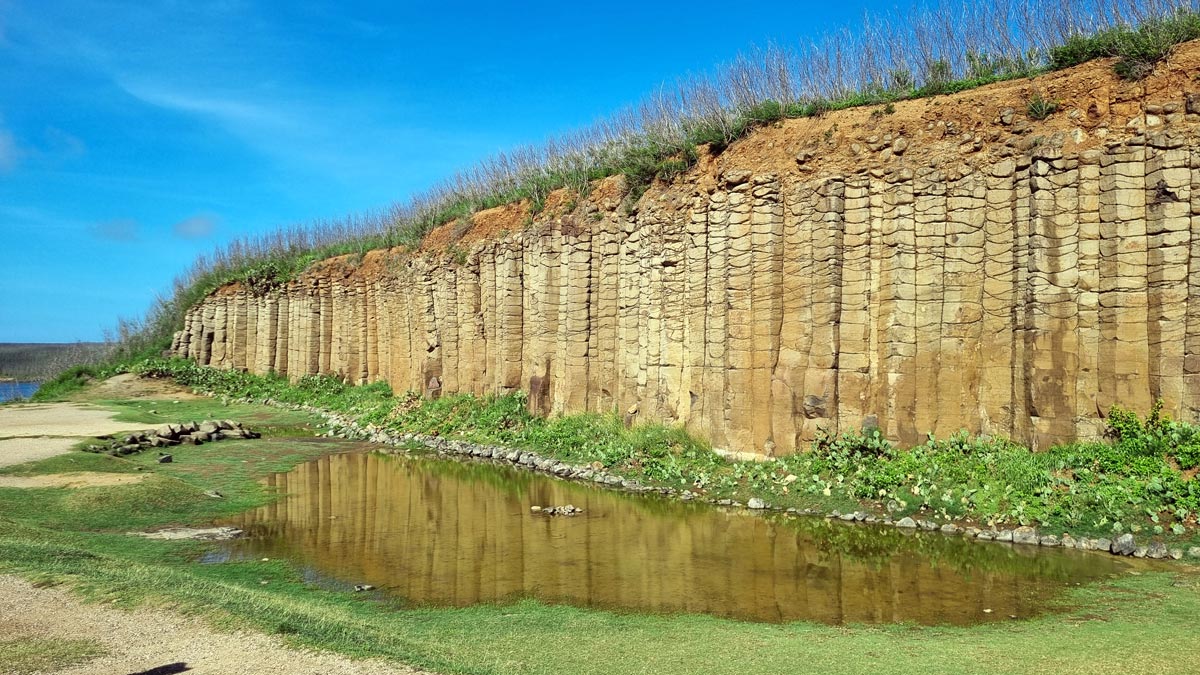
Penghu Islands are rich in coastal scenery, particularly famed for the tall basalt column cliffs that dominate much of its coastline. Formed millions of years ago as the volcanic islands rose over the ocean, the lava cooling into perfectly hexagonal columns.
The basalt cliffs can be viewed on many of the islands from sea, but the easiest to reach columns can be found on the main archipelago’s Xiyu Island – the Daguoye Columnar Basalt. The long column wall rises above a scenic beach, forming a real masterpiece of nature. Handily there is a Family Mart a minute’s walk for snacks and coffee.
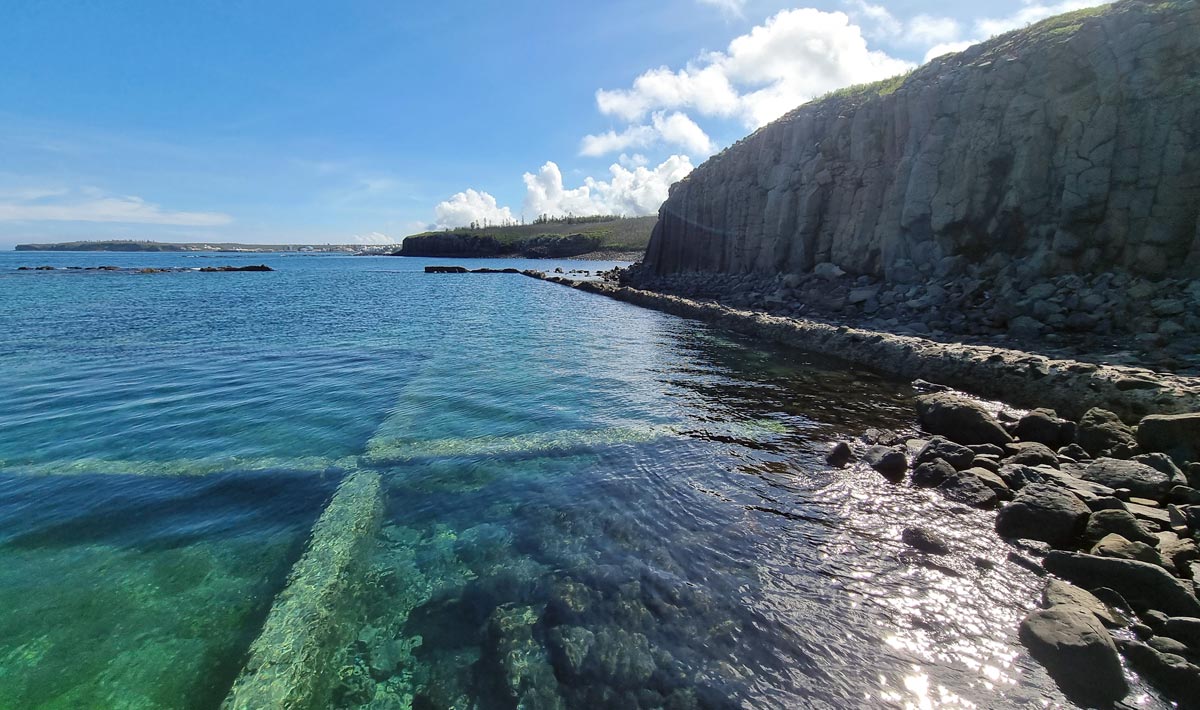
A short drive across to the opposite shore, I recommend a little stop for a coastal stroll to Chixi Rock Waterfall – where the columns directly meet the sea on the rugged coastline. Both locations are conveniently near Erkan Village so it makes sense to visit them together.
Go Island-Hopping to Qimei and Wang’an
For me, an island-hopping trip to explore Penghu’s other major islands is an absolute must and one of the main highlights of a trip to Penghu. You can either book an organised boat tour or get one of the ferries.
Organised day tours by boat to Wang’an and Qimei islands is the easiest and most popular means of doing the island hopping. Depending on the tour, you’re likely to get 2-3 hours on each island, with pre-arranged mopeds you can hop on by the harbours by far the best way to explore the islands. Alternatively the tour companies offer tour buses that stop for all the popular sights.
Ferries are best if you want to explore the islands at your own pace or bring your own scooter / car. Ferry to Wang’an takes around an hour, and Qimei is roughly another 30–40 minutes further.
Both the boat tours and ferries depart in the morning from Magong City’s main port.
Wang’An Island
If the main Penghu islands felt laid-back, I don’t even know what word can describe Wang’an. Even the local Family Mart somehow manages to feel more rural than anywhere in Taiwan.
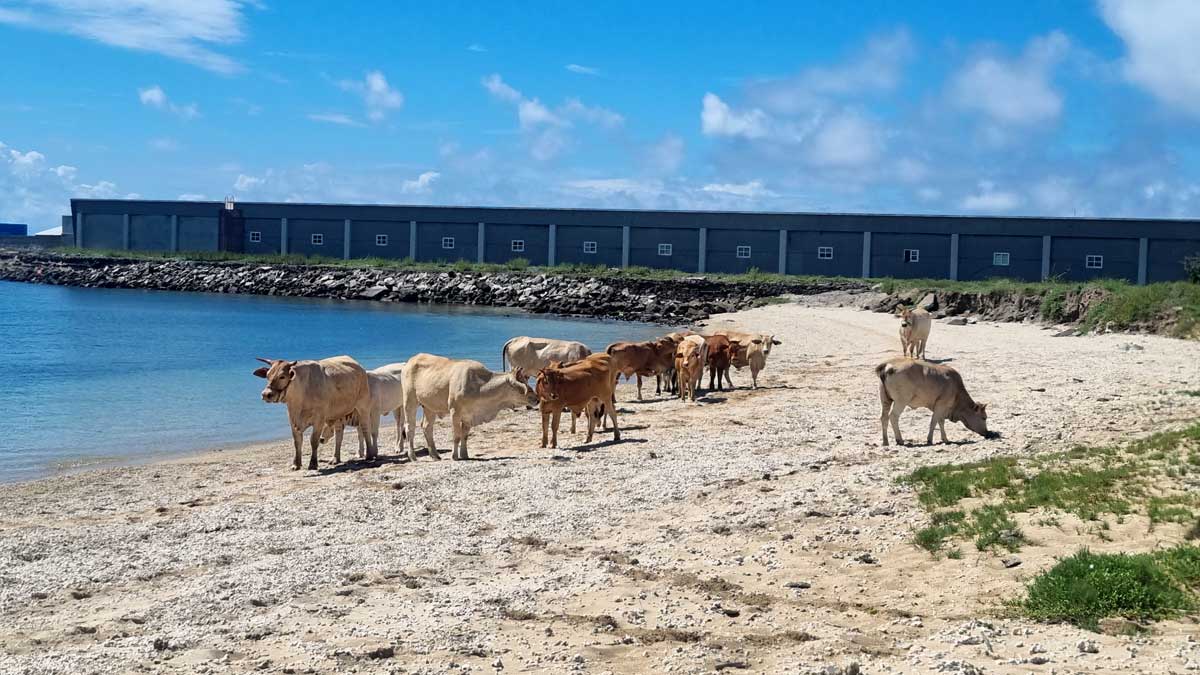
The very first view once you head out north from the harbour is a peculiar one – a sandy beach full of cows (place is literally called Cow Bay). The rest of the island is a mix of sleepy hamlets with traditional homes and stunning beaches – my favourite being the Wangankou Beach on the island’s southern shore.
You can circle the island by moped in under an hour, following the main circular road from the harbour (rental right next to it). If on an organised boat trip you’ll get a couple hours on the island, so my tip is to head anticlockwise and save some time to spend on one of the pristine beaches on the south coast.
There’s very little to do on the harbour itself besides a basic snack stop.
Qimei Island
Qimei is an absolute gem and my favourite of the main Penghu islands – thanks to its unrivalled natural beauty. There is an impressive wealth of natural sights for such a compact island – making for some of the most scenic and relaxing moped riding anywhere in Taiwan.
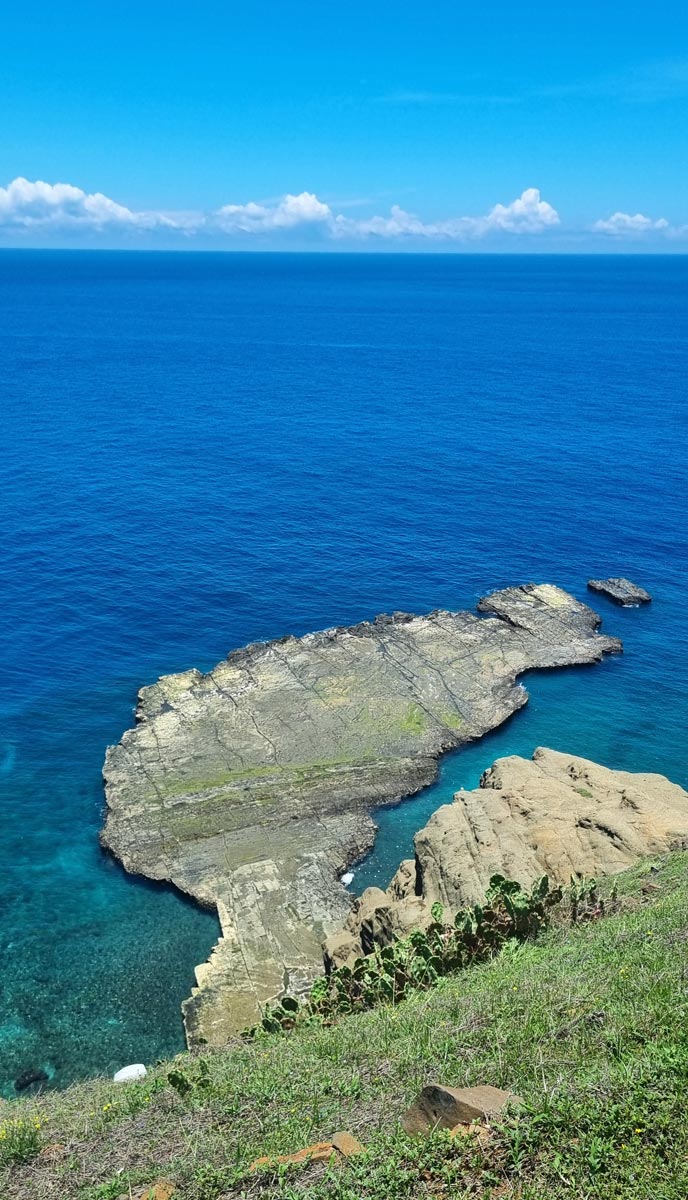
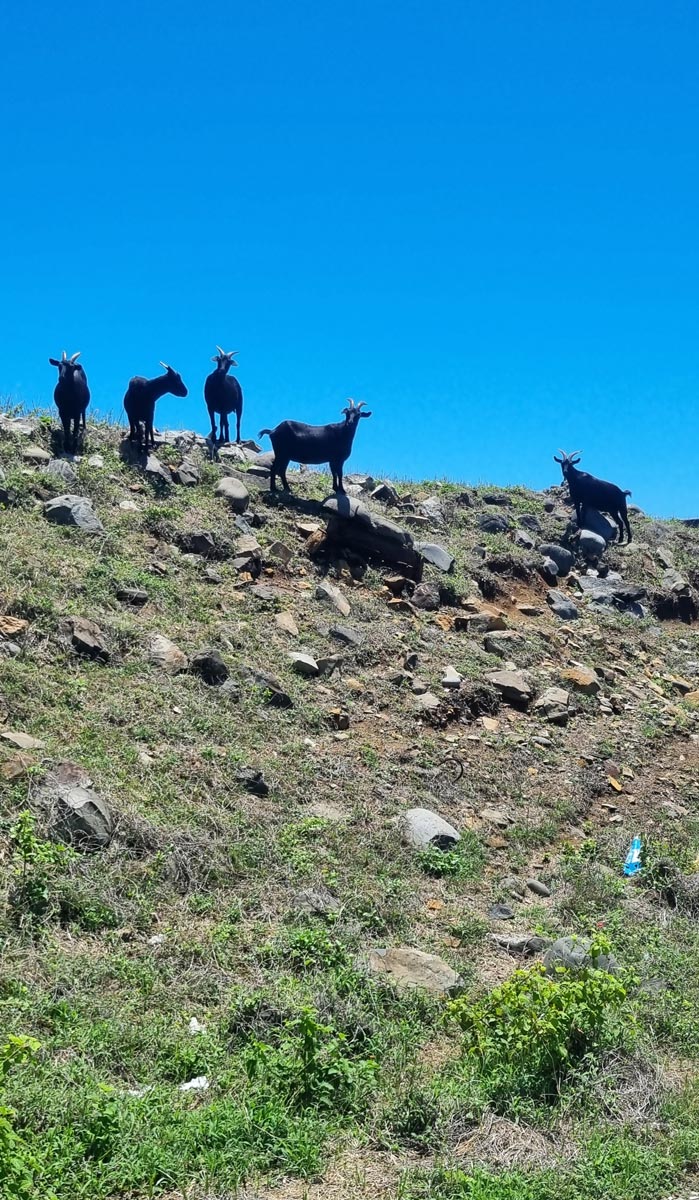
Conveniently, Qimei’s most impressive scenic points are found along the circular route that follows most of the coast. Heading anticlockwise from the port, you’ll pass dramatic cliffs and picturesque sandy bays.
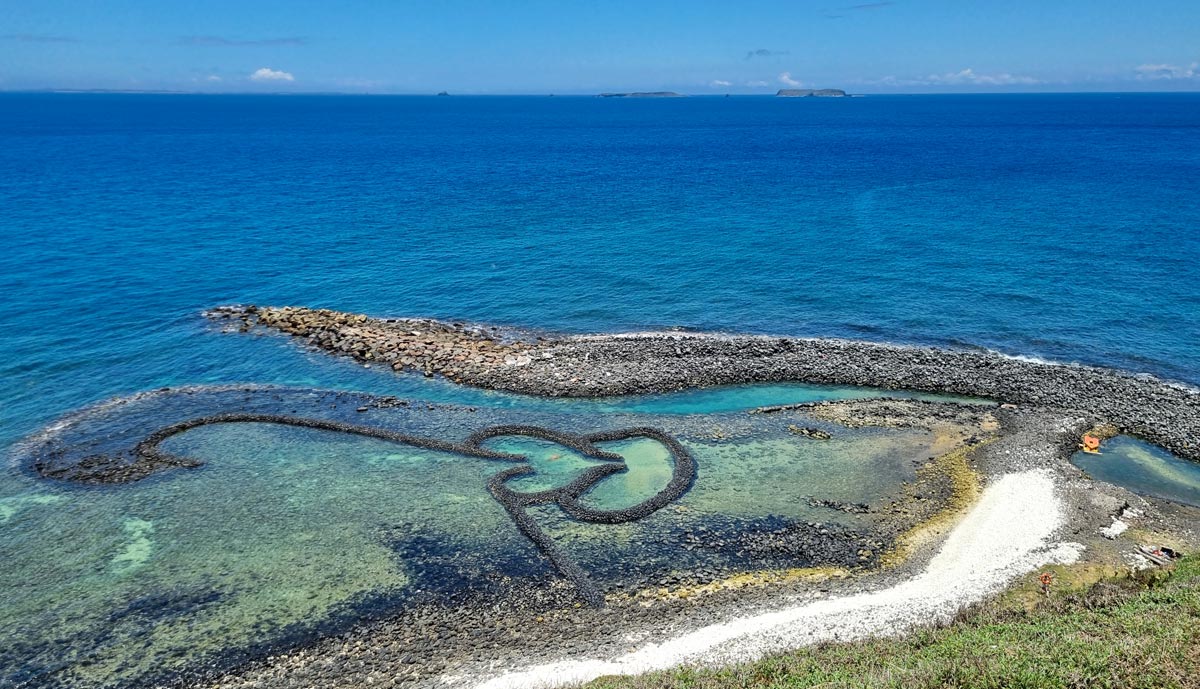
Look out for rocky formations in the shape of Lions (“Great Stone-Lion”) and a flat outcrop uncannily resembling the island of Taiwan (“Little Taiwan”). On the northern tip of Qimei is the island’s most iconic and romantic sight – the Twin Hearts Stone Weir. Like many others on Penghu, the weir was built to trap fish at low tide – but the resemblance to two linked hearts turned it into what is arguably Penghu’s best-known (and busiest!) tourist spot. There are a few shops for snacks and souvenir shops at the rest stop by the main viewpoint – I recommend trying the cactus ice cream.
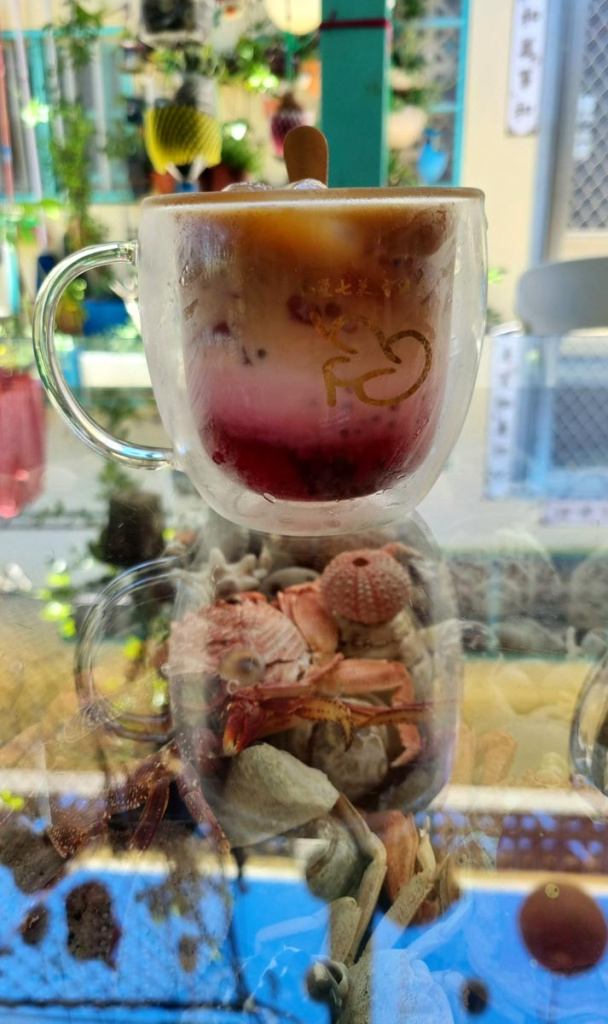
If you have some time at the end, I really recommend stopping at morecoffee for some excellent coffee with a local twist. The place is a definition of a hidden gem! You can enjoy a refreshing and high quality ice coffee with local cactus juice, cool decor and a nice tranquil atmosphere. It’s about 5 mins from the harbour and a little tricky to find, but makes it all the more special once you do.
Penghu Islands Travel Tips
Best Time to Visit Penghu Islands
April to June are great months to visit Penghu Islands – you’re likely to enjoy the best weather without the crowds. If you’d like to witness Penghu Fireworks Festival, then come from May to July and check which days it’s on.
Tourism peaks in summer – also the hottest, most humid period, and this makes September-October the next best months after springtime.
Despite being the low season, winters remain warm, but tend to get very windy – disrupting island hopping and travel in/out of the islands. Many venues also shut for this period.
How to get to Penghu Islands
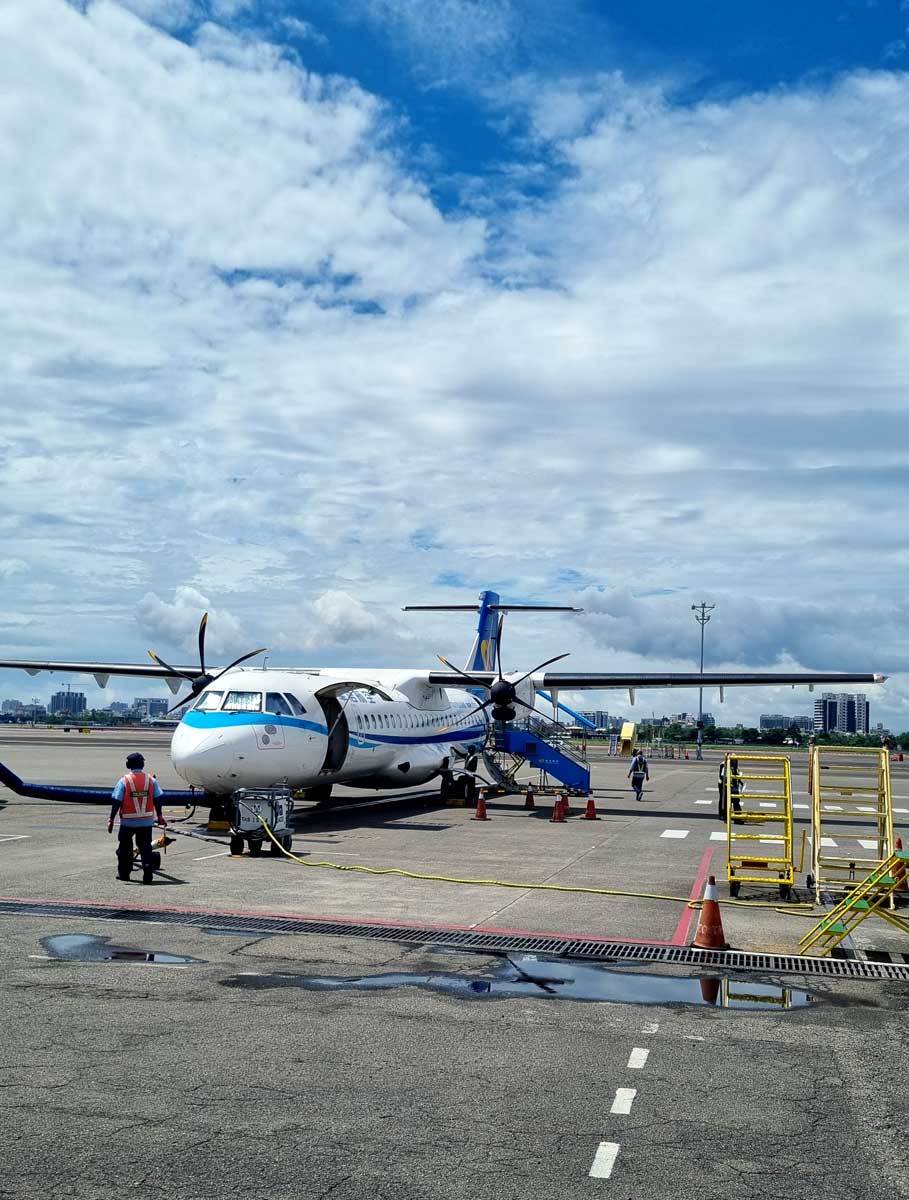
You can either fly in or take a ferry from mainland Taiwan. I’ve done both and enjoyed them equally!
Frequent flights to Penghu Airport operate from Taiwan’s main airports – with roughly hourly departures from both Taipei and Kaohsiung. The flights are short and sweet – just 40 mins from Kaohsiung and under 1 hour from Taipei. The main airlines are Uni Air and Mandarin Airlines – subsidiaries of Taiwan’s main airlines EVA Air and China Airlines – are both pretty affordable and barely differ in price.
Ferries operate daily from Chiayi (Budai Port) in central Taiwan and Kaohsiung in the south. From Chiayi it’s just a 1hr 20 min trip, with a longer 4hr 30 service to Kaohsiung. I can vouch for the large and comfy Kaohsiung ferry which we took on the way back – with plenty of resting areas, a restaurant and lovely views of mainland in the distance. Ferries also run from Kaohsiung directly to Qimei. Ferry prices and links to buy tickets with the different operators can be found here.
Expect seasonal schedules, with more frequent boat services between April and September compared to the low season. Low season = rougher seas, so there is also a higher risk of cancellations.
Verdict: Go for the flights if you’re short on time or coming from the north, but if you’re on the fence then my tip would be flying in and ferry back. If you like window views, the landing into Penghu Airport is memorable – and the ferry back to mainland is chilled and restful.
Where to Stay on Penghu Islands
For convenience, it’s hard to look past Magong City as the most strategic location for your Penghu stay. It’s ideally located for island hopping trips, the ferries in, the most varied food scene and it helps to have the Penghu Fireworks Festival at your doorstep. So best location if you’re not planning to rent your own transport.
But if you’re after somewhere more peaceful and scenic, I recommend Shanshui Beach. It’s still well-placed to explore the main island group, only 15-20 minutes drive from Magong and you get to stay next to a vast sandy beach. There are a few eateries, bars and cafes within walking distance.
Getting Around Penghu Islands
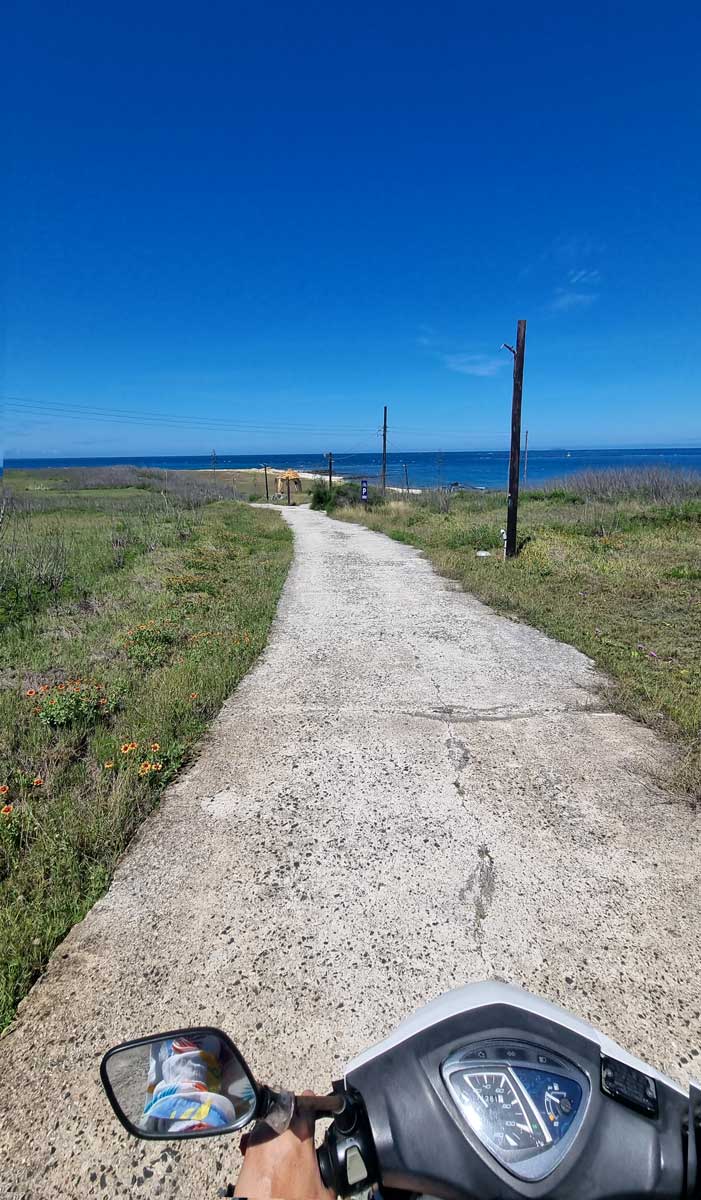
Renting a moped or car is by far and away the best way to get around the islands.
Scooter rental is the most popular option – and the quiet, well-maintained roads lend themselves perfectly to riding around on moped. There are plenty of rental companies dotted around the main islands and it’s also pretty cheap. Just keep in mind you’ll need an international driving permit (IDP) to be sure you’re not refused rental on the island (and Taiwan in general).
The main group of 4 islands is connected by a series of bridges, forming the Penghu Northern Ring Route. It only takes around 45 minutes to traverse this road from one end to another.
Boats and ferries are naturally the best way to get between the main islands – just be aware of the timing, with most organised tours leaving in the morning and seasonal timetables.
Alternatively there are a few sparse shuttle buses operating on the main island group – timetables can be found here (select Penghu County). Taxis are an option in Magong City, but harder to come by in more rural parts around the islands.
Local Food to Try on Penghu
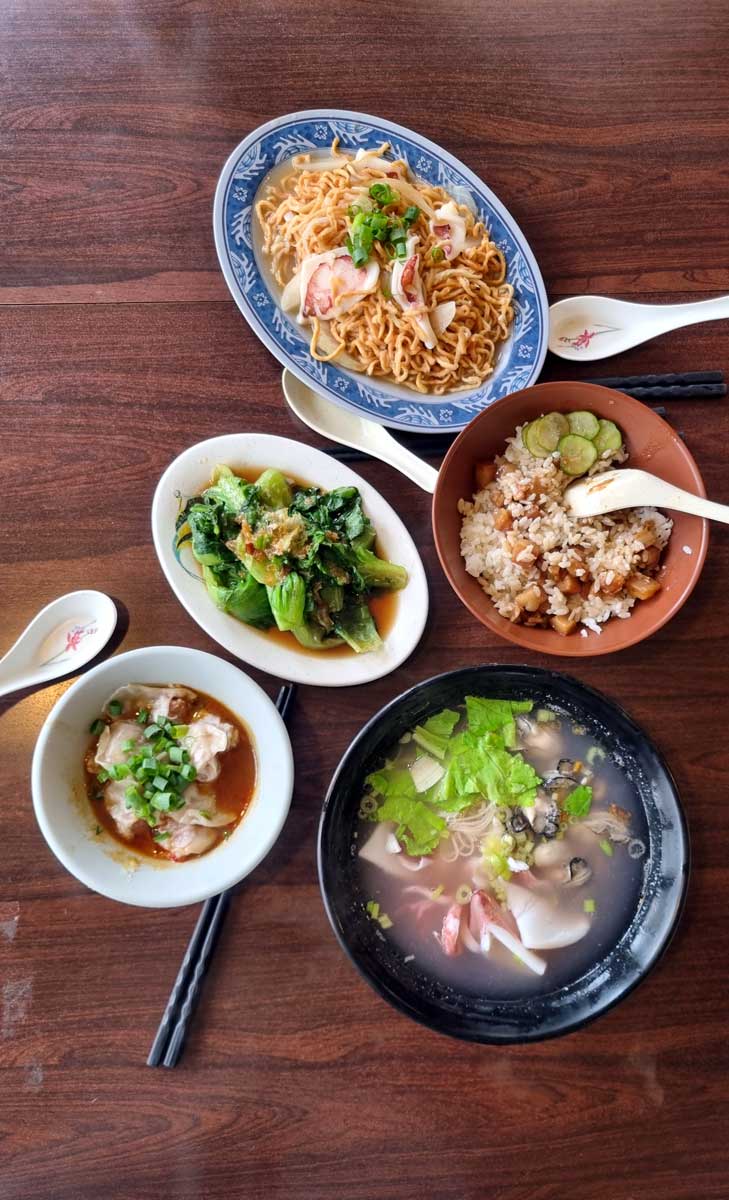
For a small archipelago, Penghu has surprisingly lots of local delicacies to offer foodies.
Naturally, seafood is the biggest draw in Penghu, with most local dishes featuring fresh catch. It’s particularly known for squid and cuttlefish. Some dishes to try:
- Squid noodles – usually comes with vermicelli and a Penghu classic
- Grilled or fried squid – the ultimate night market snack
- Fried cuttlefish balls – another famous night market snack
- Cold seaweed noodles – a more acquired taste: greenish noodles infused with seaweed
- Sun-dried fish – a Wang’an Island specialty to try
- Sashimi – normally at better value than on the mainland
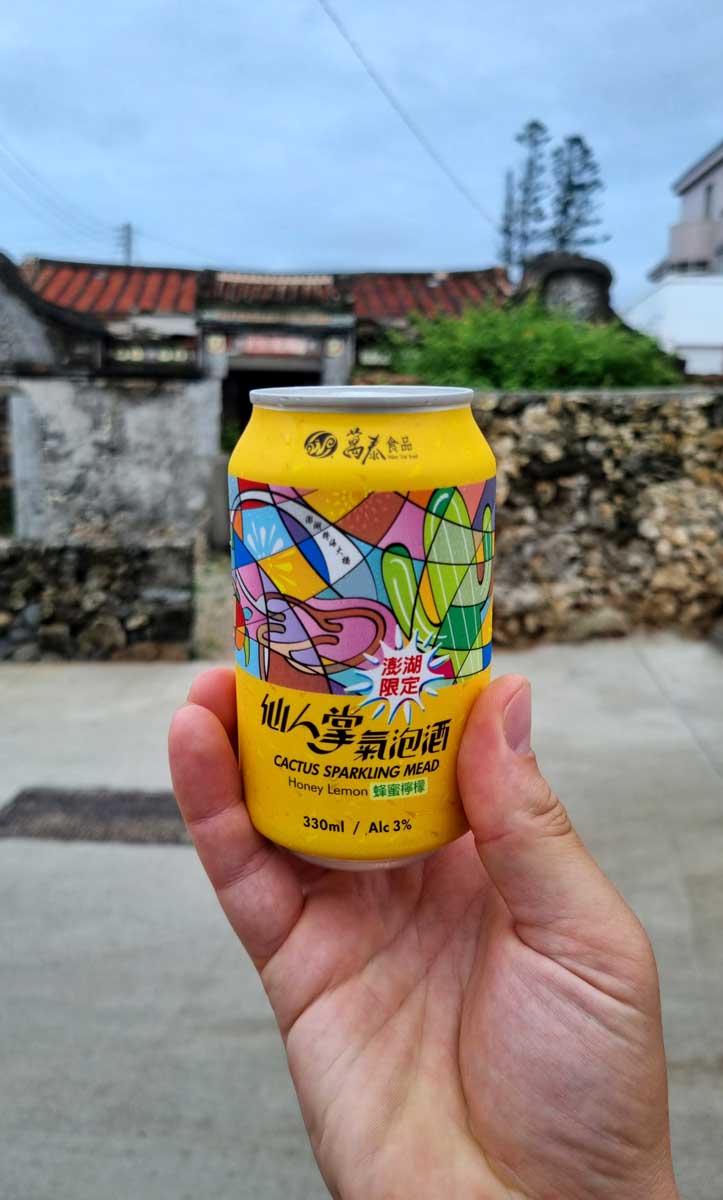
For desserts and drinks, cactus is big on Penghu and definitely the local specialty flavour to try. Some of the pink refreshments to look out for:
- Cactus ice creams and smoothies
- Cactus beer / mead
- Cactus coffee (tastes way better than it sounds!) – morecoffee on Qimei does it so well.
Last but not least, Penghu’s brown sugar cake is another local delicacy I’d recommend trying at least once.
Whether you come for the beaches, the coral villages, or the laid-back island rhythm, Penghu promises a side of Taiwan that few travellers ever see. If you’re planning your trip, I hope this Penghu travel guide helps you make the most of your time on these unforgettable islands.
You might also be interested in:
» Taiwan 2 Week Itinerary: The Ultimate Guide to Exploring the Island
» Off the Beaten Sand: 14 Best Hidden Gem Beach Destinations


